

A workshop motor that needed controlled stopping
The client in Isando used the brake motor on positioning equipment that had to stop accurately, hold a load in place and then start again without hesitation. In a workshop environment, that sort of duty puts steady strain on the windings, the bearing set and the brake assembly, especially when the motor runs hard through long shifts and the area carries dust and metal fines.
The brief was straightforward but important: restore the unit so it could perform reliably again, with the stopping action working properly and the electrical condition checked before return to service. The client needed practical repair work, not guesswork, and a clear report on what had failed and what was worth keeping.
Because the equipment sat in a busy work area, access was limited and the removal had to be planned around production. Our team worked with the client on safe isolation, lockout and removal, then brought the motor back to our Germiston base for testing and strip down.
What we found during inspection and testing
Once the unit was opened up, we carried out fault finding, bearing checks and insulation testing before touching the winding side. That order matters. You want to know whether the issue sits in the electrical circuit, the mechanical rotation or the brake components before you commit to repair work.
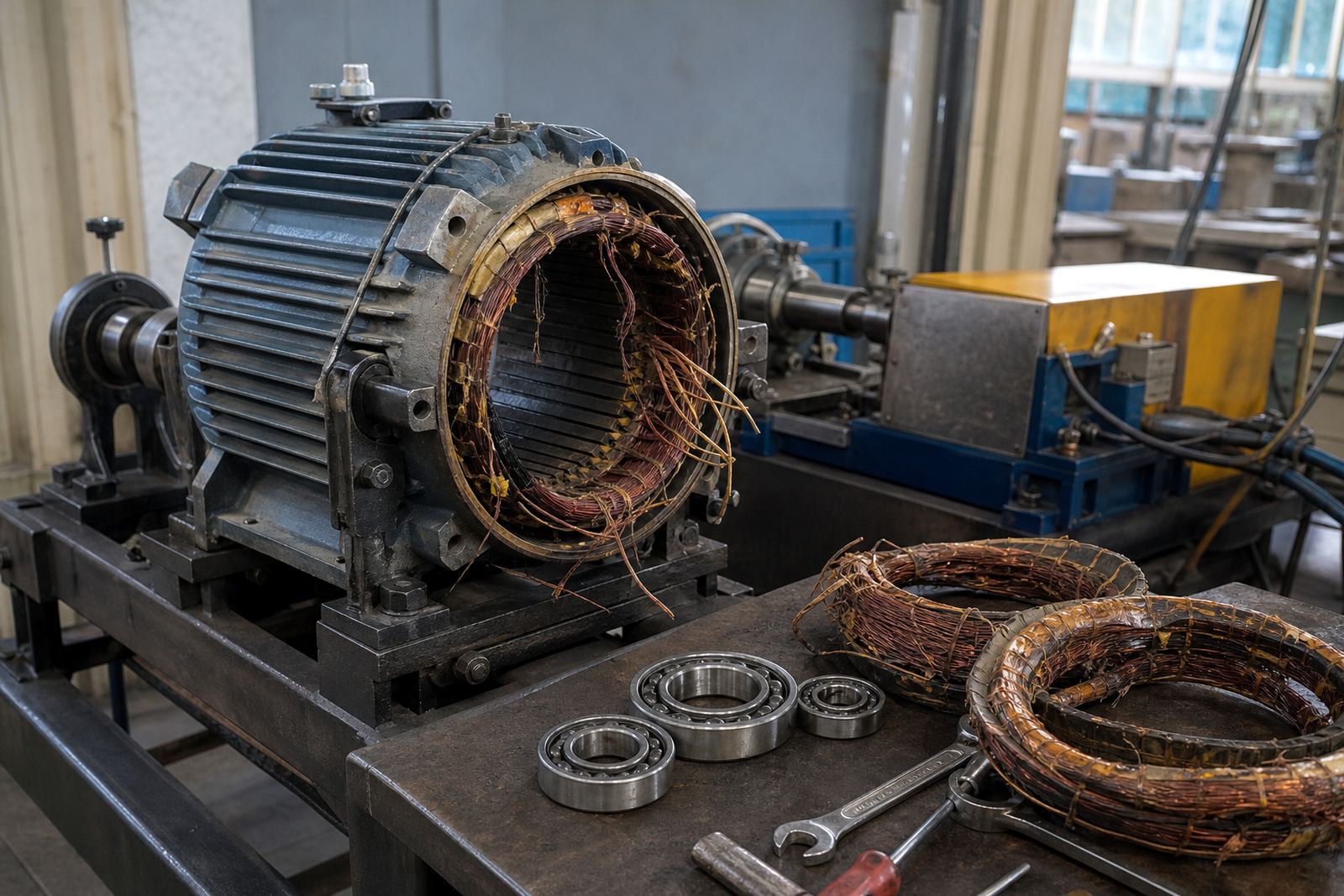
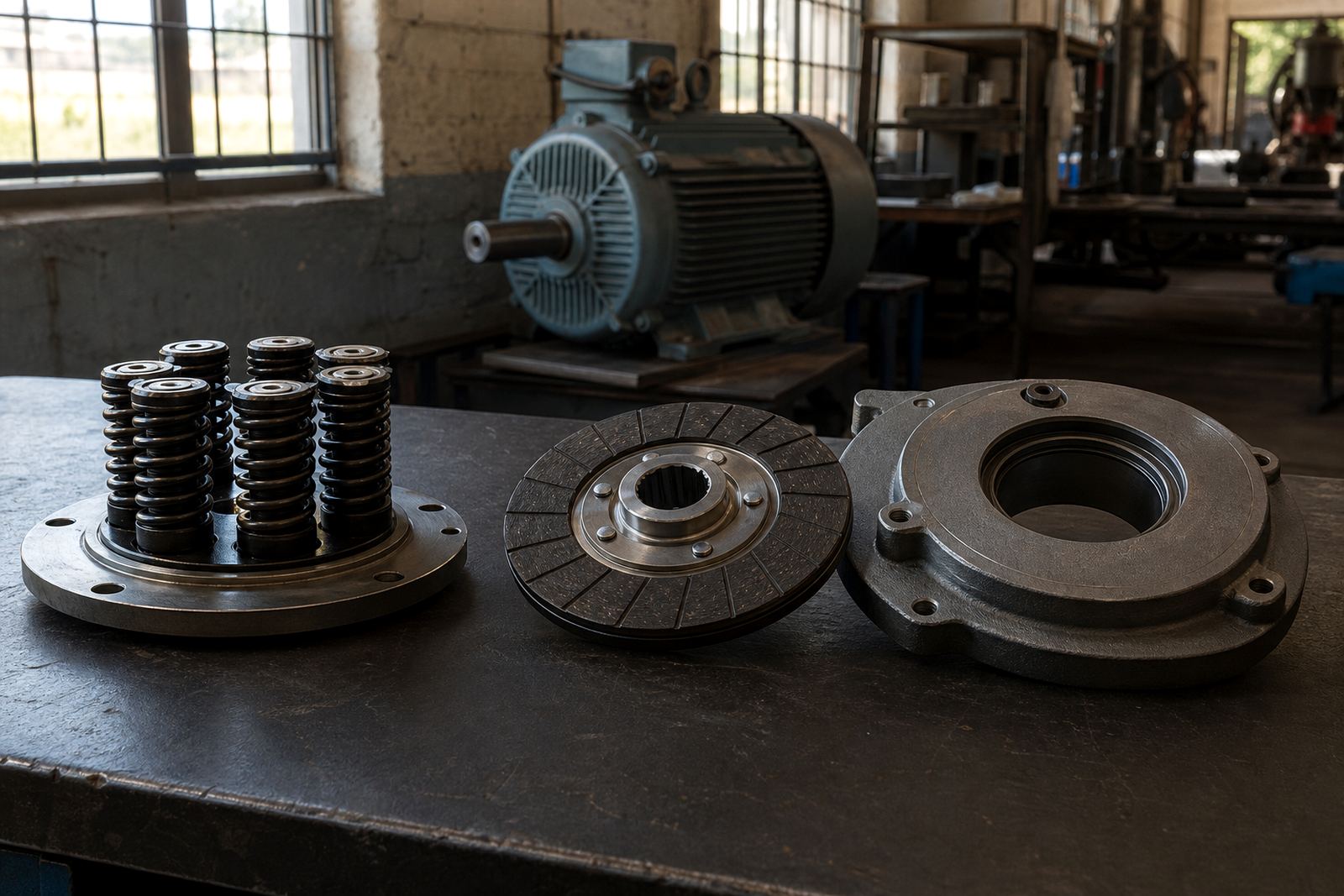
The inspection showed signs consistent with a motor that had been working under load and heat, with wear that needed attention before the unit could be put back into service. We checked the rotor and stator area, looked over the insulation condition, assessed the brake side and inspected the bearings for play and noise. A brake motor that is left with rough bearings or weak insulation can fail again quickly, so the full picture matters.
- Motor type: brake motor for positioning equipment
- Condition checked: windings, bearings, brake side and lead connections
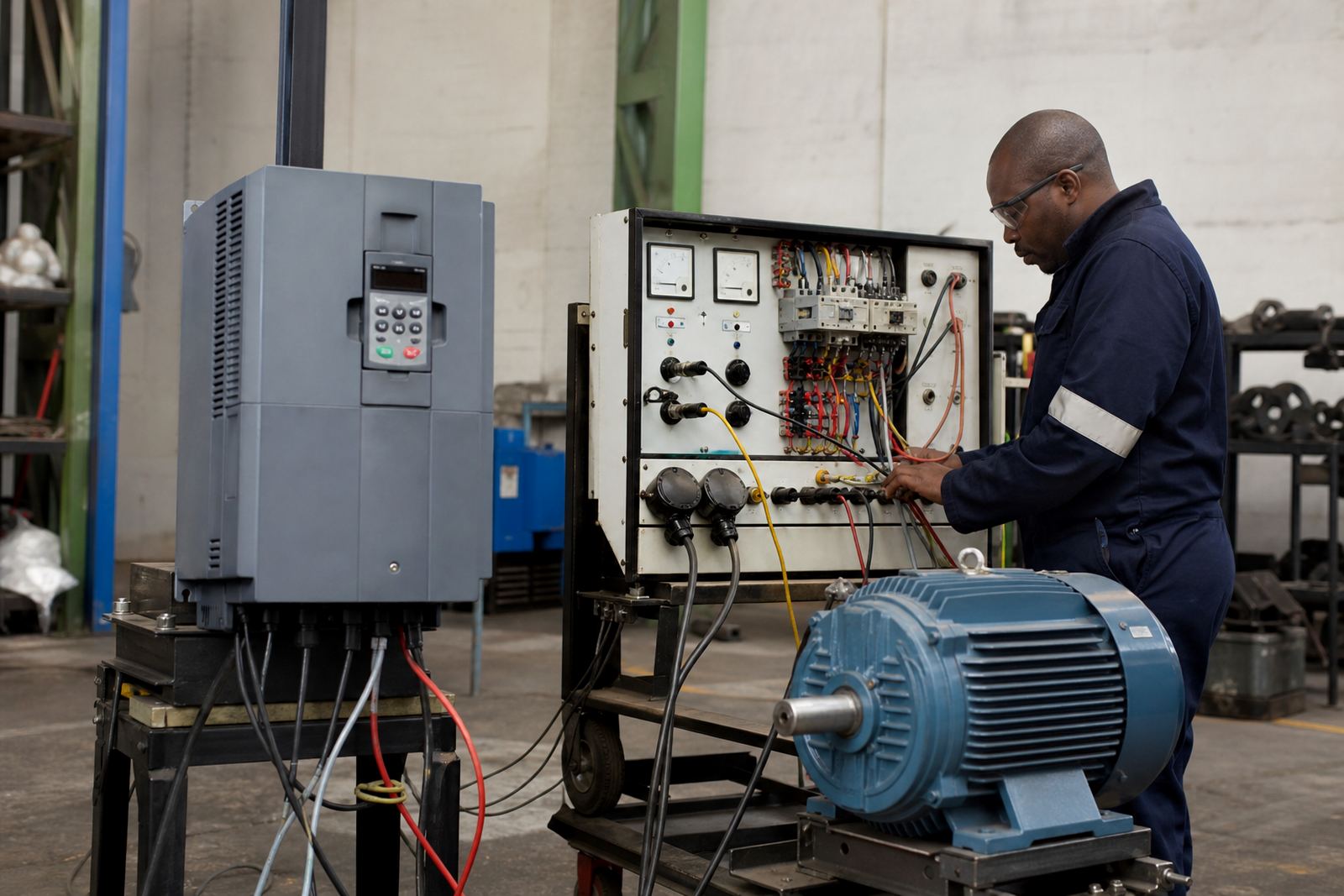
- Testing carried out: insulation resistance, visual inspection and rotation checks
- Work setting: busy workshop with limited spare space
Repair work carried out at our Germiston base
We stripped the motor, cleaned out dust and residue, replaced the worn bearings and prepared the winding assembly for repair. Where the winding condition calls for it, the process includes careful removal of damaged coils, re-winding to the original pattern and re-impregnation so the insulation holds up under heat and vibration. With brake motors, the brake side also has to be checked as part of the whole unit, because good electrical work will not help if the stopping action is not set correctly.
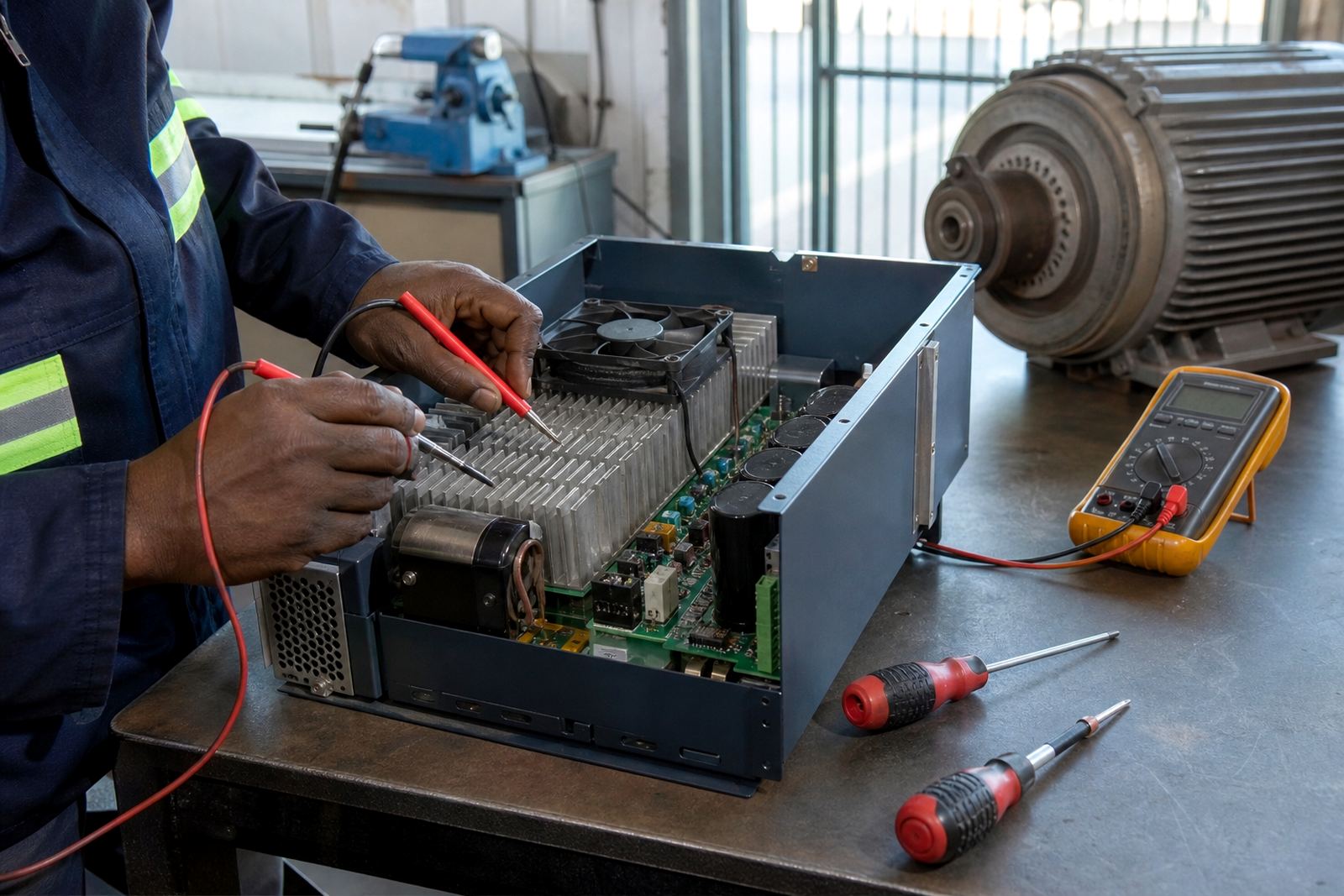
We also completed cable checks, panel cleaning and drive inspection as part of the wider job handover, since the equipment was tied into a workshop control setup. Any electrical work of this kind should only be done by qualified people, with proper lockout procedures in place before isolation or removal. That is not a box-ticking step, it is what keeps people safe.
- Bearing replacement completed
- Insulation testing repeated after repair work
- Brake and rotation checks carried out before release
- Lead terminations and cable condition reviewed
Timeline and coordination over two weeks
The project ran over two weeks from collection to return to the client. The first part covered removal planning, site isolation and transport to our Germiston base. The second part covered strip down, fault identification, repair, testing and final prep for reinstallation. That sequencing kept the workshop informed at each stage and helped avoid surprises when the motor went back in.
We also discussed shutdown planning with the client so the replacement window could be matched to their work schedule. In a place like Isando, where many workshops operate with tight production slots and shared floor space, timing matters almost as much as the repair itself. A motor can be mechanically sound, but if it comes back when the line is already under pressure, the job becomes harder than it needs to be.
Throughout the job, our field service coordinator kept the client updated on progress and on any parts that needed approval before fitment. No unnecessary changes, no overcomplicating the repair, just practical work that matched the equipment and the site.
Results on return to service
After repair and testing, the brake motor was returned for reinstallation and commissioning support. The result was a unit that started and stopped correctly again, with the stopping function working as required for positioning duties. The client could get the equipment back into use with better confidence in the motor condition and less risk of a repeat breakdown.
What mattered most was the controlled behaviour of the motor under workshop use. A brake motor used for positioning has to respond cleanly every time, especially where operators rely on it for safe and accurate movement. The repaired unit was handed back with the work documented and the key findings shared clearly, so the client had a record for future maintenance.
For a site that depends on steady throughput, that sort of outcome makes a real difference. It saves time on repeat troubleshooting and gives maintenance teams a cleaner base to work from when they plan the next service.
What we would do again for a similar Isando job
If we were called back to a similar site in Isando, we would take the same approach: isolate properly, inspect before repair, confirm the bearing condition, test insulation at each stage and verify the brake action before sign-off. That sequence works well on brake motors used in workshops, warehouses and plant rooms where equipment has to stop accurately and return to service without drama.
We would also keep the communication tight from start to finish, because workshop clients usually want plain facts, not a long story. If there is a part that needs replacement, say it. If the winding can be saved, say that too. It makes planning easier and it helps the client decide whether to repair, rebuild or replace the unit.
Locor handles motor rewinding, bearing replacement, insulation testing and drive repair for plants and workshops across South Africa, with work carried out from Germiston and support available in Johannesburg, Ekurhuleni, Pretoria, Vereeniging and Durban. For this Isando brake motor, the practical approach held up well and the client got a repaired unit ready for the next shift, not just a report on paper.
Key facts
| Project | Isando brake motor restoration |
|---|---|
| Client type | Workshop user of positioning equipment |
| Location | Isando, Gauteng |
| Timeline | 2 weeks |
| Key work | Fault finding, bearing replacement, insulation testing, brake checks |
| Service base | Germiston, Gauteng |