

Crusher Motor Trouble in Pretoria
This job came from an industrial plant in Pretoria that relies on a crusher motor for steady production through long shifts. The motor had started tripping on overload, running hot and showing signs of insulation stress after repeated starts under load. By the time it reached us, the team onsite had already ruled out simple supply issues and wanted a proper inspection before more damage set in.
The brief was straightforward: find the cause, assess whether the motor could be rewound, and confirm what else needed attention before putting it back into service. On motors used for crushers, heat and vibration often combine with dust, poor ventilation and heavy current draw. If that is left too long the winding insulation breaks down and the bearings can suffer too, so the safest move is to take the unit out early and test it properly.
- Client type: industrial plant
- Town: Pretoria, Gauteng
- Equipment: electric crusher motor
- Problem signs: overload trips, heat damage, rising running temperature
What We Found During Inspection
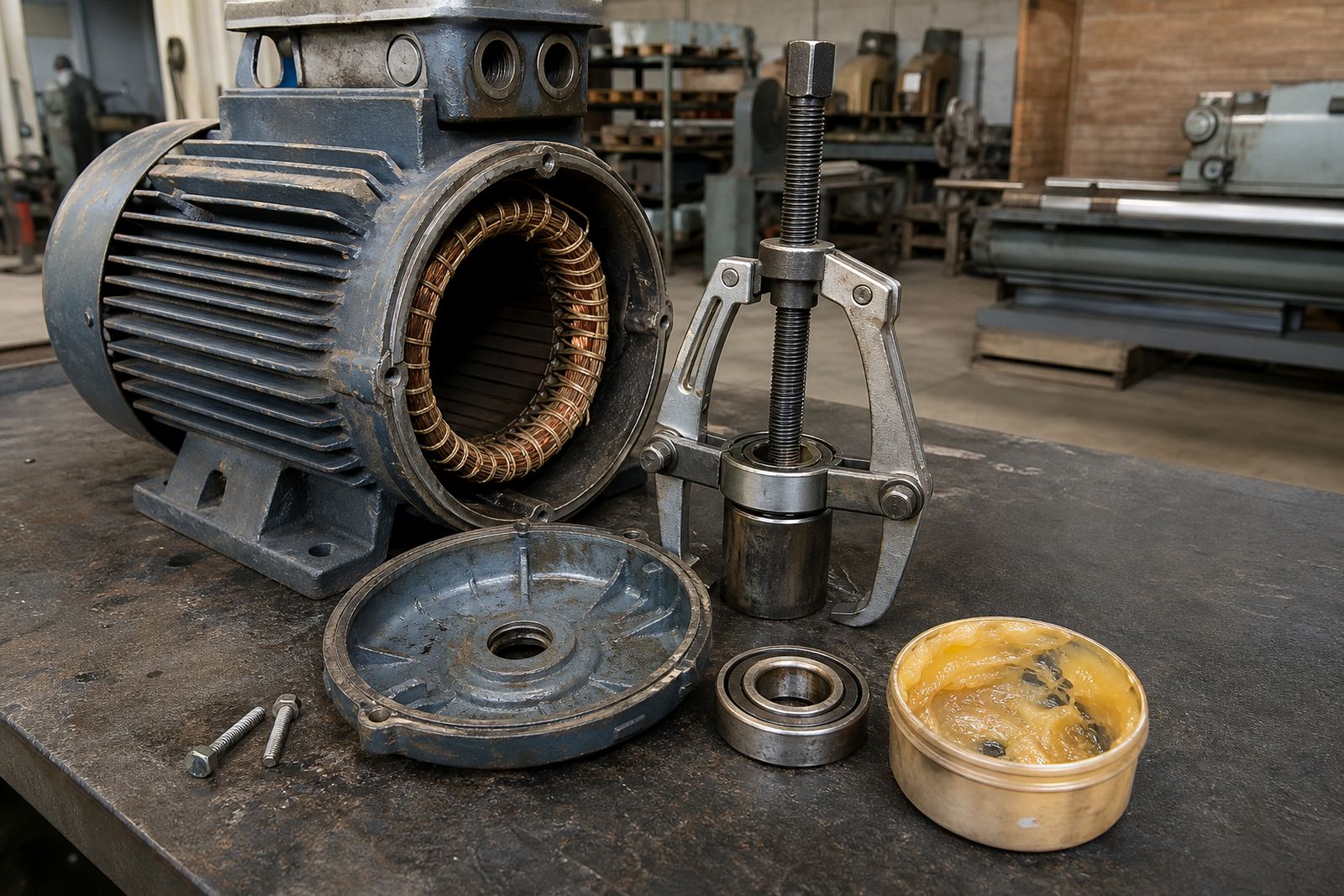
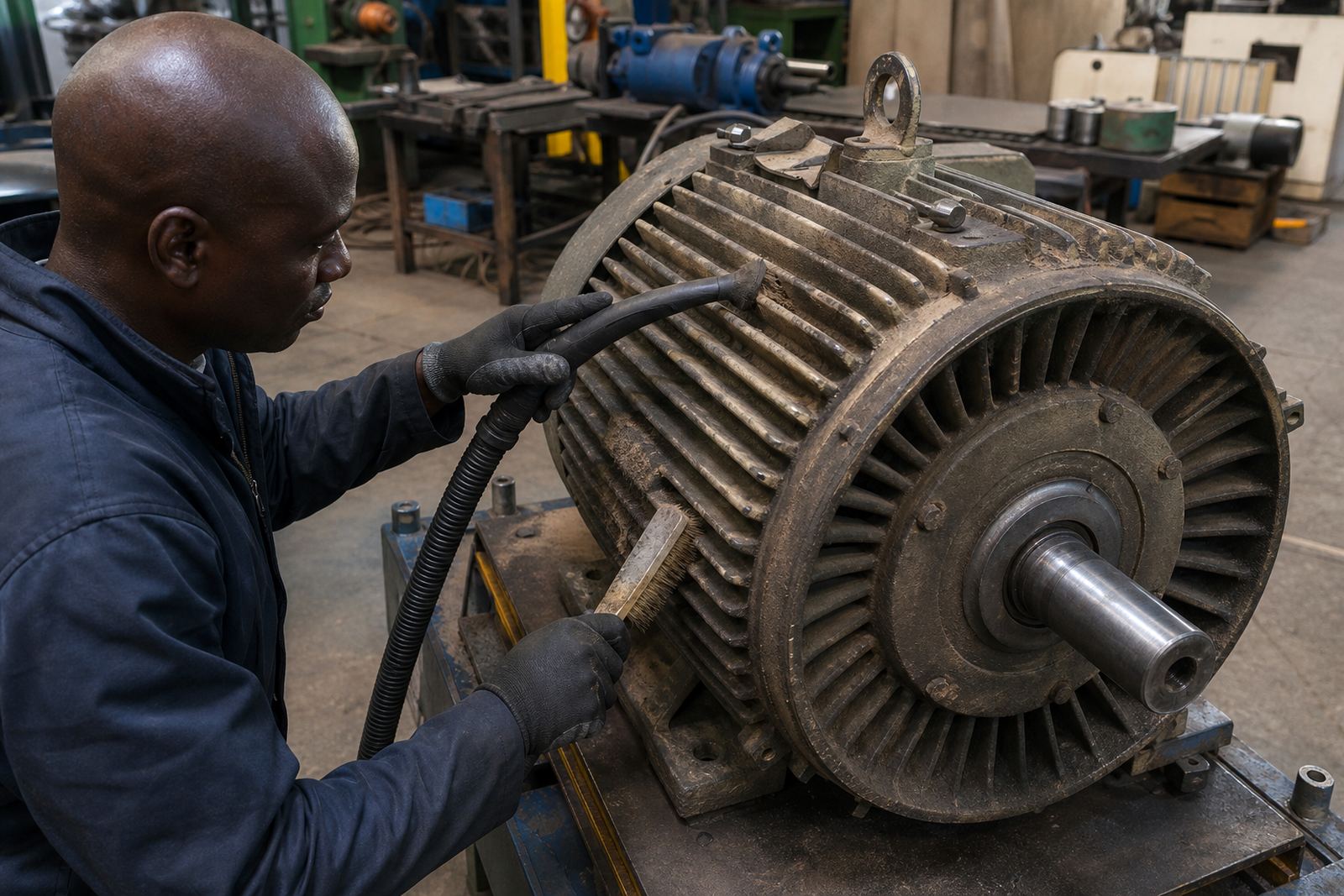
Our first step was external fault finding and a record of the motor condition as received. The frame showed heat discolouration, the terminal area had dust contamination and there was evidence of thermal stress around the winding end turns. We also checked the shaft end, fan area and bearing housings for signs of rubbing or movement. In this sort of repair you want to know if the failure is electrical, mechanical or a mix of both, because fixing only one side can leave the unit vulnerable again.
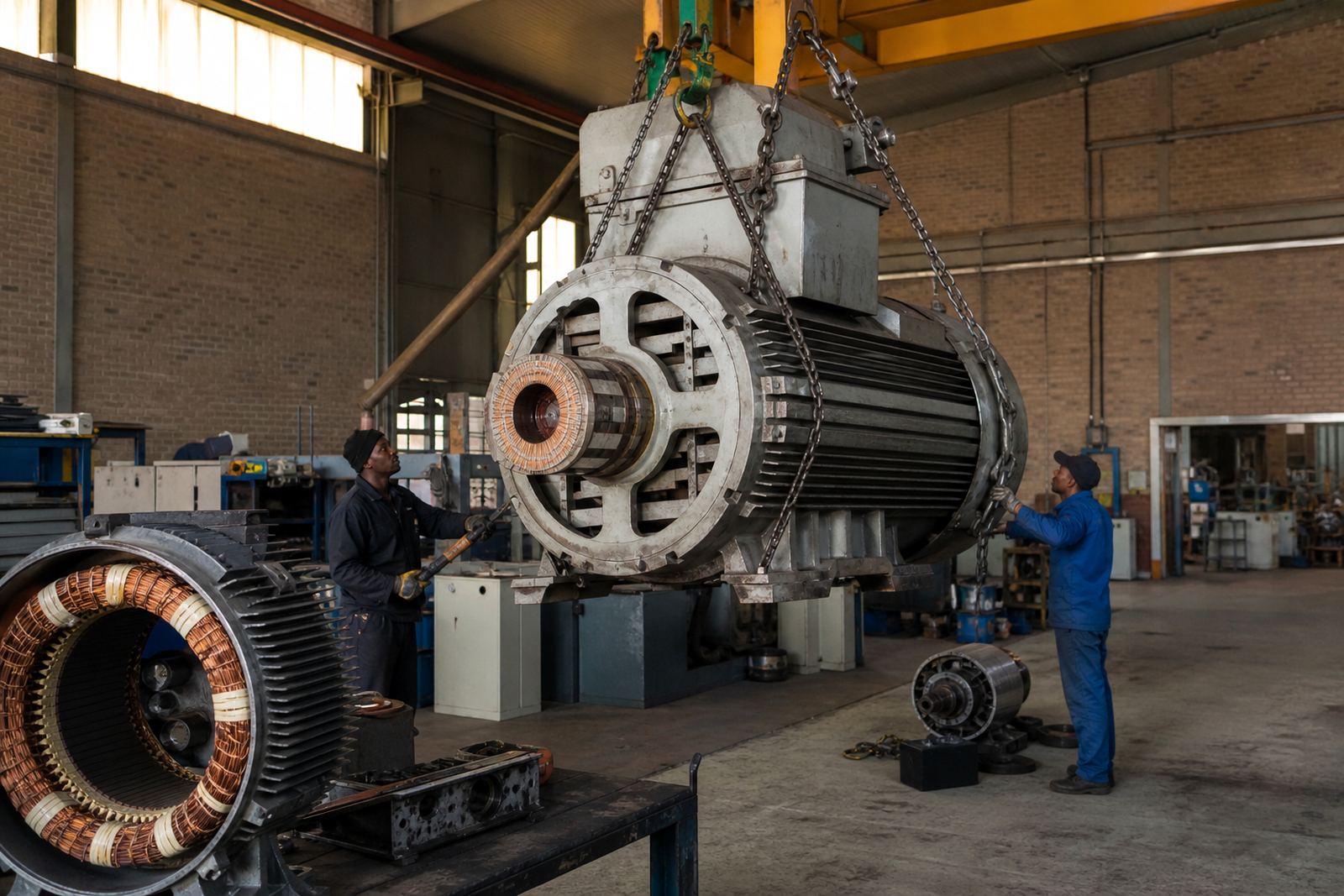
Inside the motor the winding insulation had taken a knock and the bearings were not running as freely as they should. The rotor and stator were examined for evidence of contact and the core was checked for obvious damage. We also did insulation testing before deciding on the rebuild path, because that tells you whether the unit still has a sound electrical base or whether a rewind is the better option. For a crusher motor that has already seen repeated overloads, a cautious call is usually the correct one.
- Condition check on frame, terminals and end covers
- Bearing checks for noise, play and roughness
- Insulation testing before strip down
- Assessment of core, rotor and winding condition
Rewind, Bearings and Electrical Work
Once the diagnosis was confirmed, we carried out the rewind using established motor rewinding methods suited to industrial duty work. The old winding was removed carefully, the slots were cleaned and the new winding set was formed to match the motor design and application. Attention to detail matters here because a crusher motor sees hard starts, shock load and long operating periods. If the winding is not laid in properly, the thermal performance and lifespan can be affected very quickly.
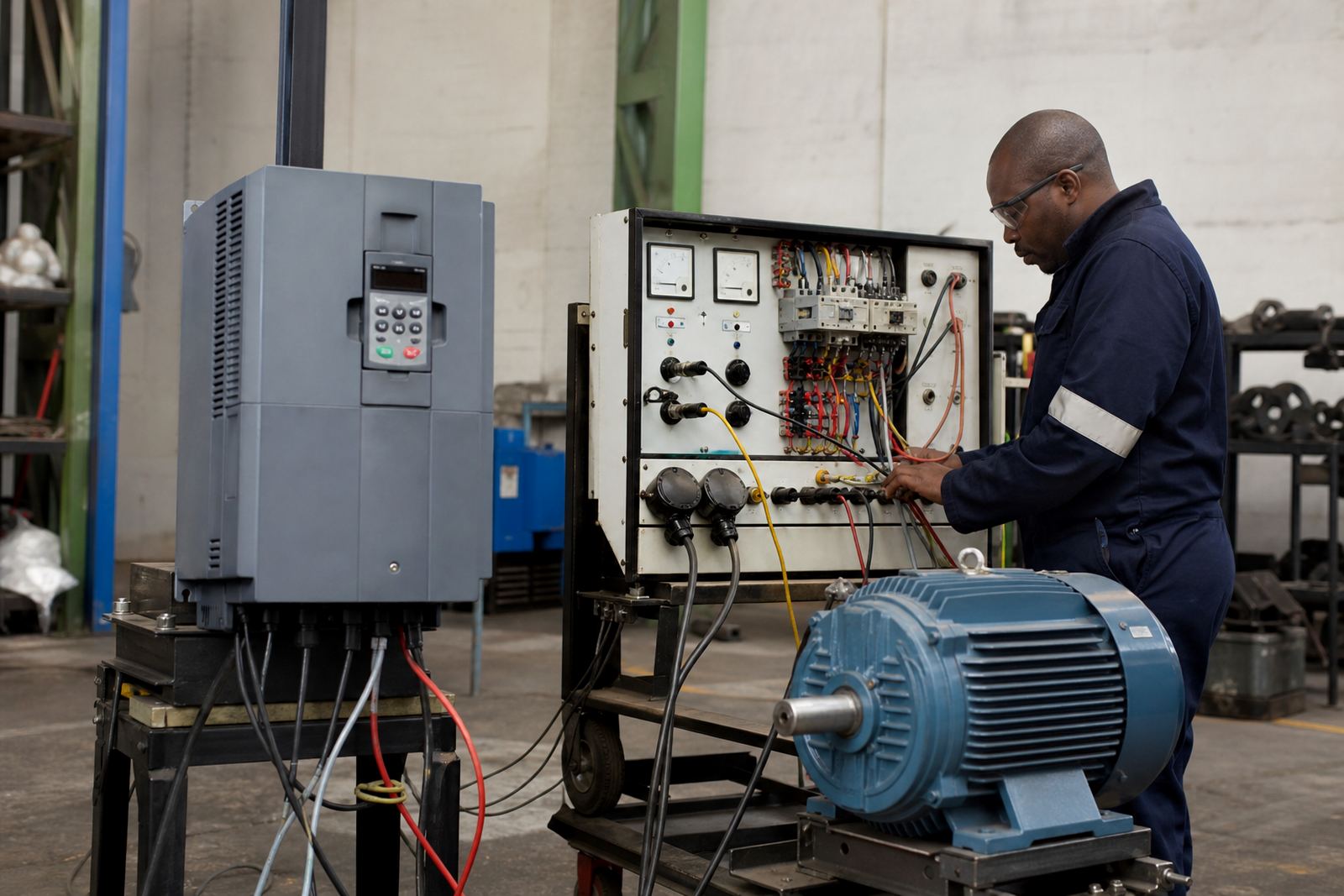
While the stator was open we replaced the worn bearings and checked the shaft and housing areas for fit. Bearing replacement is not just a parts swap, it has to be done with correct seating, alignment and cleanliness so the new bearings are not damaged at installation. We also completed insulation testing after the rewind and before final assembly, then verified the connection points and internal terminations. Electrical work on this kind of equipment must always be handled by qualified people following lockout procedures, because a motor that looks isolated can still carry risk if the site is not controlled properly.
- Motor rewind to suit industrial crusher duty
- Bearing replacement and fitment checks
- Post-rewind insulation testing
- Terminal inspection and internal connection verification
Week-by-Week Job Progress
The project ran over three weeks from receipt to dispatch. In week one we completed inspection, fault finding and strip down. That gave the client a clear view of what had failed and what could be reused. In week two the rewind, bearing work and cleaning were completed, including detailed checks on the stator core and end shields. Week three covered final electrical testing, run checks and preparation for reinstallation.
The client also wanted guidance on what to look at during the shutdown so the same fault would not return. We advised on cable checks, panel cleaning, drive inspection and site reporting around the crusher line. These practical steps are often overlooked when a motor fails, but they make a difference on sites where dust, vibration and load-shedding all put pressure on equipment. The motor was returned with the job notes needed for the maintenance team to track its condition going forward.
- Week 1: inspection, fault finding and strip down
- Week 2: rewind, bearing replacement and cleaning
- Week 3: testing, checks and dispatch preparation
Results for the Pretoria Plant
After the repair, the motor was ready for controlled refit and recommissioning by the site team. The main win was that the plant had a repaired unit that matched the duty it was originally built for, instead of trying to push a damaged motor back into service. The overload history had been addressed, the heat damage was dealt with and the insulation condition was brought back into a workable range for industrial use.
What the client valued most was having a clear written picture of the fault chain. Once you know whether the issue started with mechanical drag, electrical breakdown or a process overload problem, you can make a better call on the line itself. In many Pretoria plants the crusher is part of a wider production cycle, so even a small fault can stop conveyors, feeders and downstream machines. That is why a proper motor repair is part of the bigger production picture, not just a stand alone item.
- Motor returned fit for controlled recommissioning
- Overload and heat related damage addressed
- Clear fault record for maintenance planning
- Reduced risk of repeat failure from hidden winding damage
What We Would Do Again on Similar Jobs
If we saw this same fault pattern again, we would follow the same route: isolate the equipment properly, inspect the motor as received, test before and after strip down, then rebuild only once the true condition is understood. That approach saves time later because it avoids guesswork. It also gives the plant a proper basis for deciding whether the issue sits with the motor, the load or the control gear.
For crusher motors in Gauteng, especially where dust and high ambient temperatures are part of daily operation, we would also keep a close eye on ventilation, bearing condition and starting duty. If the unit is linked to a variable speed drive, we would inspect the drive settings and output condition as well, since drive faults can affect current draw and heating. The lesson from this Pretoria job is simple: when a motor shows repeated overload events and heat damage, do not keep pushing it. Take it out, test it, repair it properly and put it back under safe lockout control.
- Test first, then decide on rewind or repair
- Check bearings, cooling and load condition together
- Review drive settings where applicable
- Keep isolation and lockout procedures non-negotiable
Key facts
| Project | Pretoria crusher motor inspection and rewind |
|---|---|
| Client type | Industrial plant |
| Location | Pretoria, Gauteng |
| Main fault | Repeated overload trips with heat damage |
| Work completed | Fault finding, motor removal review, rewind, bearing replacement, insulation testing |
| Timeline | 3 weeks from inspection to dispatch preparation |