
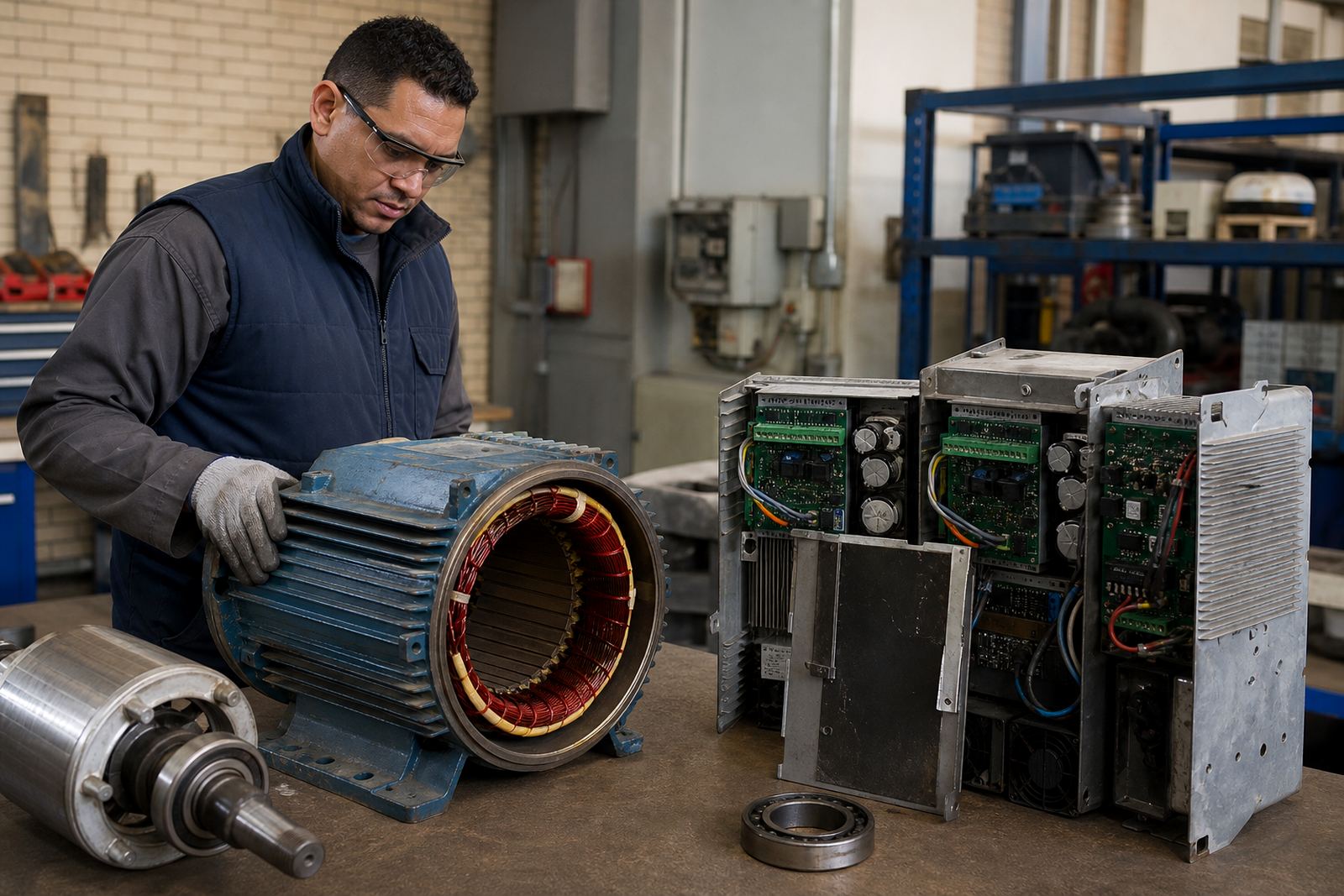

Midrand Pump Drive With Display Faults
A water utility contractor in Midrand called us in because a pump control drive was no longer behaving as it should. The unit had display issues, nuisance trips and unstable running on a critical pump set, which meant the client was dealing with interruptions to water movement and added pressure on plant staff.
The brief was clear. Find the cause, confirm whether the drive could be repaired, and get the system back into service without guessing. We treated the job as a controlled electrical task, with the drive isolated, locked out and checked by qualified people only. On any motor or drive system that sits in a wet utility environment, that discipline is not optional.
What The Site Conditions Demanded
The drive was installed in a working plant area with limited downtime windows and practical access issues around the panel room. The client needed help that respected the site schedule, because shutting down a pump circuit for too long can affect storage levels, pumping cycles and the rest of the network.
- Drive used on pump control duties in a municipal type water application
- Fault present on the display and during start up under load
- Site work had to fit into a short planned outage
- Panel area required clean handling because dust and loose conductors can cause more trouble later
We also had to work carefully around the condition of the surrounding installation. In these rooms, cable terminations, earthing and panel cleanliness matter just as much as the main drive fault. A loose lug or contaminated board can create intermittent trips that are hard to pin down.
Our Inspection And Repair Steps
Once the unit was removed and assessed, we carried out a structured inspection of the drive assembly and related components. That included visual checks, board level review, internal cleaning and testing of the main power and control sections. We also checked for signs of heat stress, capacitor condition, contaminated terminals and any evidence of moisture ingress.
- Drive inspection and internal cleaning
- Panel cleaning and cable checks
- Fault finding on display and trip behaviour
- Spare part assessment before repair work continued
Where a drive has display faults, the cause may sit in the control supply, the interface board or the power stage. In this case the trouble was not just one thing, so the repair had to be methodical. We verified the likely failure points, made the necessary repairs and rechecked the unit rather than relying on a quick reset. That saves time later because the same fault often comes back if the underlying issue is missed.
Testing Before Return To Service
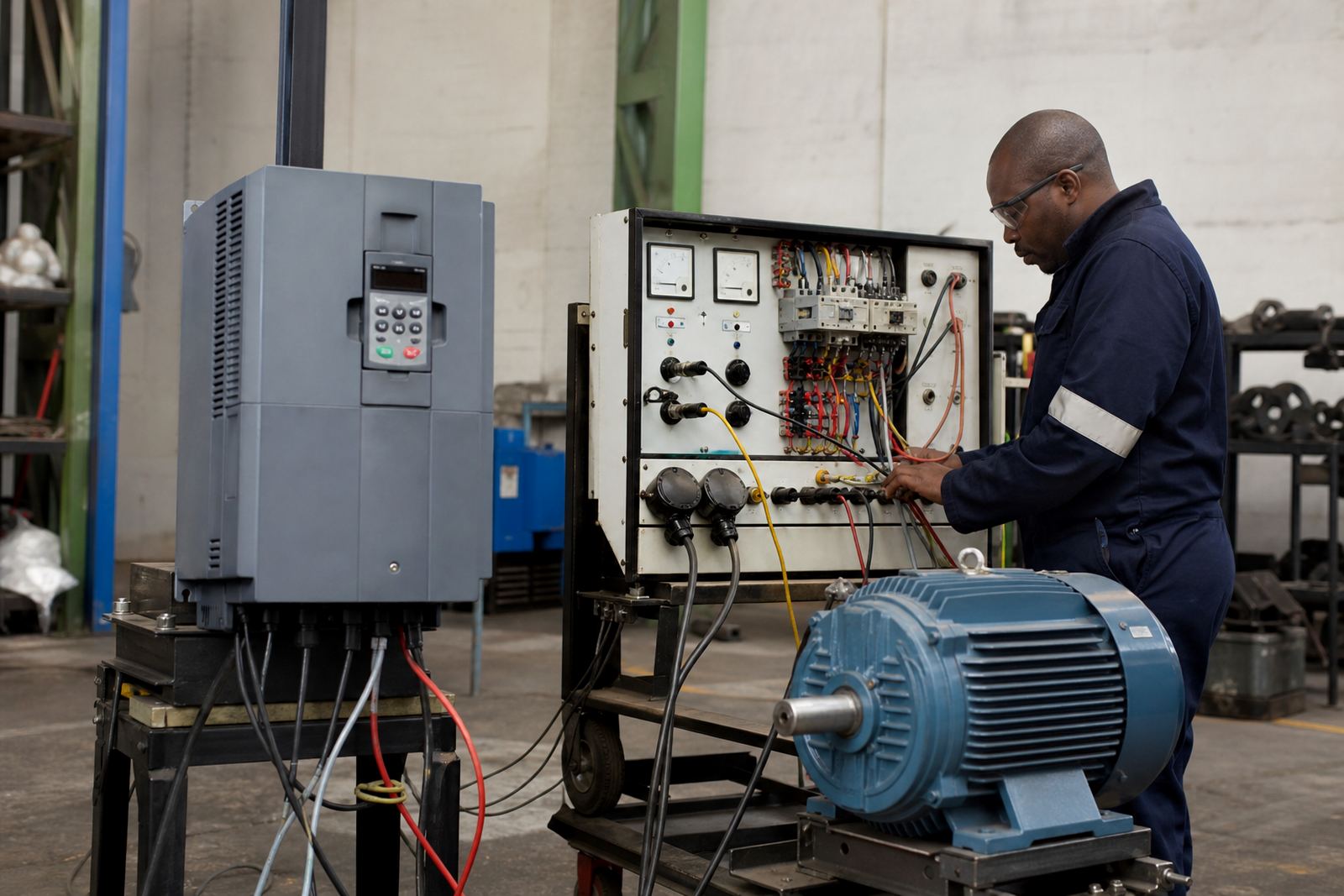
After repair, the drive was tested again under controlled conditions. The aim was to confirm clean display function, proper response to commands and stable operation through the expected load range. We also reviewed the associated motor connections and confirmed that the control side was not introducing new fault behaviour.
Electrical work on a live utility site must be handled by qualified people with proper lockout procedures. We kept the process practical and documented, because when a pump drive is part of a larger water system the handover needs to be clear for the next shift and for maintenance records.
- Insulation testing was considered where cable and motor condition needed confirmation
- Alignment checks were reviewed against the pump set arrangement
- Commissioning support was provided during re start
- Site reporting was prepared for the contractor's records
Timeline And Project Flow
The repair ran over a short measured timeline of about two weeks from first contact to return to service. The first phase covered fault finding and removal coordination, the second covered repair and verification, and the final phase covered refit support and testing at site. Because the client needed continuity, we kept the communication direct and the steps practical.
For a project like this, the exact sequence matters. First you confirm the fault. Then you decide whether the unit can be repaired safely and sensibly. After that comes the testing and reinstallation plan. Rushing straight to power up is how repeat trips happen, and nobody in water treatment wants that on a Monday morning.
What The Client Got Back
The repaired drive went back into service with the display operating normally and the trip issue addressed. The pump control function was restored to a stable working condition, which reduced the pressure on the plant team and helped the contractor move the job forward without replacing the whole unit unnecessarily.
We would approach the next similar call in the same way: isolate properly, inspect the full system, verify the motor and cabling condition, repair the drive if that is the sensible route and only then recommission. That approach is plain, but it works. It also gives the client a better chance of catching a small fault before it turns into a failed pump run or a costly shutdown.
- Drive display fault resolved through structured repair
- Trip behaviour reviewed and corrected
- Panel and cable condition checked before return
- Practical handover completed for site staff
Key facts
| Project | Midrand Water Drive |
|---|---|
| Client type | Water utility contractor |
| Location | Midrand, Gauteng |
| Equipment | Pump control variable speed drive |
| Issue | Display fault and repeated trips |
| Project duration | About 2 weeks |