Pinetown Extruder Drive Fault Under Load
A processing plant in Pinetown asked us to look at an extruder drive that would run for a while, then fault during acceleration or speed changes. The machine was part of a production line, so the team needed the drive checked properly before more damage spread to the motor, gearbox, cable run or control panel. The fault only showed itself under load which made it harder to pin down, and that is exactly the kind of issue that needs methodical testing rather than quick resets.
The drive was handling a three-phase motor on a line that had regular start-stop cycles, plus changes in output demand during a shift. In that type of duty, heat, dust, vibration and unstable supply conditions can all play a part. We looked at the drive as part of the full system, not on its own, because a fault that appears in a speed change can come from power quality, a motor problem, loose terminations, a cooling issue or a failed component inside the unit.
What The Client Needed Us To Check
The brief was to inspect the drive, confirm why the faults were appearing and decide whether repair was practical. The site also needed clear feedback on any risk to the motor and whether the cabinet needed cleaning, re-termination or cable checks before the line was returned to service. Because the machine supported production, the client wanted a controlled approach that did not create extra downtime.
- Intermittent faults during speed changes under load
- Drive inspection and fault finding on site
- Motor and cable condition checks where access allowed
- Advice on safe restart and commissioning steps
- Clear reporting for the maintenance team
There was one important constraint. Electrical work on industrial plant must only be done by qualified people, with proper lockout and isolation procedures in place before any cover is removed or any test work begins. That matters on extruder lines because stored energy, hot surfaces and moving parts can create serious risk if a machine is not made safe first.
How We Carried Out The Assessment
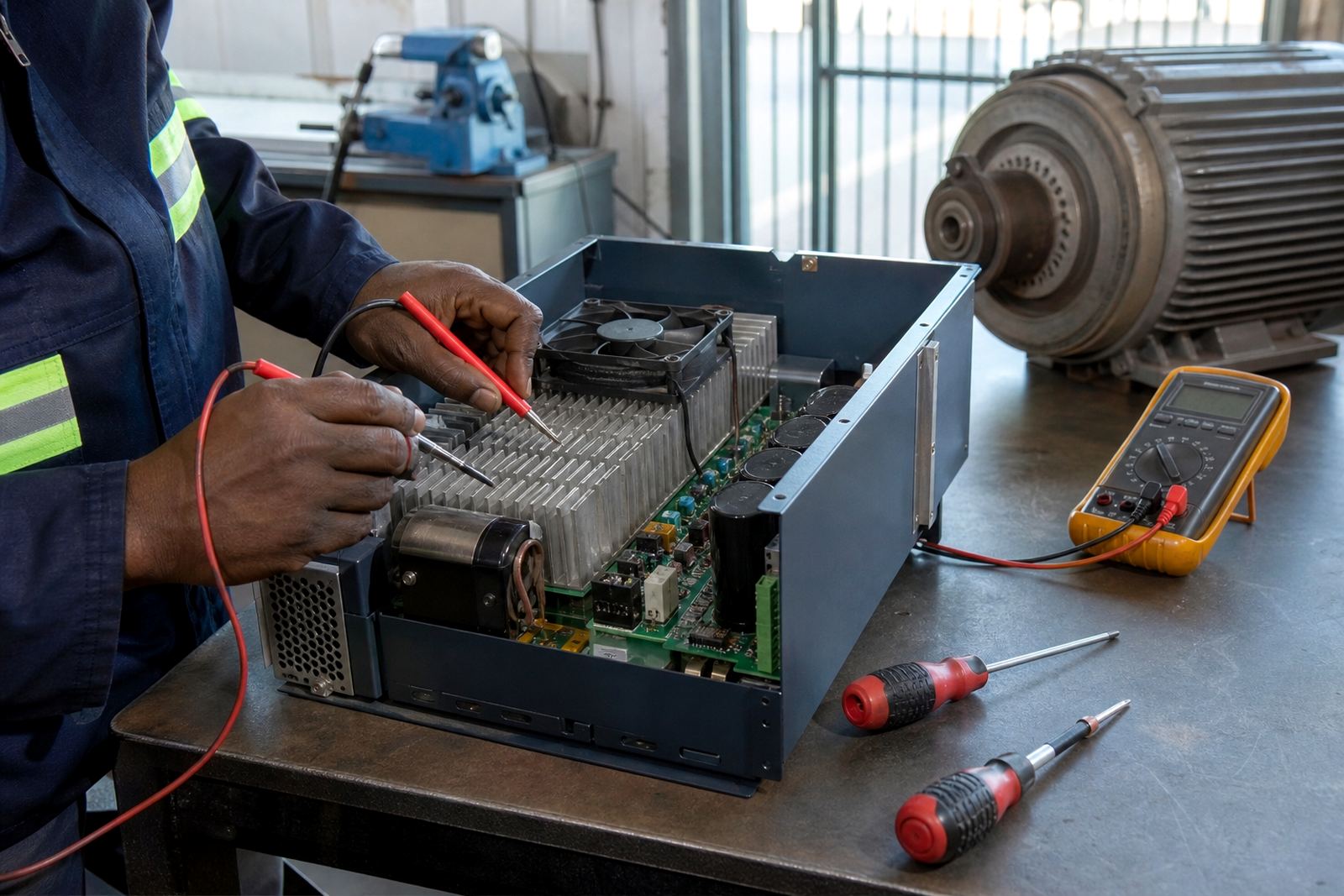
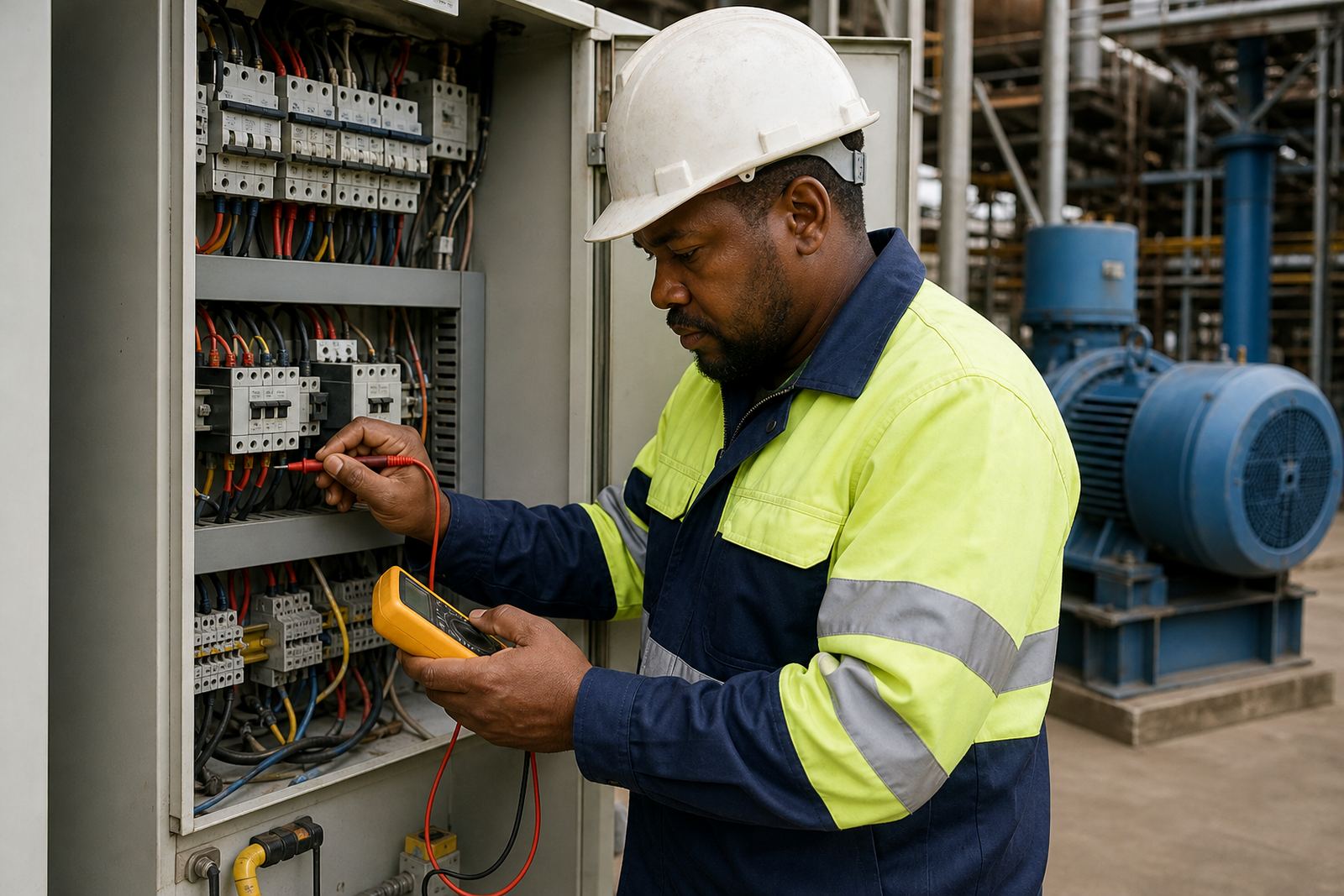
We started with a visual inspection of the drive and its surrounding panel area, looking for signs of heat discolouration, dust build-up, loose terminations, damaged glands and any signs of moisture ingress. Then we checked the incoming supply and the output side, because an intermittent drive fault can come from either end. We also reviewed the cooling path, as blocked airflow and hot ambient conditions in a workshop or plant room can cause a drive to misbehave during heavier loading.
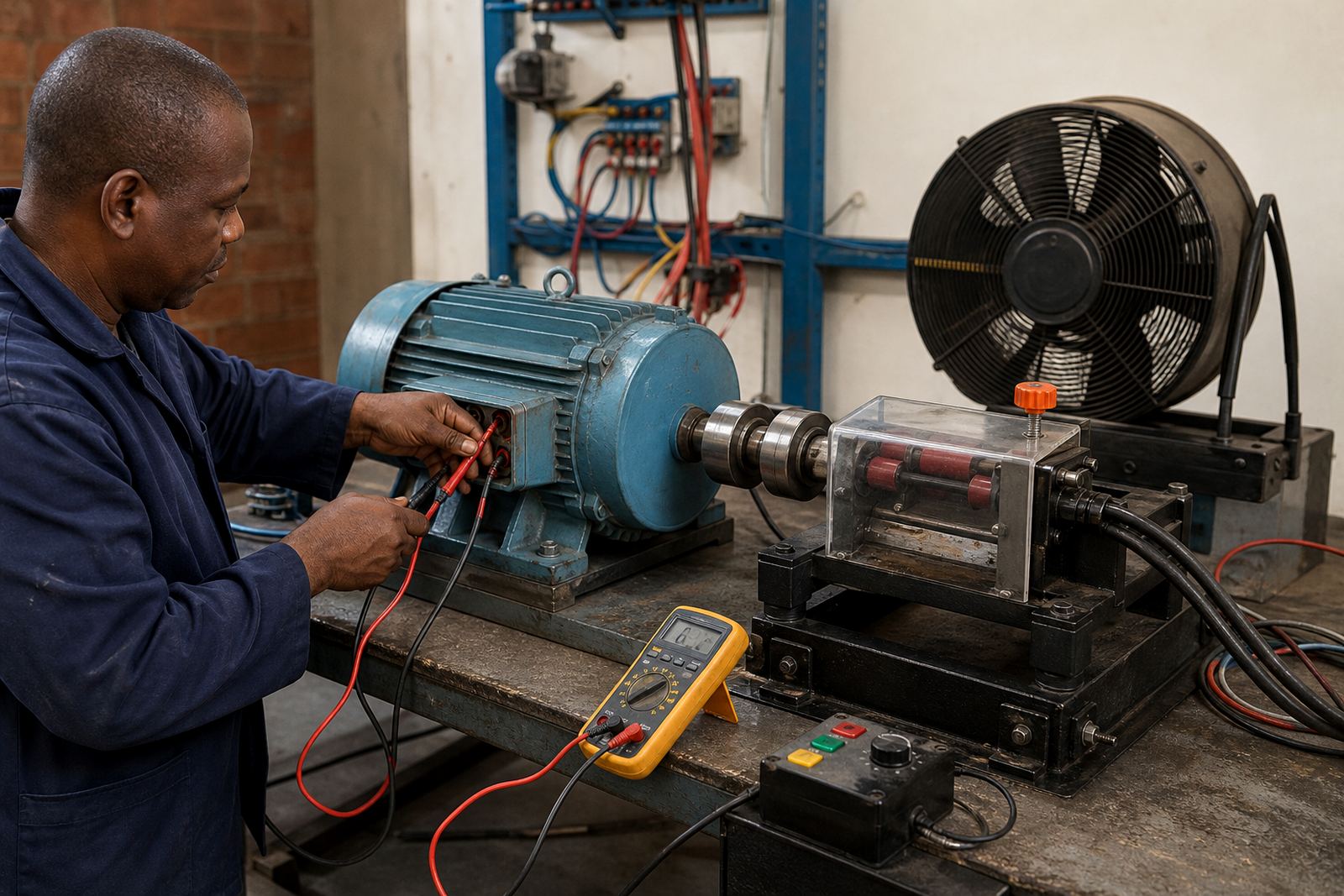
The unit was then tested in a controlled way. We checked the drive settings, confirmed the motor details against the application, and looked at the operating pattern that triggered the issue. Where the site setup allowed, we also included insulation testing on the motor circuit and basic cable checks to rule out a developing earth fault or damaged winding connection. If a drive is being asked to ramp up or slow down too quickly for the load, the problem can look electrical even when the root cause is in the application settings.
- Drive inspection and internal fault review
- Panel cleaning and terminal checks
- Insulation testing on the motor circuit
- Cable checks and termination review
- Parameter review for acceleration and deceleration
- Site reporting with practical next steps
Repair Work And Parts Assessment
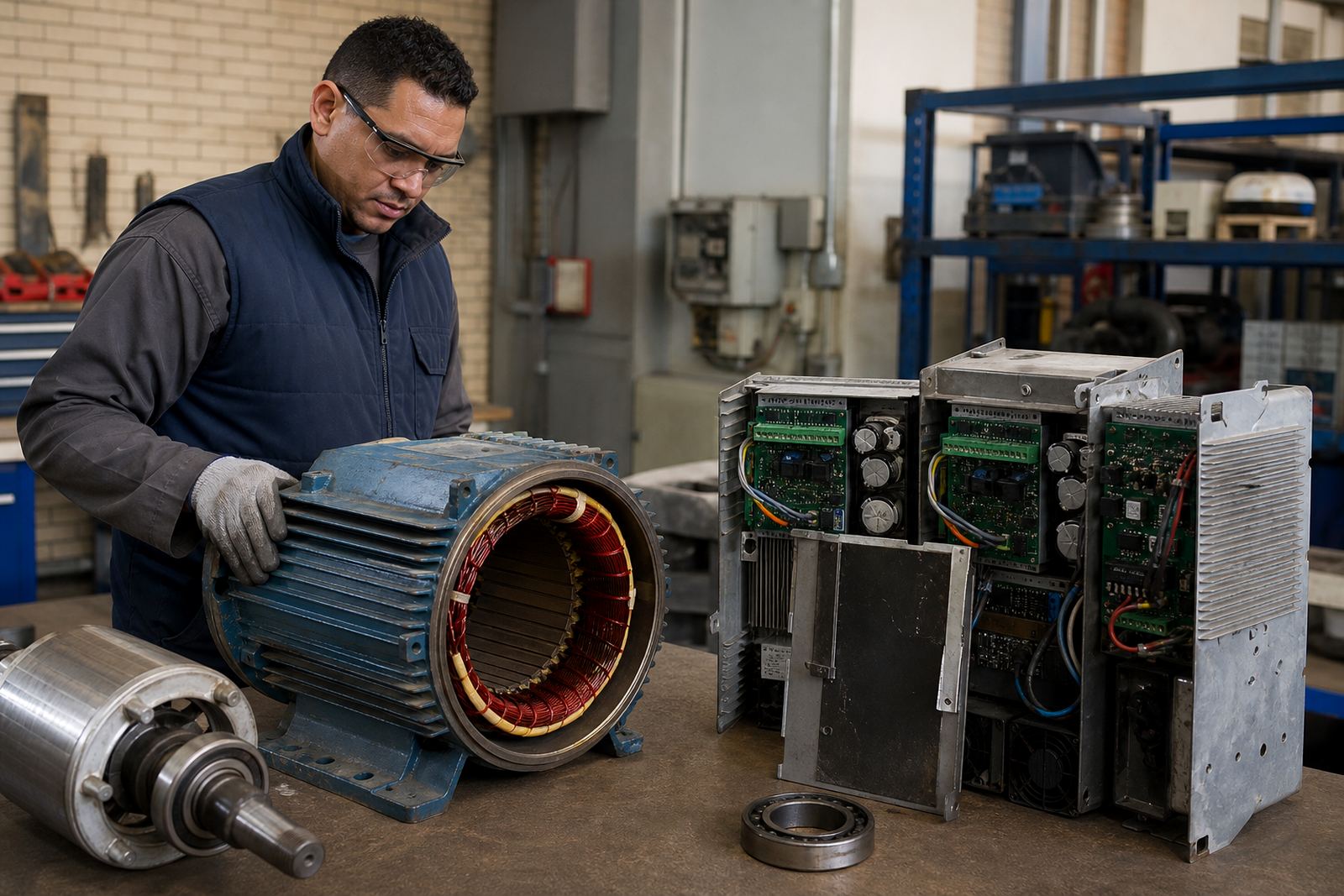
Once we had narrowed down the fault, we carried out the required repair work on the drive and checked the associated components that could influence the problem. On industrial drives, a fault during speed change can be linked to worn capacitors, failed power devices, damaged control circuits, fan issues or poor connections. We do not assume the failure point, we test it. That approach keeps the repair focused and avoids replacing parts that are still serviceable.
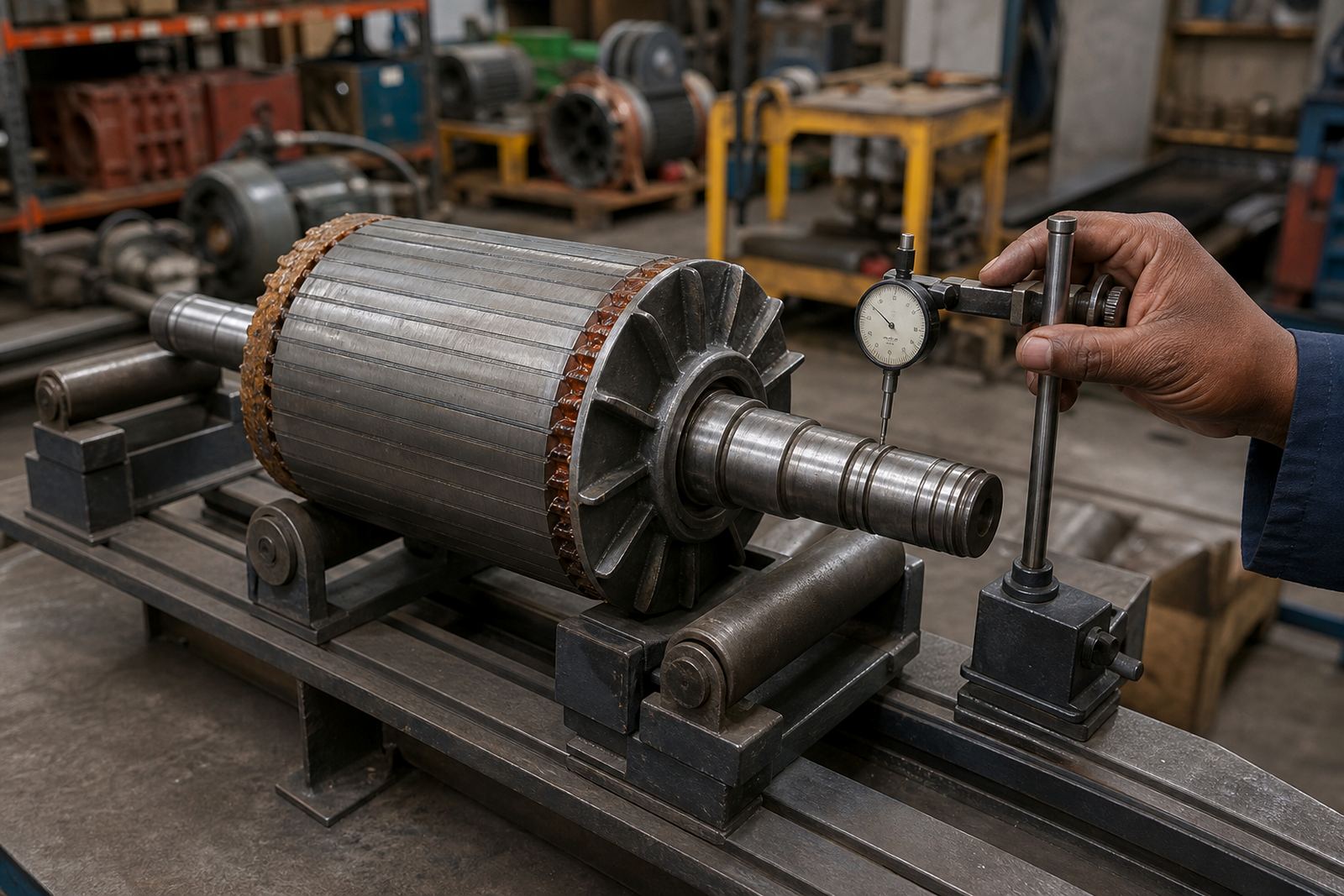
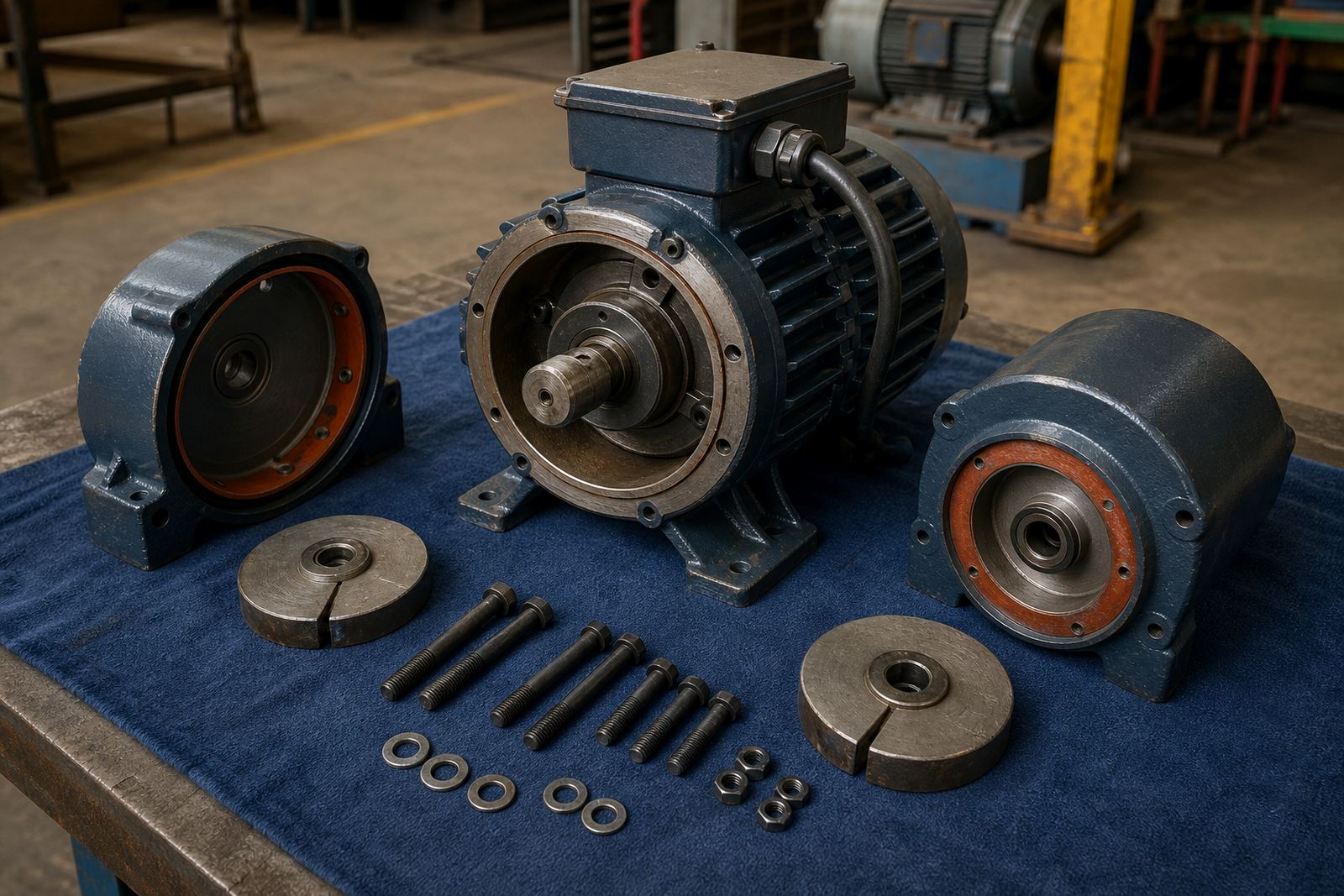
We also reviewed the motor condition because an overworked or partially damaged motor can place extra strain on the drive. In extruder applications, bearings are often worth checking too. A bearing starting to fail can increase load, create vibration and affect current draw. If bearing noise, play or contamination is found, bearing replacement is often the better answer than waiting for a breakdown. The same goes for insulation values that are drifting out of range. Catching that early can save the winding from further stress.
As part of the service, we assessed the need for any spares before recommissioning, including replacement terminals, cooling fans, contactor items or cable accessories where needed. The aim was not to add parts for the sake of it, but to return the system in a condition the maintenance team could trust.
Timeline And Return To Production
The job was handled over a short, planned timeline of two weeks from assessment to final handover. That included inspection, testing, fault confirmation, repair work, follow-up checks and site reporting. For a line that depends on stable speed control, a careful two-week process is often better than a rushed same-day guess, especially when the machine is feeding a production schedule and the plant wants certainty before full load is restored.
After repair, the drive was tested through changing speed points and load conditions to confirm that the earlier fault no longer appeared. We also verified the start-up behaviour, stopping response and stability at working speeds. The final step was to leave the client with practical notes for the maintenance team so they knew what had been checked and what to monitor in the short term.
- Intermittent fault no longer appeared during speed change tests
- Drive response was stable through the operating range
- Panel condition improved after cleaning and checks
- Maintenance team received a clear site report
What We Would Repeat On The Next Similar Job
If we were called to another extruder drive in Pinetown, Durban or anywhere else in South Africa with the same symptoms, we would follow the same order: isolate safely, inspect the full circuit, test the motor and cable path, review the drive settings, then repair the actual fault rather than the likely one. That method works because intermittent drive issues usually sit at the edge of several small problems, not one obvious failure.
We would also repeat the same practical checks around ventilation, dust, terminations and motor condition. In coastal or humid areas, moisture can change insulation values and make faults appear only when the machine heats up. In inland plants, dust and load-shedding recovery can create different stress points. Either way, the basics remain the same: safe isolation, proper testing and clear reporting. That is the sort of work our team in Germiston handles for plants and workshops across Johannesburg, Ekurhuleni, Pretoria, Vereeniging and Durban.
For maintenance teams, the biggest value is not just repair but knowing why the fault happened and what to watch next time. That is how a drive service becomes a useful part of the plant’s planned maintenance, rather than a one-off fix.
Key facts
| Project | Pinetown extruder drive repair |
|---|---|
| Client type | Industrial processing plant |
| Fault | Intermittent fault during speed changes under load |
| Work included | Drive inspection, fault finding, insulation testing, cable checks, repair |
| Timeline | 2 weeks |
| Service area | Pinetown, KwaZulu-Natal |