

Conveyor Drive Trouble in Alrode
The factory was running a conveyor line that had to start, stop and hold speed throughout the shift, and the drive faults were becoming hard to pin down. Trips were not constant, which meant the fault could disappear during a quick look and then show up again under load, after warm-up, or when the line started with a heavier product load.
The brief was to find the cause of the intermittent trips, inspect the drive and related field wiring, and get the conveyor back into service without cutting corners. Because electrical work must always be done by qualified people using lockout procedures, we treated the unit as a controlled repair job from the first visit. That meant proper isolation, checks for stored energy, and a clear record of what had been tested before anything was opened further.
The plant needed a practical answer, not guesswork. We looked at the drive history, the condition of the panel, the motor cable, the conveyor loading pattern and the site conditions around the installation. In a factory setting, a loose termination, dust buildup, heat, poor earthing or a motor that is starting to break down can all trigger the same symptom, so the process has to be methodical.
What We Found During The First Inspection
The first inspection focused on the drive itself, the incoming supply, control wiring and the motor side of the circuit. The unit was showing signs that it had been operating in a warm, dusty environment, and the panel needed a proper clean as well as testing. There were also indicators that the conveyor had been working under a changing mechanical load, which can expose weak points in both the drive and the motor circuit.
We checked for loose terminals, signs of heat stress, damaged insulation, fan condition, contamination on the heatsink area and any abnormal readings that might suggest motor or cable trouble. We also looked at the settings that affect acceleration, deceleration and overload response. On a conveyor, these values matter because a settings mismatch can cause nuisance trips even where the hardware is still sound.
- Intermittent trip complaint under normal conveyor operation
- Factory environment with dust and heat around the drive panel
- Need for safe lockout and controlled testing before work continued
- Possible causes included wiring, load variation, motor condition and drive electronics
At this stage it was clear that the fault could not be solved by a quick reset alone. The drive needed a proper inspection on the bench and the motor side had to be checked as part of the full circuit, because the symptoms could point to more than one issue at once.
Repair Work On The Drive And Motor Circuit
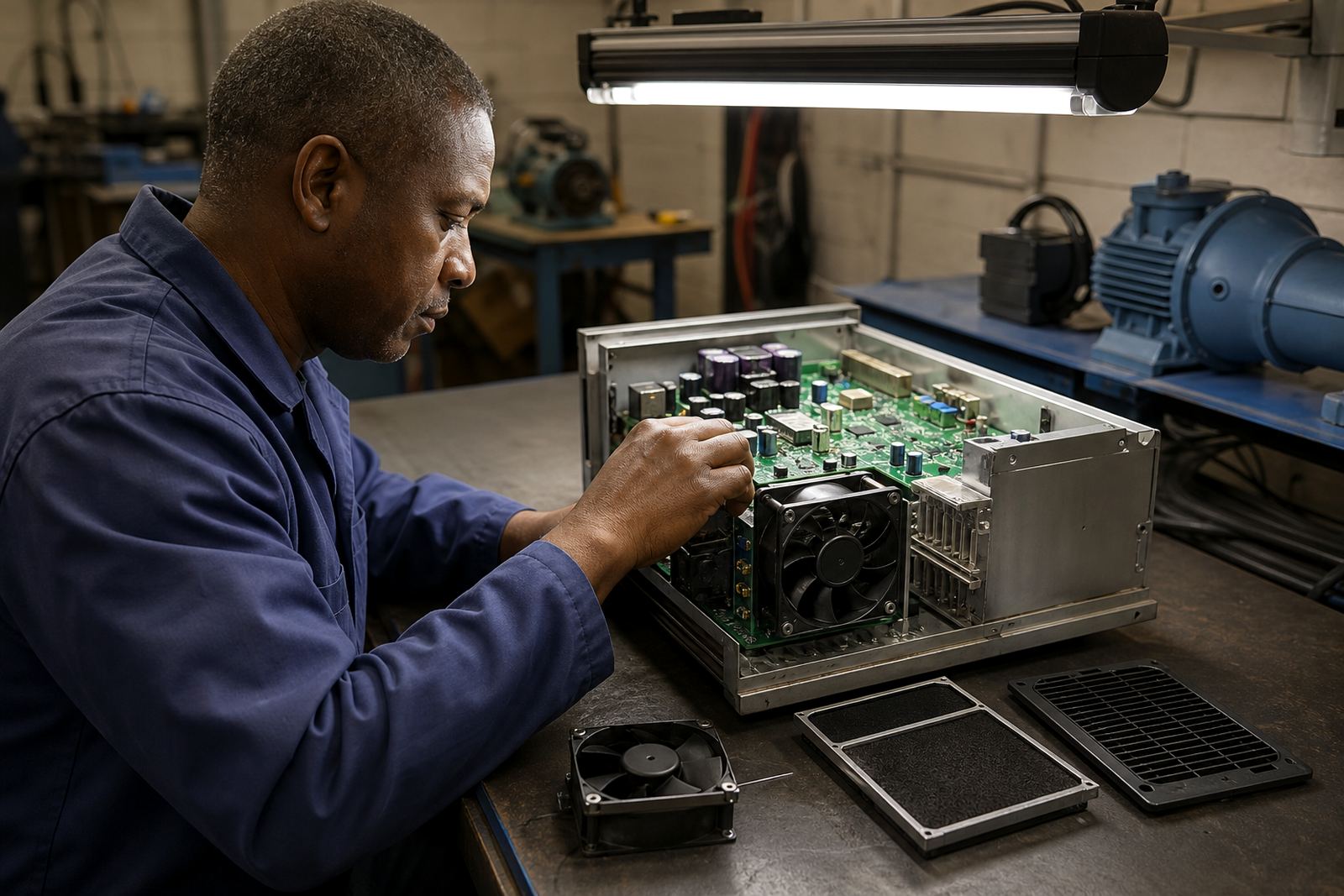
We removed the drive for bench inspection and carried out the repair process in stages. The internal condition was checked carefully, including the power section, control board area, cooling path and any parts affected by heat or contamination. Where a component has failed or drifted out of specification, the only sensible route is to repair it properly and then verify the result under controlled conditions.
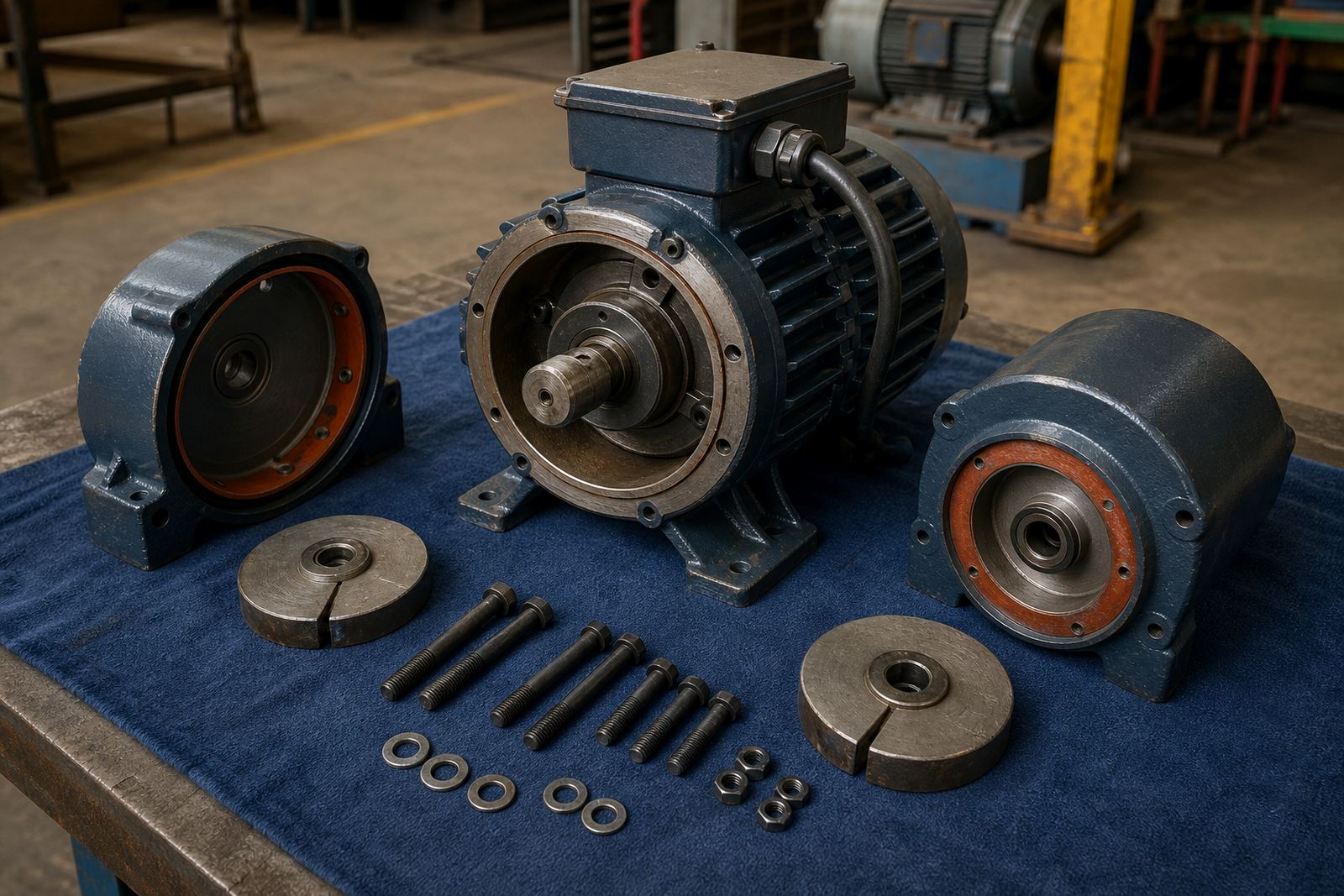
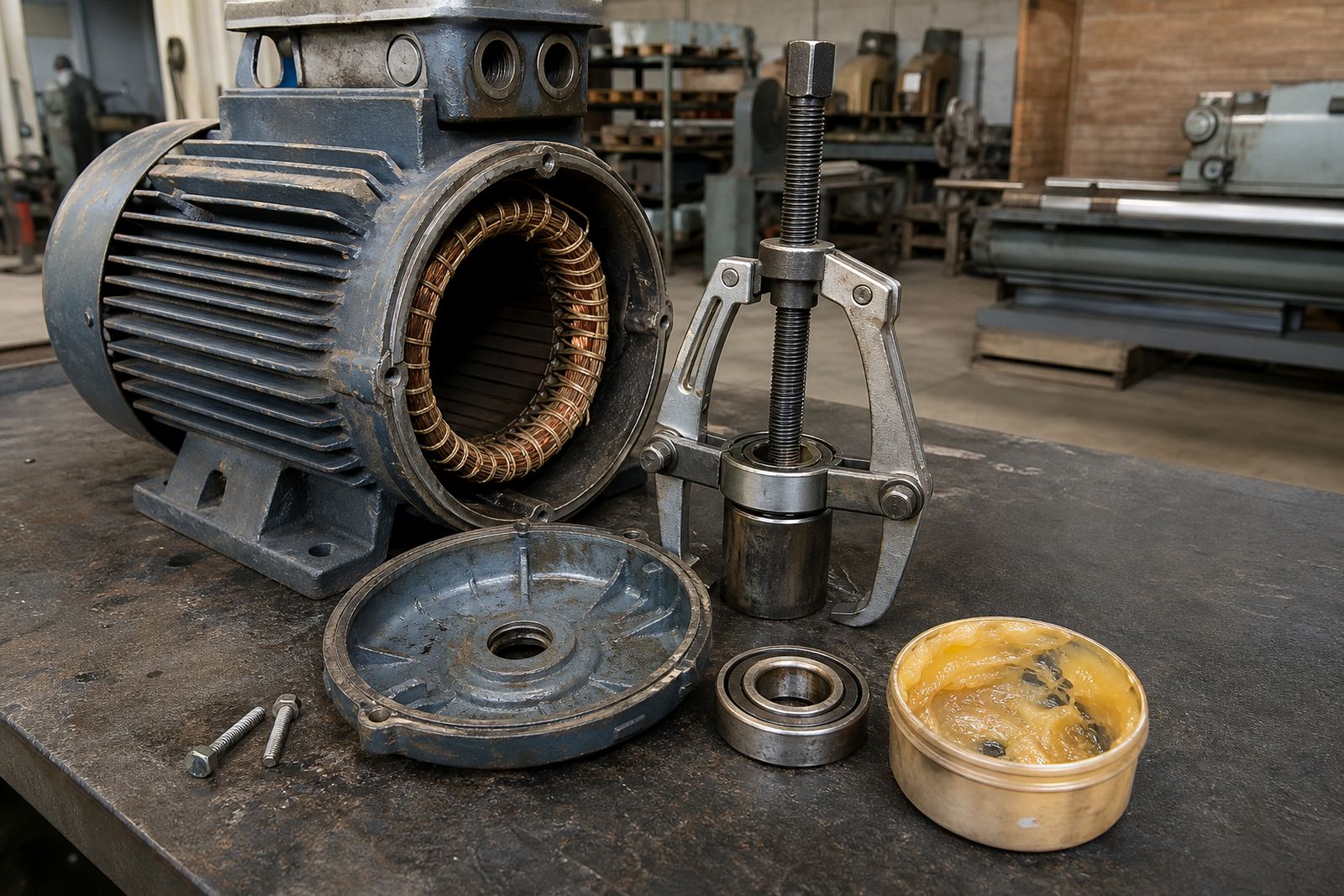
On site, we carried out motor and cable checks, insulation testing and continuity testing so that the drive would not be returned into a fault that had simply been hidden. We also inspected the conveyor motor mounting and alignment points, since mechanical strain can place extra load on the drive and lead to repeated trips. Bearing checks were included too, because worn bearings can increase current draw and make a drive work harder than it should.
- Drive removed and inspected on the bench
- Insulation testing completed on the motor circuit
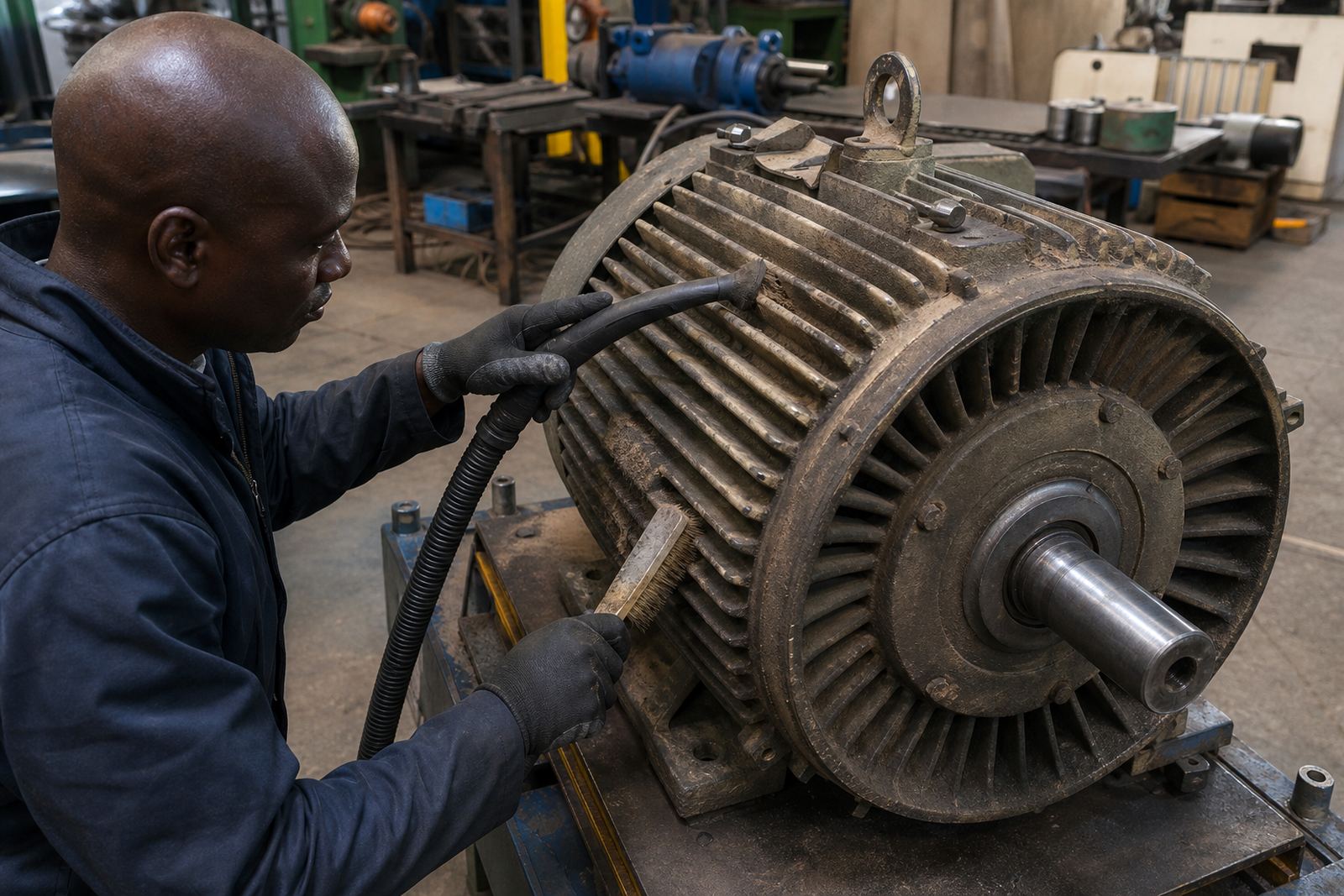
- Panel cleaned and loose dust removed from sensitive areas
- Termination points checked and resecured where required
- Mechanical loading and alignment risks reviewed on site
For any industrial electrical system, the aim is not only to get the machine running again but to leave it in a state that can hold up in daily use. That means looking at the whole loop from supply to motor, and not stopping at the first visible issue.
Shutdown Planning And Site Constraints
The work had to fit around production timing, which is common in Alrode and across Gauteng where many sites run long shifts and cannot afford unnecessary downtime. The customer needed the conveyor available again without disrupting the rest of the plant more than necessary. We therefore planned the work in stages so that testing, removal, repair and return to service could be handled in a controlled sequence.
There were practical constraints too. The panel area had limited space, the environment was not clean, and the drive sat in a location where heat buildup could become a factor. We also had to consider the broader site condition, including load-shedding risk and the need to confirm the system came back correctly after a supply interruption. In these situations a careful shutdown plan saves time later because it reduces repeat faults and unnecessary strip-downs.
Our approach included site reporting so the maintenance team could see exactly what had been done and why. That record helps when the same conveyor is reviewed again in a few months, because it gives the next technician a proper starting point instead of a guess.
Timeline And Return To Service
The project was completed over two weeks from first fault finding to final recommissioning. The first week covered inspection, safe isolation, removal and bench work. The second week covered reinstallation, checks under load, and final monitoring while the conveyor resumed normal duties.
Before handover we verified that the drive started correctly, responded to control signals as expected and held stable operation through repeated cycles. We also checked the panel for abnormal heat and confirmed that the motor circuit readings remained within acceptable condition after the repair. Once everything was proven, the conveyor was returned to service with the fault notes and findings handed over to the client team.
- Week 1: fault finding, isolation, removal and bench inspection
- Week 2: repair completion, refit, testing and recommissioning
- Final checks completed under operating conditions
- Site reporting handed over for maintenance records
The important result was stability. Instead of repeated unexplained trips, the conveyor was running as intended and the maintenance team had a clearer picture of the electrical and mechanical condition of the system.
What We Would Repeat On The Next Job
If we were called to a similar conveyor drive job again, we would follow the same sequence. Start with safe isolation, inspect the full circuit, confirm the motor condition, clean the panel, verify the settings and only then return the unit to service. That process suits sites in Germiston, Johannesburg, Ekurhuleni, Pretoria, Vereeniging and Durban where industrial equipment has to cope with dust, heat, vibration and everyday wear.
For clients, the value is in a repair that is methodical and practical. Electrical and drive work should always be handled by qualified people, with lockout in place and proper testing before power is restored. That keeps staff safer and gives the equipment a better chance of holding up after the repair. It also avoids the kind of repeated shutdowns that waste a shift and put pressure on the whole plant.
Locor continues to support plants and workshops with electric motor rewinding, bearing replacement, insulation testing, variable speed drive repair, alignment checks, commissioning support, panel cleaning, cable checks and site reporting. From Germiston, the team works across South Africa and handles the details that matter when a conveyor has to run reliably again.
Key facts
| Project | Conveyor variable speed drive fault finding and repair |
|---|---|
| Site location | Alrode, Gauteng |
| Client type | Factory with conveyor production line |
| Main issue | Intermittent trips on a conveyor drive |
| Timeline | 2 weeks |
| Core work | Drive inspection, insulation testing, bearing checks, panel cleaning, recommissioning |
| Service area | Germiston, Johannesburg, Ekurhuleni, Pretoria, Vereeniging and Durban |