

What a Spares Assessment Covers
A spares assessment is a practical review of the parts that are likely to fail, wear out or need attention during motor and drive repairs. On site, we look at the condition of bearings, seals, terminal boxes, fans, couplings, mounting parts, cabling and drive components, then note what can be reused and what should be replaced. This helps you avoid ordering the wrong items or opening a motor twice because a small part was missed.
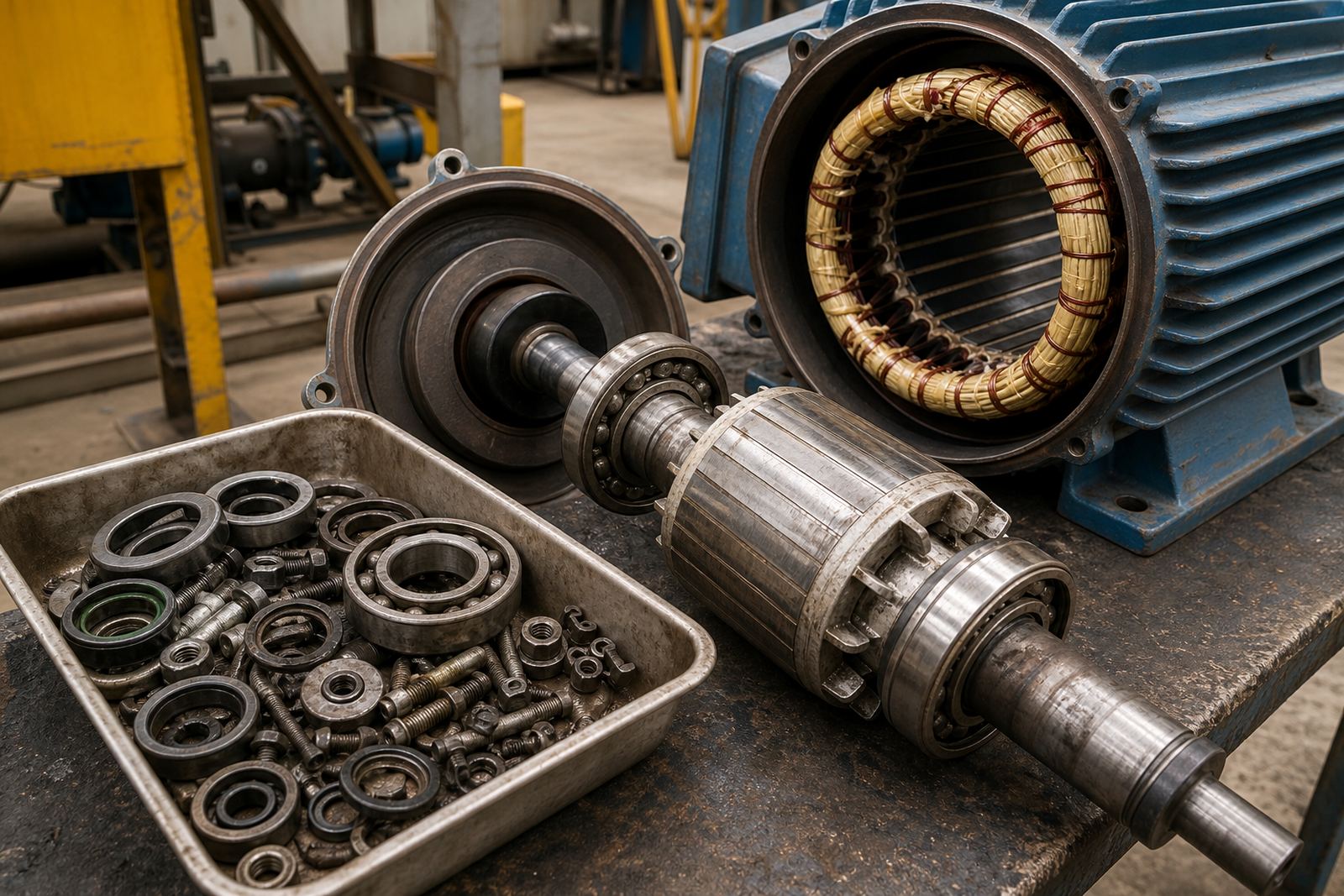
For electric motors, the assessment often includes checking bearing fit, signs of overheating, grease condition, shaft wear, insulation condition and any damage that points to contamination or vibration. For drives, we look at visible board damage, cooling fan wear, terminals, capacitors where relevant and signs of dust, heat or moisture ingress. In coastal areas like Durban, humidity can shorten the life of small parts fast, while in dusty industrial sites around Germiston and Boksburg the issue is often contamination and blocked cooling paths.
How We Assess Parts On Site
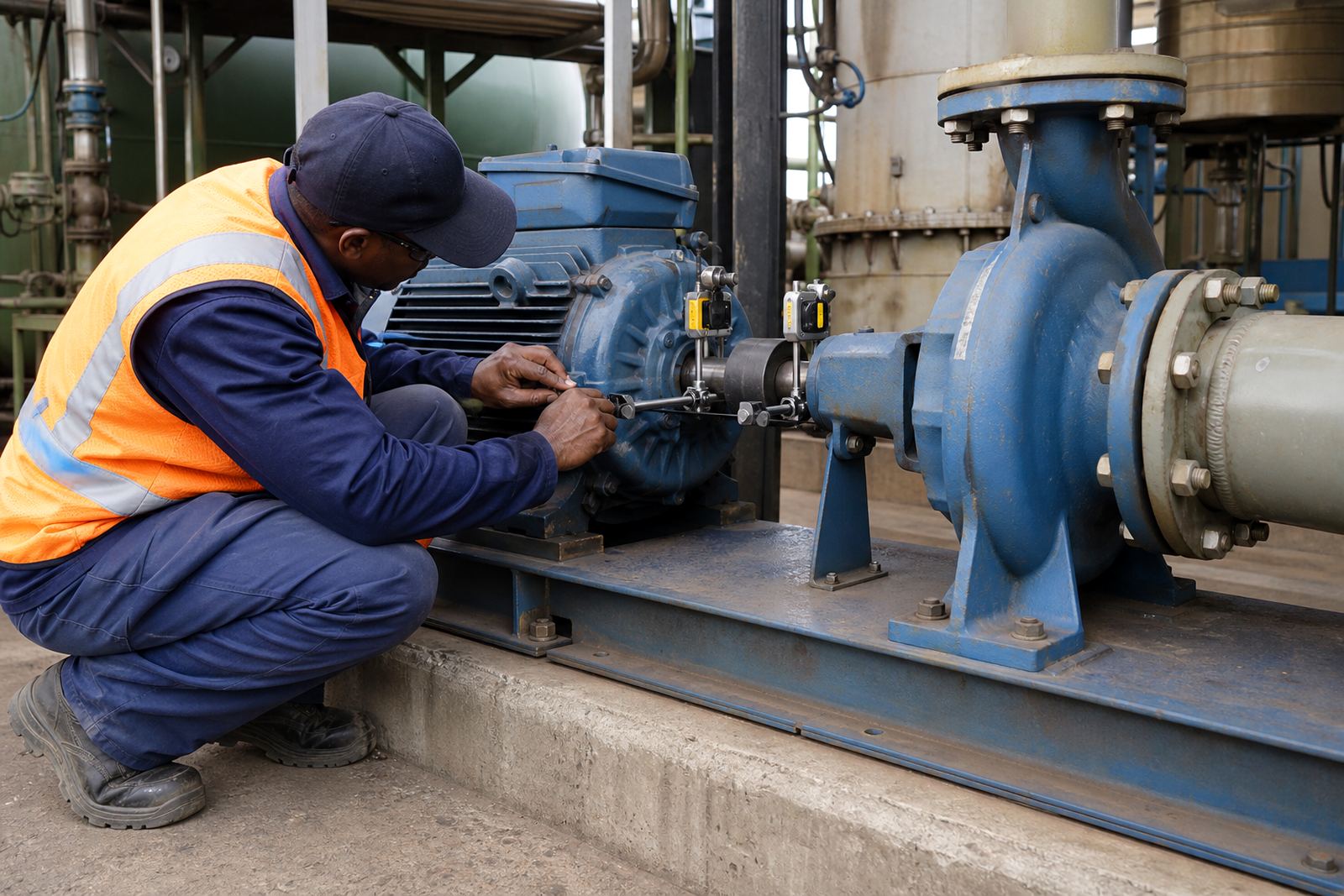
The process starts with a site visit or a clear fault history from your maintenance team. We identify the machine, note the rated kilowatt, voltage, frame size, duty cycle and mounting arrangement, then compare the likely repair scope against the spares you already hold. If the unit is already isolated, lockout procedures must be followed and only qualified people should work on electrical equipment.
Our team then records the parts that need closer workshop inspection, parts that are beyond practical repair, and items that should be kept as stock for the next shutdown. That might include bearing numbers, seals, gaskets, fan blades, drive cooling fans, terminal hardware, contactors, relays or control accessories. Where possible we help you separate urgent items from nice-to-have spares so the job stays manageable.
- Identification of motor and drive model details
- Visual inspection of wear, heat and contamination
- Review of likely replacement parts and labour steps
- Simple stock check against what is already on site
- Written summary for planning and procurement
What Comes Out of the Assessment
After the assessment, you receive a practical summary that can be used by maintenance, production and procurement teams. It shows which components are required immediately, which can be ordered for future planned work, and which items are worth keeping as emergency spares. We also flag parts that are not safe to reuse, such as bearings with play, overheated insulation, cracked terminal parts or boards showing heat staining.
This approach is useful for sites that run during load-shedding, because the real risk is often not a total failure but repeated starts, voltage dips and hot restarts that damage motors and drives over time. A clear spares plan lets you prepare before the next shutdown, and it keeps workshop work tidy instead of rushed. It also helps on older machines where the exact part may need to be matched by dimensions rather than a simple part number.
Turnaround, Shutdown Planning and Workshop Flow
Turnaround depends on the number of machines, access to the plant and whether the equipment can be inspected on site or needs to come into the workshop. A single motor or drive can usually be assessed quickly, while a full plant review with several machines takes longer because each unit must be traced, checked and recorded properly. We work around shutdown windows where possible and can help sequence the work so critical machines are handled first.
For clients in Pretoria, Vereeniging, Johannesburg and Ekurhuleni, this planning is especially useful when equipment is spread across multiple lines or depots. If a unit is already stripped, we can assess the parts list alongside bearing checks, insulation testing and alignment needs. That way the repair scope is clear before any ordering starts, and there is less chance of down time caused by missing one small part.
How Pricing Is Approached
Pricing for spares assessment is based on the size of the job, the number of units to be reviewed, travel distance and whether the work is done on site or in conjunction with workshop inspection. We do not quote blind on a motor or drive that has not been seen. A proper assessment gives a more accurate picture of what can be repaired, what must be replaced and what can wait until the next planned stoppage.
For many plants, the most economical approach is to combine spares assessment with fault finding, bearing checks or drive inspection in one visit. That reduces repeat call-outs and gives your team one clear list to work from. It also helps avoid buying parts that will not fit, which is a common cause of wasted spend when older equipment is involved.
Maintenance Intervals and When to Recheck
There is no single interval that suits every site, but spares should be reviewed whenever equipment is running hotter than normal, showing bearing noise, tripping on start-up, or being used in a dirty, wet or vibration-heavy area. Sites with multiple shift patterns, frequent starts and stops, or exposure to dust and moisture should recheck key parts more often. If a motor is used on a critical line, it is worth keeping a current record rather than waiting for failure.
As a guide, recheck motors and drives before major shutdowns, after repeated electrical faults, and after any event such as flooding, overheating or contamination from washdown. In coastal or chemical environments, insulation and bearing condition can change faster than expected, so a fixed calendar alone is not enough. The best practice is to inspect, record and update the spares list while the equipment is still usable.
- Before annual shutdowns or planned overhauls
- After repeated nuisance trips or overheating
- When a motor has bearing noise or shaft play
- After moisture, dust or chemical exposure
- When drive cooling or control parts are aging
Key facts
| Service type | Onsite spares assessment for electric motors and variable speed drives |
|---|---|
| Typical equipment | Industrial motors, drives, panels, cooling parts, bearings and related fittings |
| Assessment output | Written parts summary for repair planning and procurement |
| Work settings | Plants, workshops, shutdowns and maintenance programmes |
| Regions covered | Germiston, Johannesburg, Ekurhuleni, Pretoria, Vereeniging and Durban |
| Safety note | Electrical work must be done by qualified people under proper lockout procedures |