Onsite fault finding for motors, drives and controls
Fault finding starts with the basics and works through the likely causes in a sensible order. We look at the motor, the drive, the supply, the cable run and the control circuit to see where the fault is really coming from. In a plant, workshop or municipal setting, a tripped drive or failed motor can point to many things at once, so testing has to be done properly and not by guesswork.
Our Germiston base supports sites in Johannesburg, Ekurhuleni, Pretoria, Vereeniging and Durban, with field support also reaching Boksburg and Kempton Park. We work on equipment used in conveyors, pumps, fans, compressors, mixers and general plant machinery. Electrical work must always be handled by qualified people and lockout procedures must be followed before any inspection, test or removal starts.
- Motor fault tracing for winding, insulation, bearing and overload related issues
- Drive inspection for trips, alarms, parameter faults and cooling problems
- Supply checks for voltage imbalance, phase loss and loose terminations
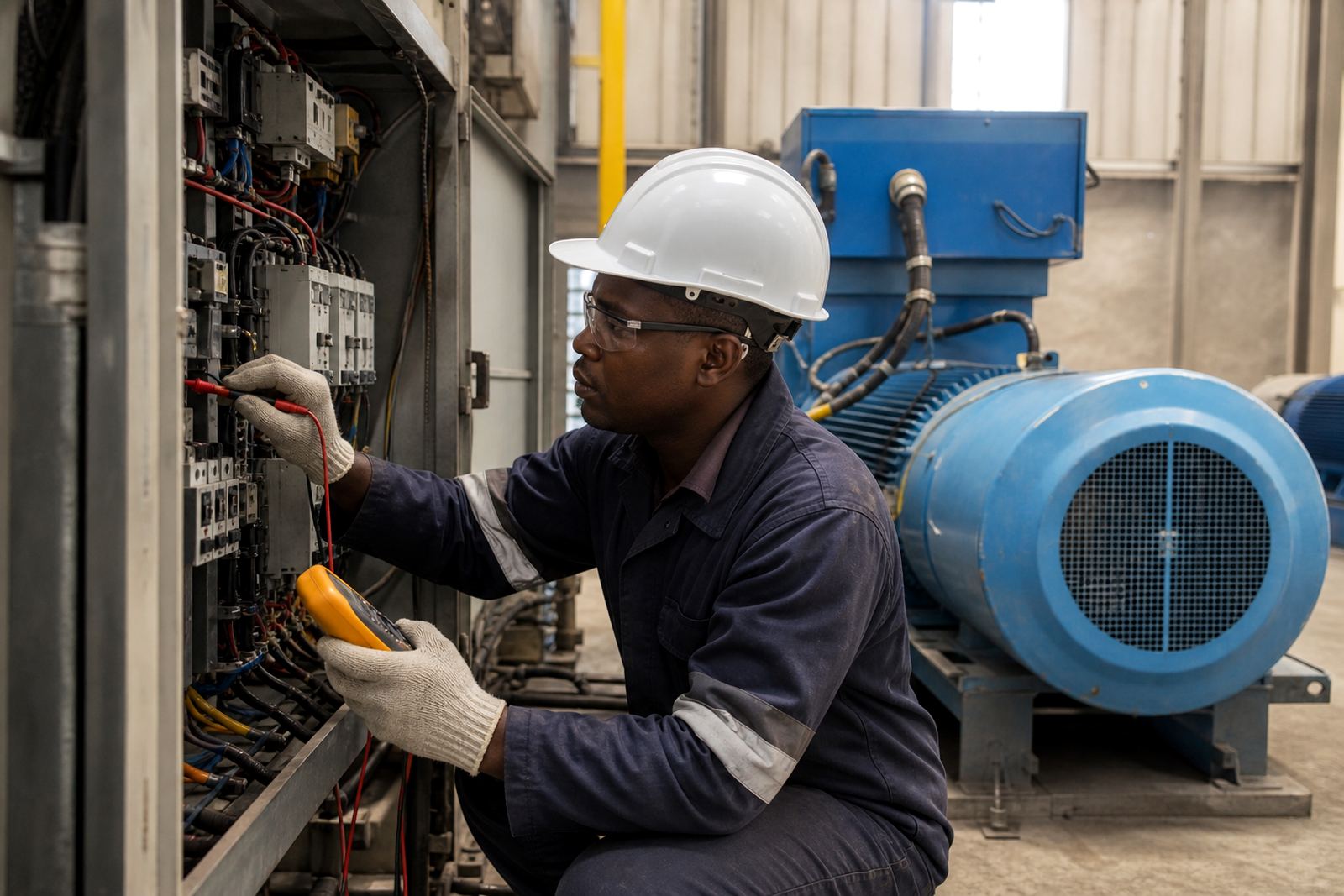
- Control circuit checks for contactors, relays, interlocks and panel wiring
What we check during the first visit
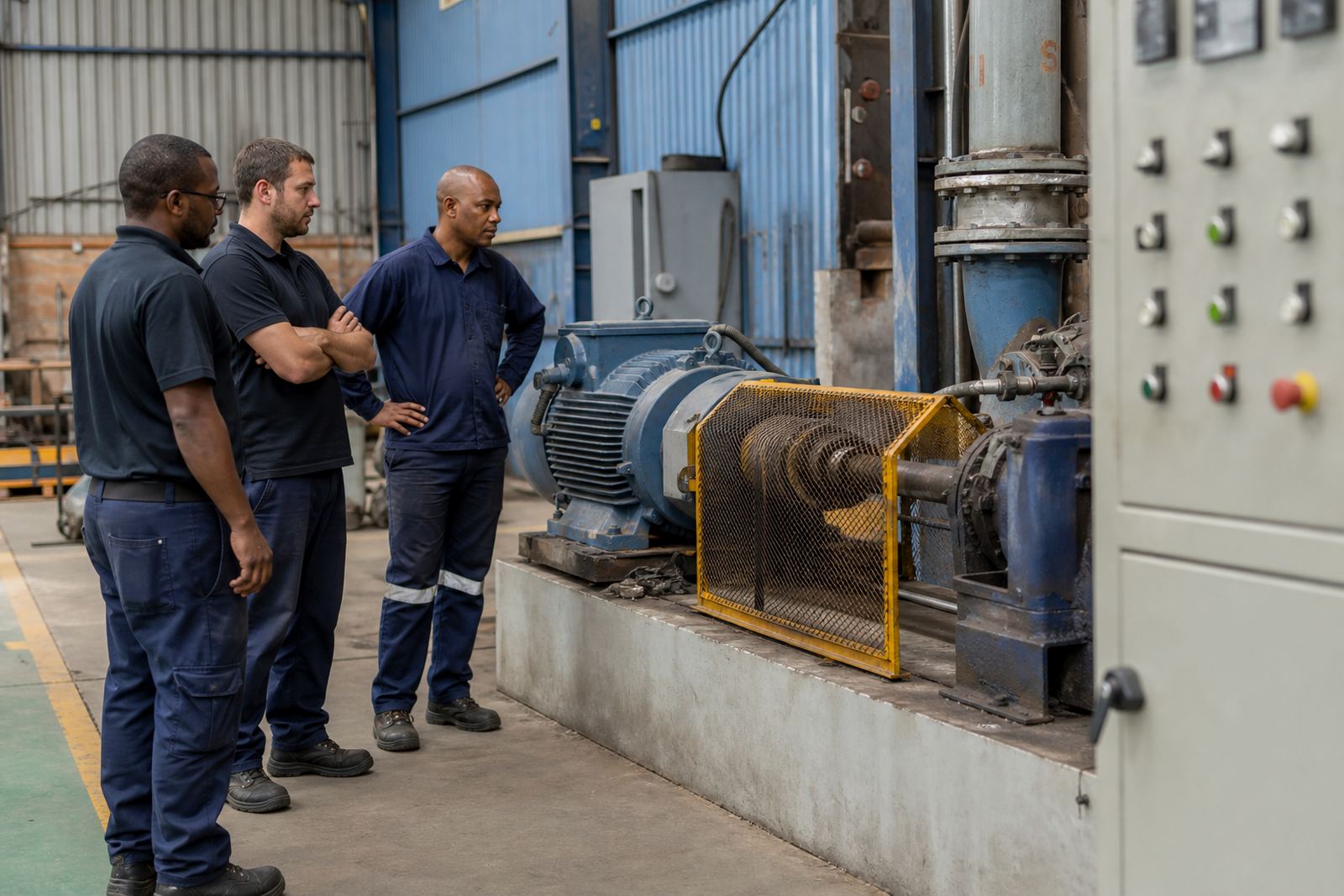
The first visit is about narrowing the problem fast and safely. We begin with site reporting, then check the operating history, symptoms and any recent changes such as a storm, a load-shedding event, a power dip or a maintenance shutdown. We then inspect the motor and drive installation, cabling, panel condition and the process conditions around the machine. A motor that fails under load can point to a different issue than one that fails at start up.
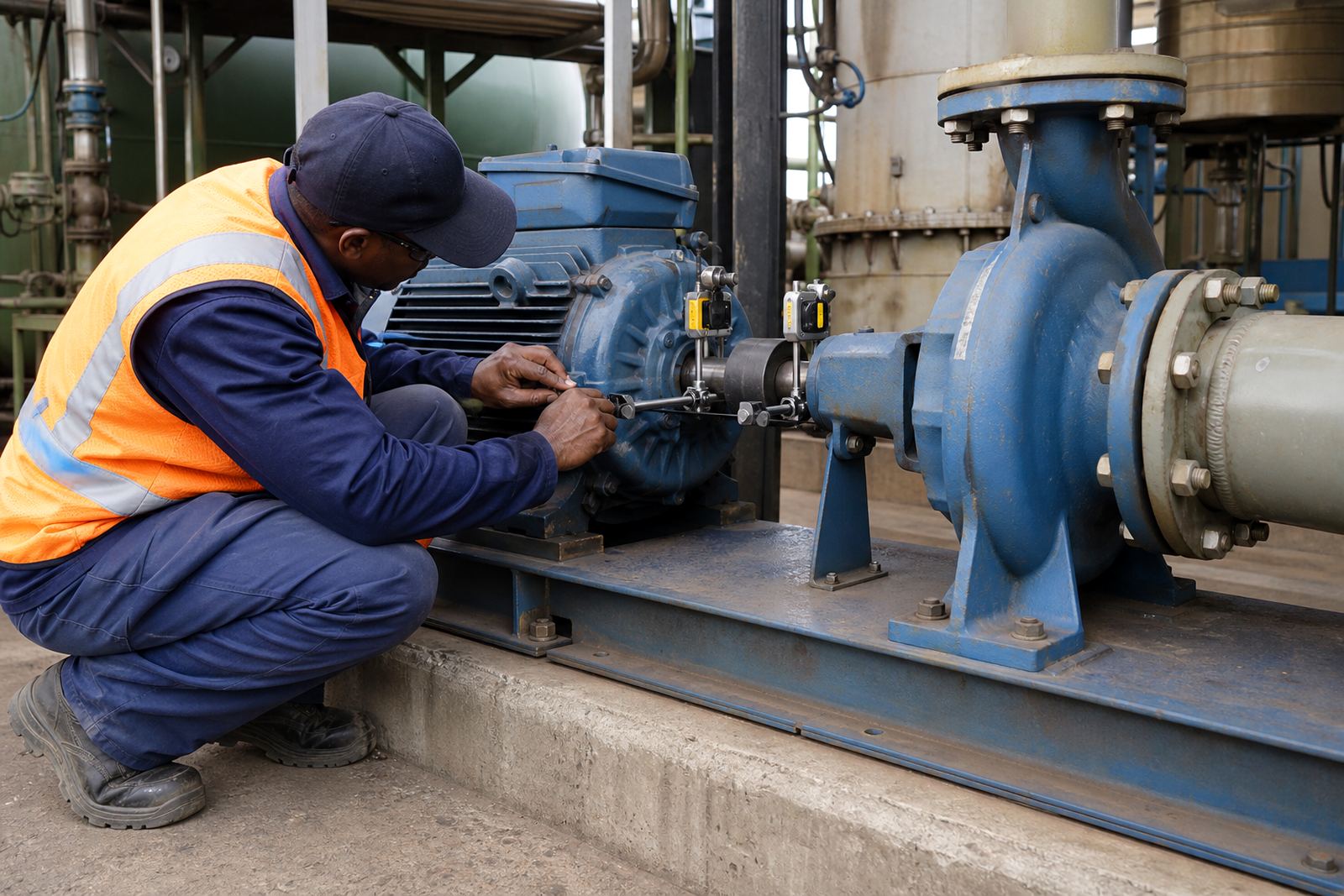
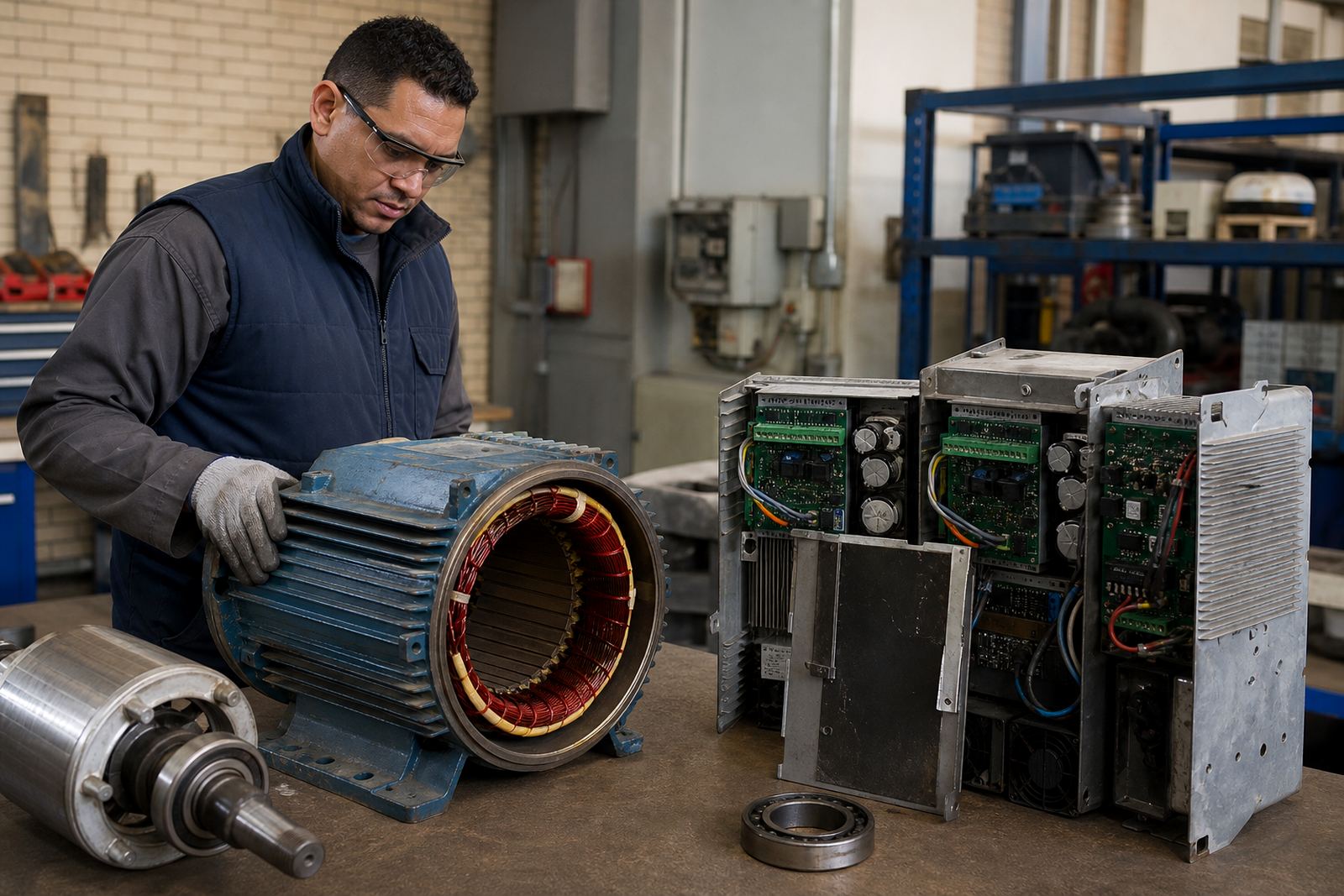
Our technicians can carry out bearing checks, insulation testing, panel cleaning, cable checks and alignment checks where needed. If the motor needs to be removed for bench testing or rewinding, we can plan that with the site team so the shutdown is controlled. It is better to test methodically than to keep changing parts and hoping for the best, because that gets expensive quickly.
- Visual inspection of the motor, terminal box, drive and control panel
- Testing of supply quality and current draw under safe conditions
- Mechanical checks for coupling condition, mounting and bearing noise
- Assessment of whether the fault is electrical, mechanical or process related
How the fault finding process works
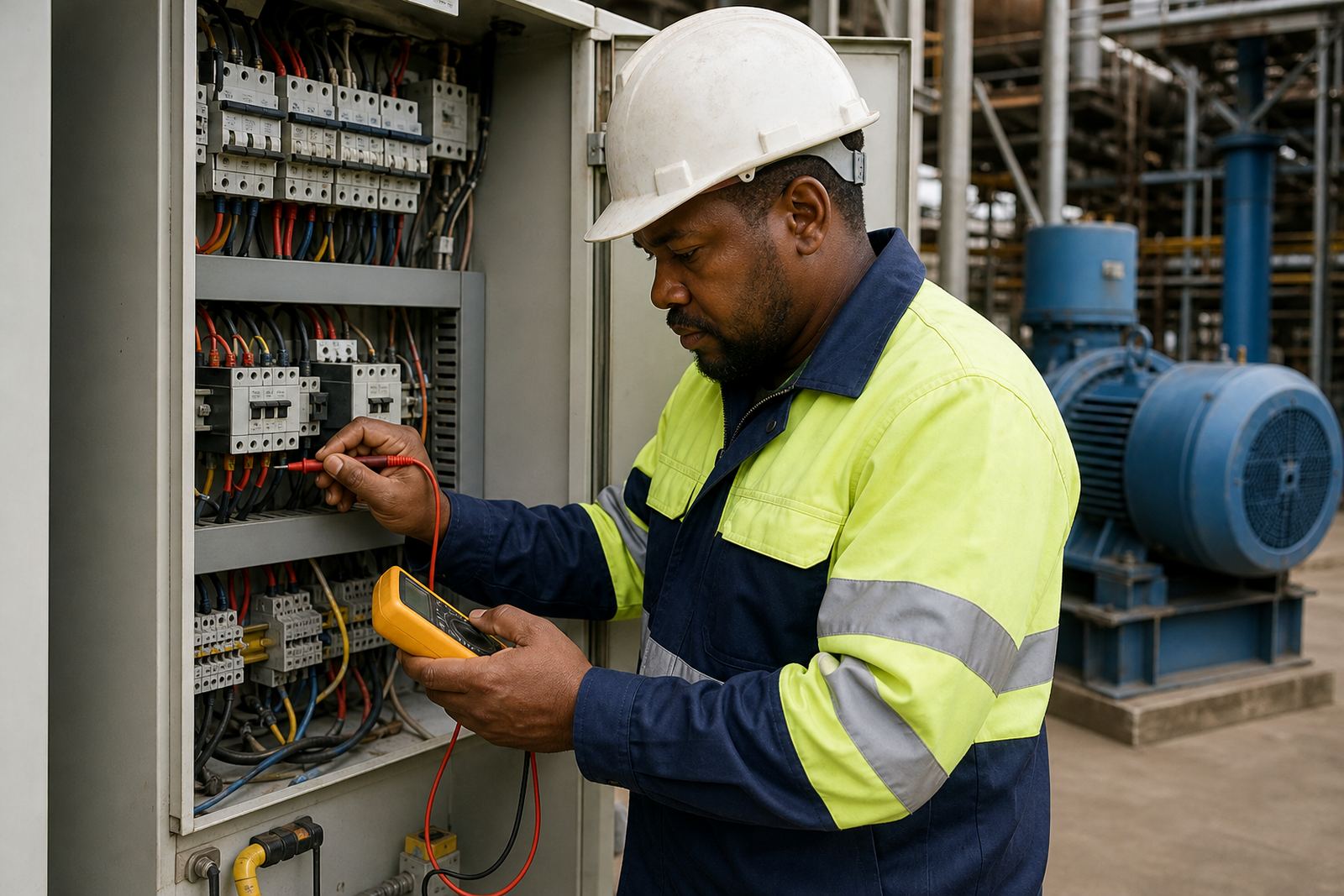
We keep the process practical. After the initial inspection, we test the unit in steps and compare the readings against what the machine should be doing. For electric motors, this may include continuity checks, insulation resistance testing, earth verification and rotor or bearing observations. For variable speed drives, we look at incoming supply, output condition, alarms, cooling fans, control signals and any evidence of contamination or overheating.
If the fault is linked to a winding issue, the motor may need rewinding after strip down and inspection. If the bearings are noisy or have play, replacement may be needed before the motor goes back into service. If the drive has a power section fault or control board problem, repair is assessed according to the condition of the components. We do not push unnecessary work, and we explain what is worth repairing and what is better replaced. That saves time and keeps the decision clear.
- Step 1: isolate and make safe with lockout procedures
- Step 2: inspect the site installation and record symptoms
- Step 3: test motor, drive and supply circuits
- Step 4: confirm the likely cause and recommend the next action
Faults we commonly trace in the field
Many breakdowns follow the same patterns, even if the site looks different. A motor may trip on overload because of worn bearings, incorrect loading, low voltage, poor ventilation or damaged windings. A drive may stop because of heat, dust, loose cabling, failed cooling parts or a supply issue. On some sites the real problem is outside the machine, such as a bad contactor, a damaged control cable or unstable power from the supply side.
Because South African plants deal with voltage dips, dust, humidity and regular starts and stops, the same machine can fail for more than one reason at the same time. That is why the fault report matters. It tells you whether you are dealing with a motor issue, a drive issue, or a combination. It also helps with shutdown planning, spare part decisions and future maintenance.
- Repeated drive trips after start up or under load
- Motor overheating, humming, vibration or uneven current draw
- Insulation failure caused by moisture, dust or age
- Loose terminations, damaged cables or contaminated control panels
Turnaround, pricing approach and reporting
Turnaround depends on what we find, how easy the site access is and whether the fault can be confirmed onsite or needs workshop testing. Some faults are traced quickly. Others need removal, strip down, bench testing or a second visit. We do not promise a fixed turnaround where the condition of the machine is still unknown, but we do work through the problem in a controlled order so there is less delay from back and forth checking.
Pricing is based on the scope of work, the time needed onsite, the type of machine and whether extra testing or removal is required. If a motor must be rewound, bearings replaced or a drive repaired, we first confirm what the work involves before going ahead. Site reporting is included so your team has a clear record of what was tested, what failed, and what action is recommended. That makes it easier for maintenance staff and managers to decide on the next step.
- Quoted according to machine size, access, testing time and fault complexity
- Additional work only proceeds once the issue has been discussed
- Reports can support shutdown planning and spares assessment
Maintenance intervals and how to reduce repeat faults
Regular maintenance reduces the number of surprise callouts. For motors and drives in dirty, hot or coastal conditions, inspections should be more frequent because dust, moisture and vibration build up faster. In a typical plant, it helps to check terminations, cooling paths, mounting bolts, fan condition, insulation readings and bearing noise at planned intervals instead of waiting for a failure. Sites affected by load-shedding should also watch for restart stress and unstable supply conditions.
We often help customers set practical intervals based on how the machine is used. A pump that runs all day will need a different schedule from a workshop machine that starts occasionally. We can support commissioning, shutdown planning and field service checks so the same problem does not keep coming back. A small issue caught early is usually cheaper than a full breakdown later, and it keeps production moving with less disruption.
- Routine checks on bearings, insulation and cable terminations
- Panel cleaning and cooling checks for drives and control gear
- Scheduled inspection after storms, dips or repeated overload trips
- Planned maintenance for high duty or moisture exposed equipment
Key facts
| Service area | Germiston, Johannesburg, Ekurhuleni, Pretoria, Vereeniging, Durban, Boksburg and Kempton Park |
|---|---|
| Equipment covered | Electric motors, variable speed drives, control panels, cables and related plant equipment |
| Core tests | Insulation resistance, continuity, earth checks, current draw, drive alarms and supply checks |
| Typical work | Fault finding, motor removal, drive inspection, bearing checks and site reporting |
| Site conditions | Suitable for plant rooms, workshops, municipal sites and industrial facilities |
| Operating base | Germiston, Gauteng |