

What insulation testing checks on your motor
Insulation resistance testing measures how well the winding and associated conductors are separating live parts from earth and from each other. In practical terms, it helps show whether a motor has been affected by dust, damp, heat stress, oil contamination or ageing insulation. For sites in Germiston, Boksburg, Kempton Park and other industrial areas, this is a useful check on machines that work long shifts, sit in humid rooms, or stop and start often during load-shedding.
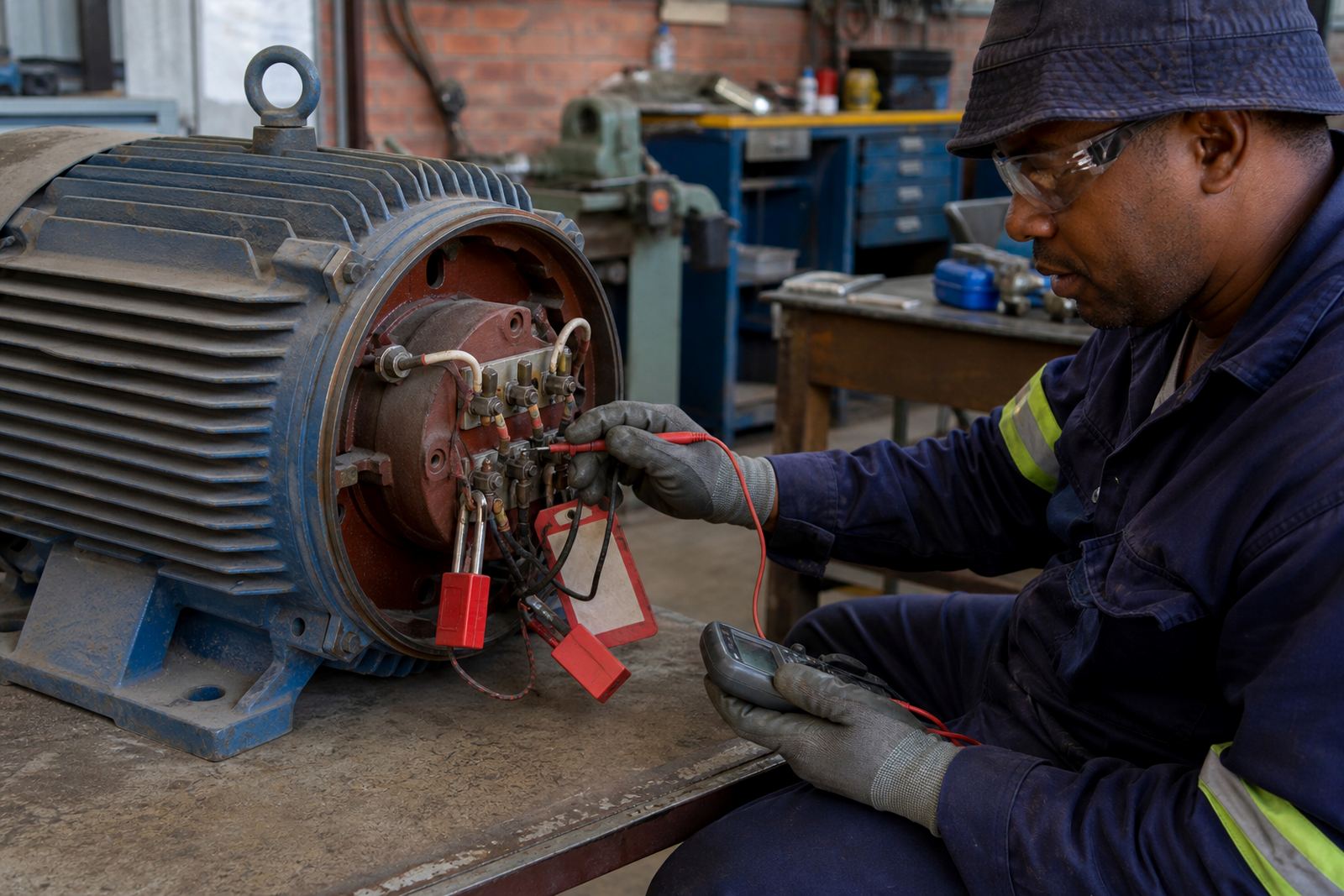
We use insulation testing as part of planned maintenance or when a motor has tripped, overheated or failed unexpectedly. The aim is not only to find a fault, but to give you a clear picture of whether the motor is safe to return to service, needs drying out, or requires rewinding. Electrical work must always be handled by qualified people using proper lockout procedures, isolation and verification before any test is done.
How our onsite testing process works
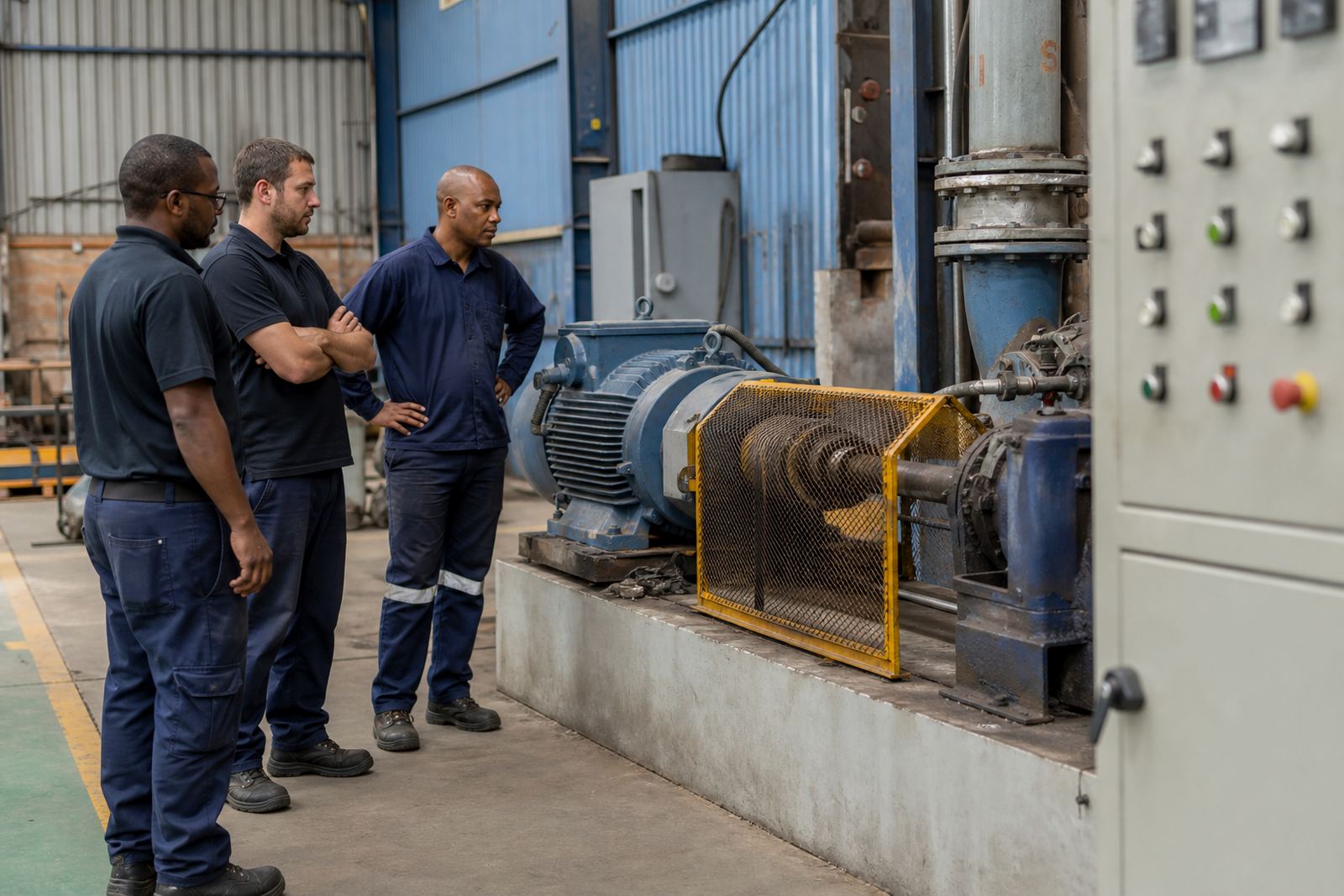
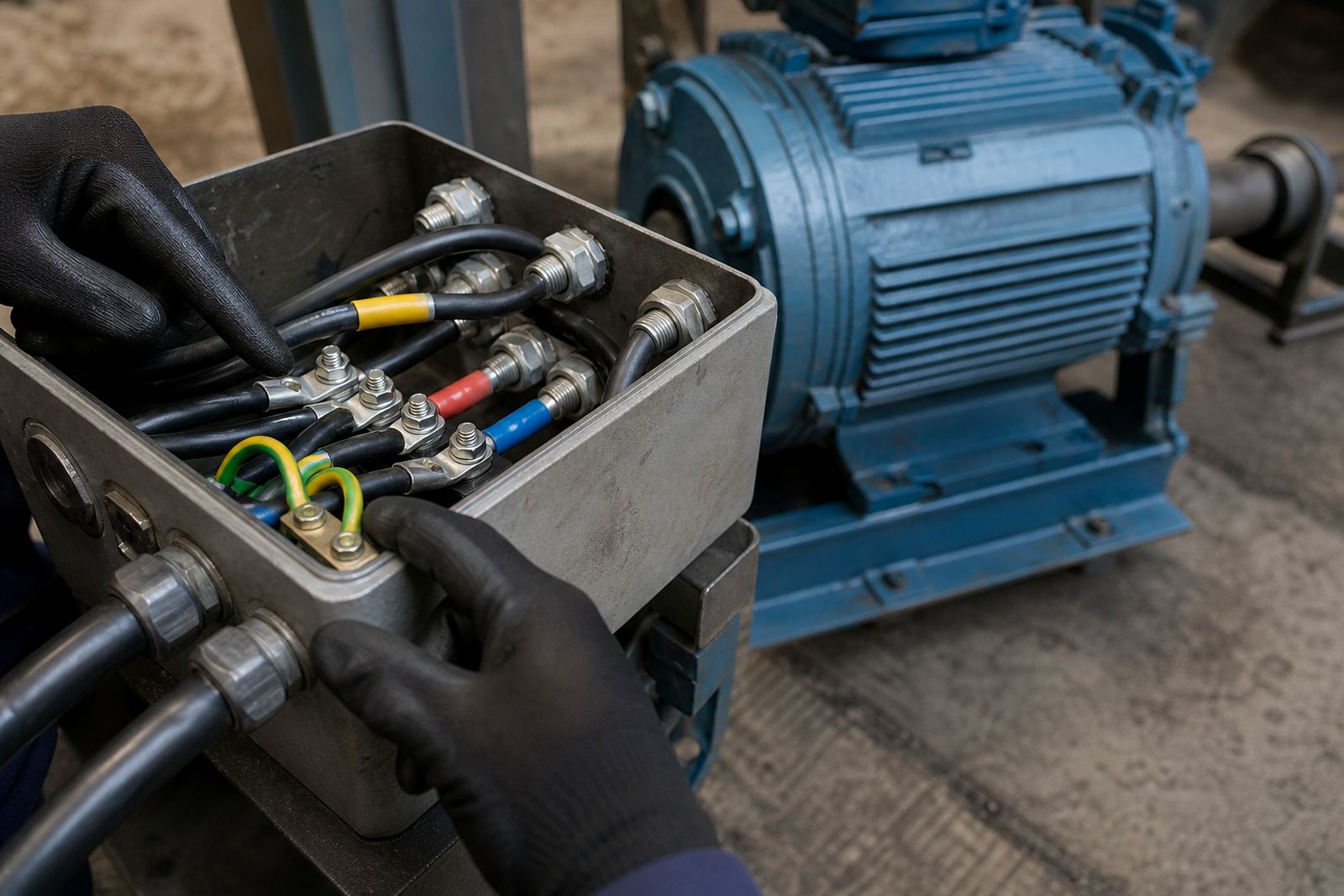
Our field service team can attend site in Germiston, Johannesburg, Ekurhuleni, Pretoria, Vereeniging or Durban for checks on motors, starters and related circuits. The process starts with lockout, isolation and a visual inspection. We look at terminals, cable condition, gland sealing, signs of moisture, dust build-up and heat damage. If the site has a motor control panel, we also check whether contamination or loose connections may be affecting readings.
- Confirm the equipment is isolated and safe to test
- Inspect the motor, cable ends and terminal box
- Carry out insulation resistance readings at the required test voltage
- Record and compare readings between phases and to earth
- Check whether the result suggests drying, cleaning, repair or rewind
- Provide site reporting with the findings and next step
If the test points to a moisture issue, we may recommend drying, cleaning or a further inspection before energising the motor again. If the readings are uneven or low, the motor could need more detailed bench work. In a few cases, a cable fault or panel issue may be the cause instead of the motor itself, so fault finding is often done along side the test.
When insulation testing is worth scheduling
Planned testing is sensible before a shutdown, after a long idle period, or when a motor has been stored in a damp area. It is also useful after flooding, roof leaks, steam exposure, heavy dust contamination or repeated nuisance tripping. Coastal humidity can affect equipment even when it is not in direct use, and inland sites can still have problems where cooling is poor or panels are full of fine dust.
Many workshops include insulation checks in their maintenance routines for critical pumps, fans, conveyors and compressors. If a motor is important to production, a quick reading can sometimes prevent a breakdown during a busy shift. This kind of check does not replace a full overhaul, but it does give a useful early warning. For some motors, especially older units, a small drop in insulation resistance over time is often the first sign that attention is needed.
What we can include with the test
Insulation testing is often most useful when paired with related checks. Locor can include bearing checks, alignment checks, cable checks, panel cleaning and drive inspection if the job requires a wider look at the equipment. On a failed motor, we may also carry out fault finding to see whether the issue is local to the windings or linked to the supply, contactor, inverter or site conditions.
- Motor removal support where access is tight or the set is mounted in a confined space
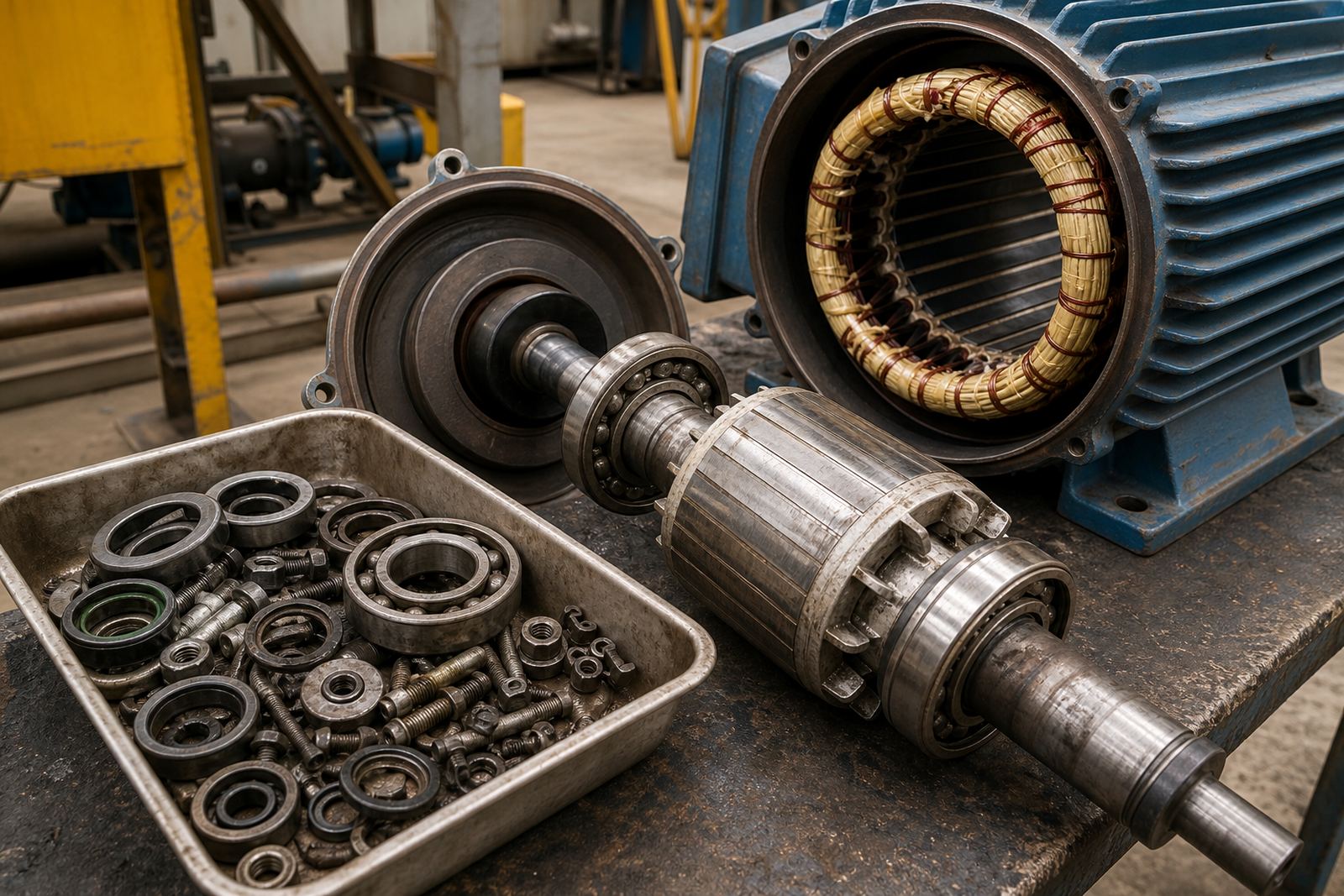
- Spares assessment if the motor may need bearings, seals or a rewind
- Commissioning support after repair or replacement
- Shutdown planning so the test fits your maintenance window
- Site reporting for maintenance files and handover records
Our team works from Germiston and covers nearby industrial nodes such as Boksburg and Kempton Park, as well as jobs further afield by arrangement. If a motor is still in service, we can often test it without removing it, provided the site conditions and isolation points allow safe access.
Turnaround and how pricing is approached
Turnaround depends on access, the number of motors on site and whether the test is part of a routine visit or a breakdown callout. Simple onsite insulation testing can often be done within a short visit, while a full breakdown assessment may take longer if the machine needs to cool, dry out or be stripped for more detail. Where a unit must go off site for rewinding or repair, the timing will also depend on the condition of the motor and the parts needed.
Pricing is based on the scope of work rather than a one-size-fits-all rate. Factors include travel, the size and quantity of motors, whether test records are needed for multiple assets, and whether the job includes removal, refitting or follow-up inspection. We do not quote blindly over the phone for electrical faults because the real condition only becomes clear once the equipment is isolated and tested properly. That keeps the work practical and avoids surprises later on.
Keeping motors healthy between inspections
A good maintenance interval depends on how hard the motor works, where it is installed and how dirty or damp the area is. In a clean indoor workshop, checks may be less frequent than on a plant floor with heat, vibration and dust. Motors that run under heavy load, start often, or sit through long shut-downs should be tested more regularly. If your site is near the coast or has water wash-downs, moisture can enter terminal boxes and affect insulation sooner than expected.
As a general guide, include insulation testing during planned maintenance, after any prolonged stoppage, and after signs of overheating or tripping. Keep terminal covers sealed, clear dust from fan guards and panels, and make sure cable glands are sound. The small things matter here, because poor housekeeping can bring insulation readings down quickly. A motor that was fine last month can become a problem after one wet weekend or one bad power event.
For plants and workshops across South Africa, Locor helps keep these checks practical and well documented. Our focus is straightforward: safe testing, clear readings and honest advice on what comes next.
Key facts
| Service type | Onsite insulation resistance testing |
|---|---|
| Typical equipment | Electric motors, cables, starter circuits and related panel wiring |
| Test method | Insulation resistance measurement at the appropriate test voltage for the equipment |
| Safety requirement | Qualified personnel, lockout procedures and verified isolation before testing |
| Common findings | Moisture ingress, dust contamination, ageing insulation, cable damage and heat stress |
| Coverage | Germiston, Johannesburg, Ekurhuleni, Pretoria, Vereeniging, Durban, Boksburg and Kempton Park |