

What commissioning support covers after a repair
When a motor or drive has been rewound, repaired or replaced, the first start up is the point where small faults can show themselves. Our commissioning support is the practical follow through after workshop work, so the equipment is restarted in a controlled way and checked under real operating conditions. This is especially useful for pumps, conveyors, mixers, compressors and process equipment where a wrong rotation or unstable load can affect the whole line.
We assist with start up checks for repaired electric motors and variable speed drives, confirm that the direction of rotation matches the application, and look at how the machine responds as speed or load changes. Electrical work must only be carried out by qualified people using proper lockout and isolation procedures, and we work with that approach on every site. On industrial sites in Germiston, Boksburg, Kempton Park, Johannesburg, Pretoria, Vereeniging and Durban, that means safe access, clear switching control and careful handover back to operations.
- Rotation checks before full load is applied
- Current, vibration and temperature observations during start up
- Control signal checks from starters, relays or drive inputs
- Practical feedback for operators and maintenance teams
Checks carried out on site during restart
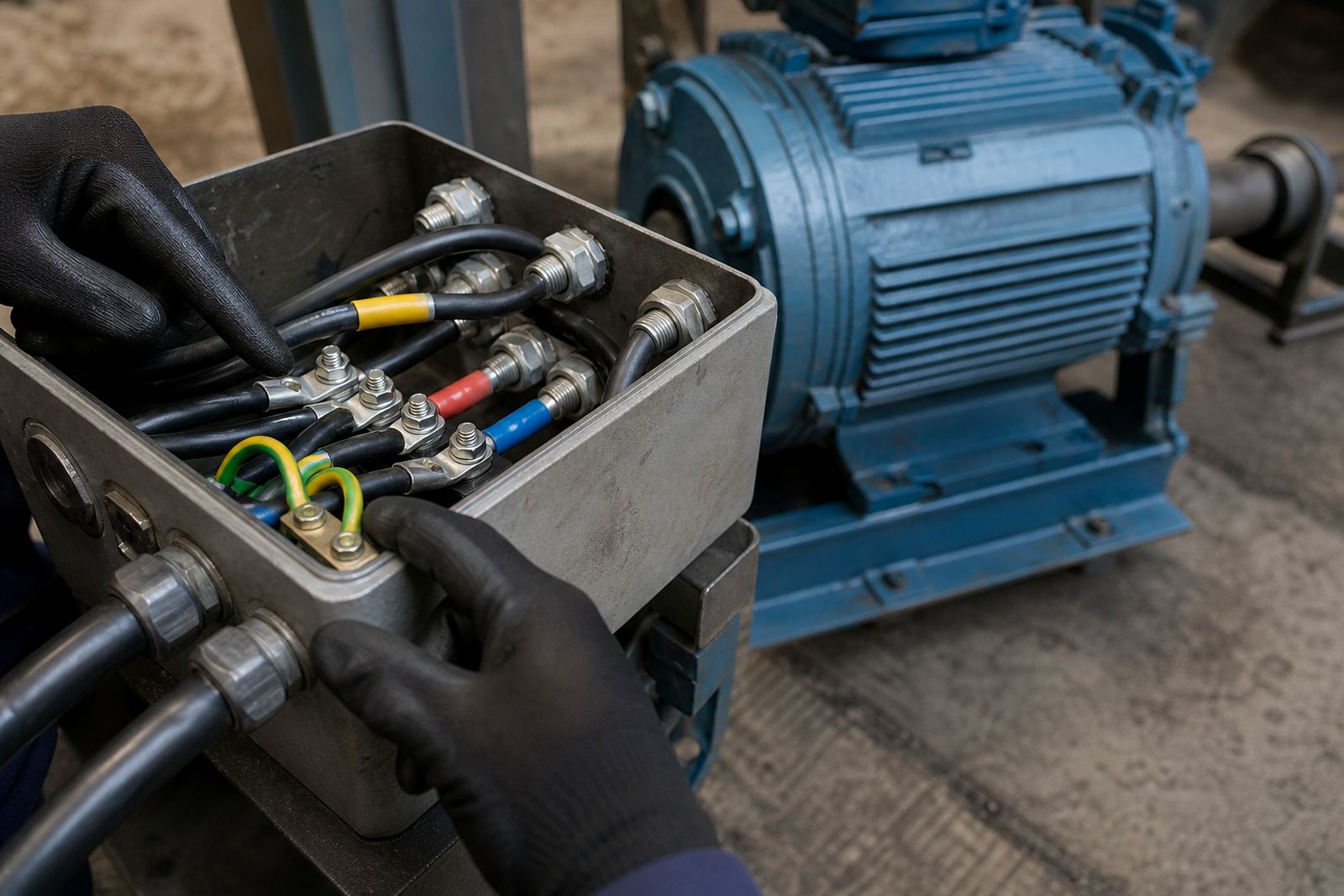
Every restart is different, but the same basics apply. We confirm the motor is mechanically sound, that bearings are not running hot, and that the drive or control gear is responding as expected. If the unit was removed for repair, we also look at coupling condition, shaft alignment and cable terminations before the first energised run. Where needed, we help with site reporting so the team has a written record of what was tested and what still needs attention.
For variable speed drives, commissioning support may include parameter review, input and output verification, status check, fault history review and test runs at low and normal speed. For repaired motors, we check insulation behaviour, running noise, direction, and whether the load rises smoothly. If the installation has long cable runs, dusty switch rooms or coastal humidity, those conditions are noted because they can affect the restart. Load shedding and unstable supply can also complicate a return to service, so we plan the sequence carefully.
- Supply and cable checks before energising
- Motor rotation and phase sequence confirmation
- Drive settings review for speed, ramp and protection values
- Observation of abnormal noise, smell, heat or tripping
How our process works from isolation to handover
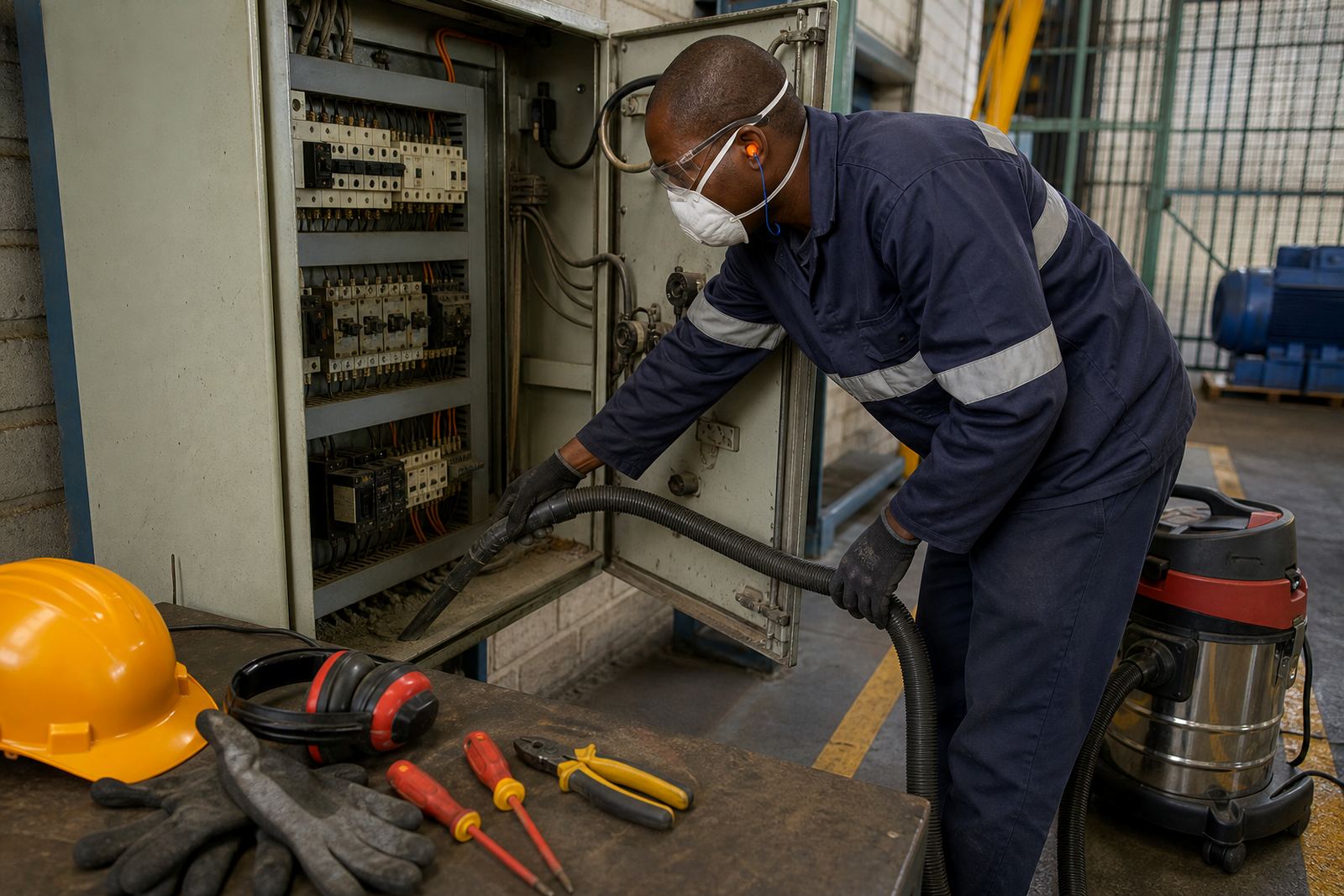
We keep the process practical and direct. First we review the repair summary, the machine duty and the site conditions. Then we agree on the safest time to restart, especially if the plant needs to stay down only for a short window. Lockout, isolation and permit controls remain in place until the checks are complete. Where a panel is involved, we can assist with panel cleaning and cable checks before start up, because loose dust, poor terminations and damaged wiring can cause avoidable faults.
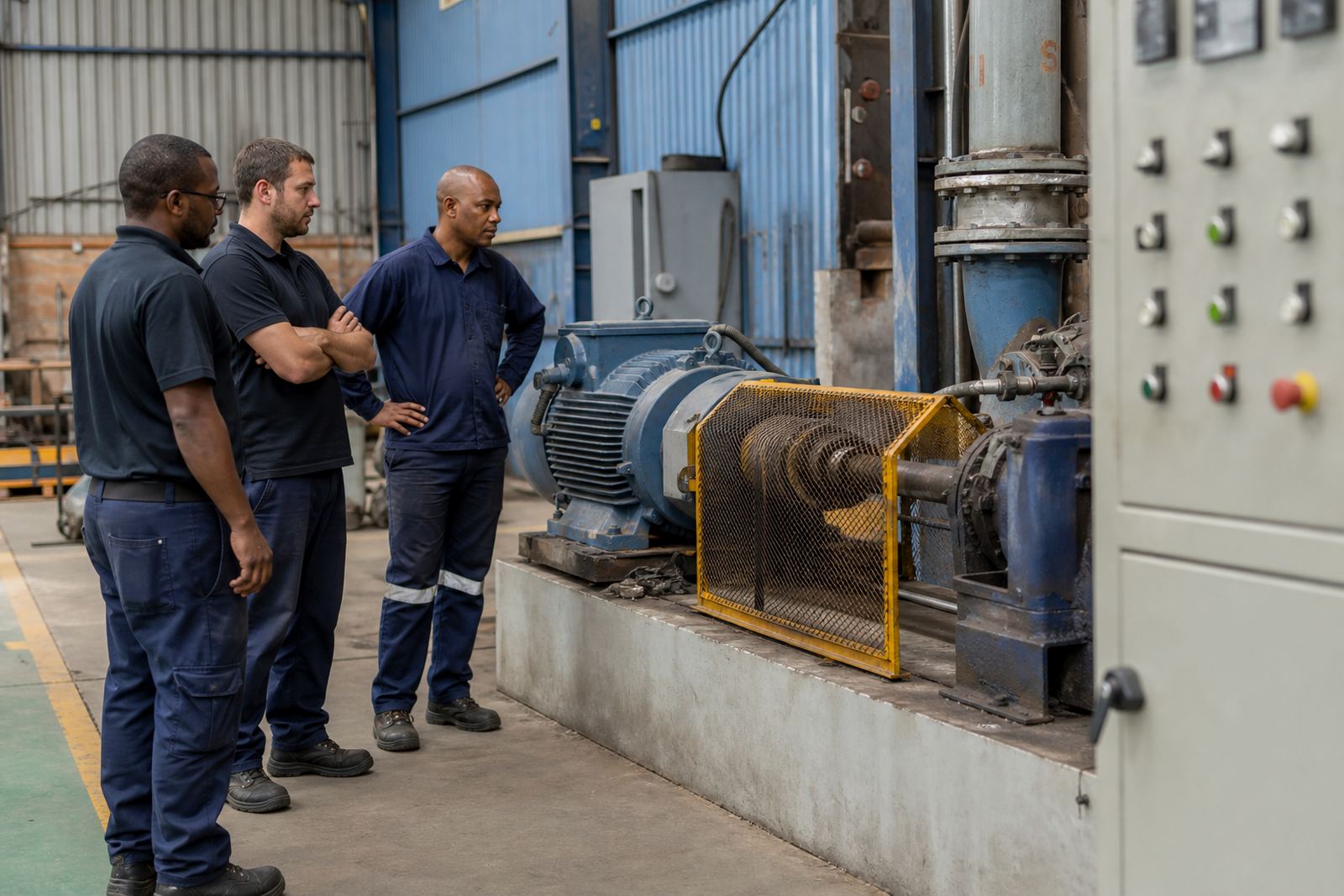
Once the equipment is safe to energise, we observe the first run closely and compare actual behaviour with the expected duty. If anything is out of range, we stop and assess it before further operation. This may include bearing checks, a repeat insulation test, or a drive inspection if the response is not correct. The goal is to avoid repeated starts that can stress windings, couplings and process equipment.
- Review of repair notes and site conditions
- Isolation, lockout and pre-start inspection
- Controlled energising and first-run monitoring
- Handover with findings and next-step advice
Typical equipment and site conditions we support
Locor supports commissioning for a wide range of industrial equipment, from small workshop motors to larger plant units used in processing, water systems, material handling and manufacturing. In Gauteng, many sites run on tight production schedules, so restart support needs to be efficient without cutting corners. We work around shutdowns, maintenance windows and production handbacks in Germiston, Ekurhuleni, Pretoria and surrounding industrial areas.
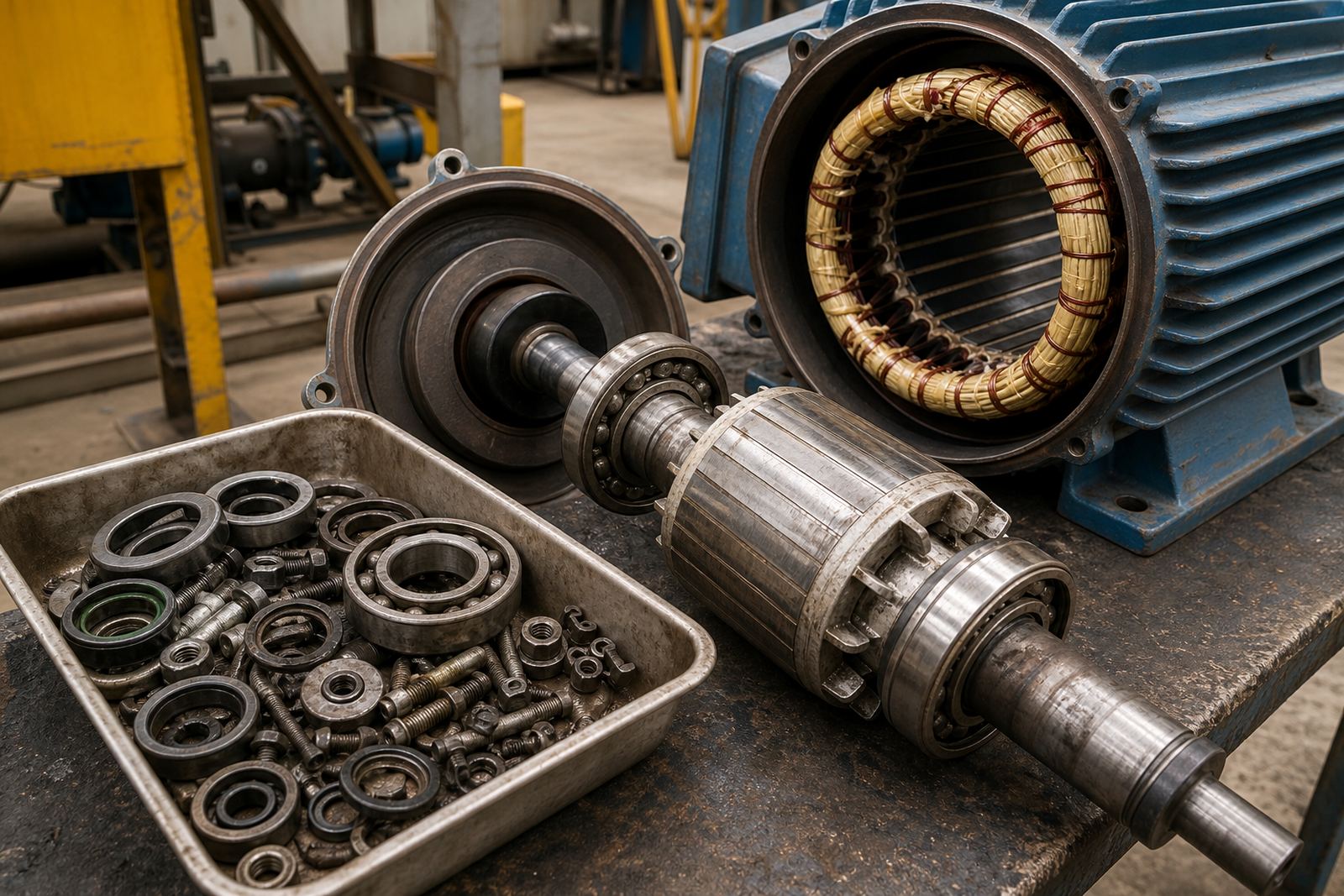
Commissioning support is often useful after rewinding of squirrel-cage motors, bearing replacement, or repair of a variable speed drive that feeds a critical machine. We also assist where the site has had cable damage, nuisance tripping, or a recent control fault that needs proving out before normal production resumes. In Durban and coastal areas, moisture and salt air can make terminals, enclosures and cooling paths more sensitive, so we pay attention to those details during restart.
- Motors driving pumps, fans, compressors and conveyors
- Variable speed drives on process and workshop equipment
- Installations affected by moisture, dust or repeated shutdowns
- Sites needing restart checks after planned maintenance
Turnaround, pricing approach and planning a shutdown
Turnaround depends on the size of the machine, how much site testing is needed, and whether the equipment can be started immediately after repair or must wait for other work on site. We plan around your shutdown sequence and try to keep the restart practical for your maintenance team. If access is limited or the plant is under pressure to return to production, we can coordinate the order of checks so the essential items are done first.
Our pricing approach is based on the scope of the restart support, the amount of travel involved and the complexity of the motor or drive. There is no one-size-fits-all rate for commissioning support because a small workshop motor and a critical process drive do not need the same level of checking. We discuss the job first, then agree on the work required so there are no surprises. For sites in Johannesburg, Boksburg, Kempton Park and Vereeniging, this often means short planning calls before the shutdown date to keep the visit efficient.
- Scope reviewed before site attendance
- Travel and access factored into the quote
- Simple restart jobs and larger shutdowns handled differently
- Planning can be linked to maintenance windows and production stops
Maintenance intervals and when to call us back
Commissioning is not only about the first restart. It also helps set the baseline for future maintenance. After a repair, the machine should be rechecked at sensible intervals if it works in a hot, dusty, vibrating or moisture-prone area. Bearings, insulation and drive settings can drift over time, especially where equipment runs long hours or starts and stops frequently. A brief follow-up check can catch issues before they become a breakdown.
As a rule, it is wise to review the machine after the first shift, again after a short run-in period, and then at normal maintenance intervals set by the duty and the site conditions. If the motor starts drawing more current, the drive trips, or the machine changes sound or temperature, it should be inspected promptly. Our team can help with fault finding, alignment checks, spares assessment and site reporting so the next maintenance step is clear.
- Follow-up checks after first start and short run-in
- Earlier reviews for heavy duty or contaminated environments
- Prompt inspection after tripping, noise or heat rise
- Useful for plants aiming to reduce repeat stoppages
Key facts
| Service type | Commissioning support for repaired motors and variable speed drives |
|---|---|
| Typical focus | Rotation, load response, control checks, and safe restart verification |
| Work settings | Plants, workshops, process lines and utility systems |
| Areas covered | Germiston, Johannesburg, Ekurhuleni, Pretoria, Vereeniging and Durban |
| Related checks | Insulation testing, bearing checks, alignment checks and drive inspection |
| Safety note | Qualified electrical work only, with lockout and isolation procedures |