

Why Motor Testing Matters After Repair
Testing is not a box-ticking exercise. It shows whether a repaired motor is ready to go back into service, or whether a fault still remains inside the windings, bearings, terminal box or connection leads. In workshops across Germiston, Johannesburg and Pretoria, the aim is the same: reduce repeat failures and avoid damage to couplings, pumps, fans, conveyors and gearboxes.
A motor may look fine from the outside and still have hidden issues. A winding can have weak insulation, a bearing can run noisy under load, or a terminal connection can be loose enough to create heat. On sites affected by load-shedding, voltage swings and frequent starts can make small faults show up faster than expected. That is why proper testing after repair is so important.
Electrical work must be done by qualified people, with lockout procedures in place before anyone touches the machine. Make sure the supply is isolated, tagged and verified dead before inspection begins.
Visual Checks Before Any Instrument Test
The first step is always a careful visual inspection. This does not need instruments, but it does need experience and attention to detail. A clean motor is easier to inspect, so dust, oil and carbon traces should be removed before testing starts. Look for cracked terminal covers, burnt lugs, damaged cable glands, water entry marks and signs of overheating around the frame or bearings.
Check that the motor is correctly identified by frame size, voltage, connection type and speed. If the nameplate is unreadable, the repair team may need to work from physical measurements and winding data. In coastal areas such as Durban, moisture and salt can also leave corrosion on terminals and fixings, which must be addressed before energising the unit.
- Inspect the terminal box for heat marks or loose conductors
- Check fan covers, coupling keyways and mounting feet
- Look for oil leakage, rust or signs of water ingress
- Confirm the shaft turns freely by hand where possible
Insulation Testing and What It Tells You
Insulation testing is one of the most useful checks after rewinding. It helps confirm that the windings are properly separated from the motor frame and from one another. If insulation is weak, the motor may trip, overheat or fail as soon as it is put under load. The test method and values used depend on the motor size, voltage and the workshop procedure in place.
Technicians normally compare readings phase to phase and phase to earth, then look for consistency. Sudden drops, unstable readings or a clear imbalance can point to moisture, contamination, damaged sleeving or an issue inside the winding. After cleaning and drying, the test may be repeated to see whether the reading improves. That step is especially useful on motors that have stood idle in damp stores or near washdown areas.
- Use the correct test voltage for the motor rating
- Record readings before and after drying or cleaning
- Check that lead ends and terminations are dry and clean
- Investigate any reading that changes sharply between tests
Bearing Checks and Mechanical Condition
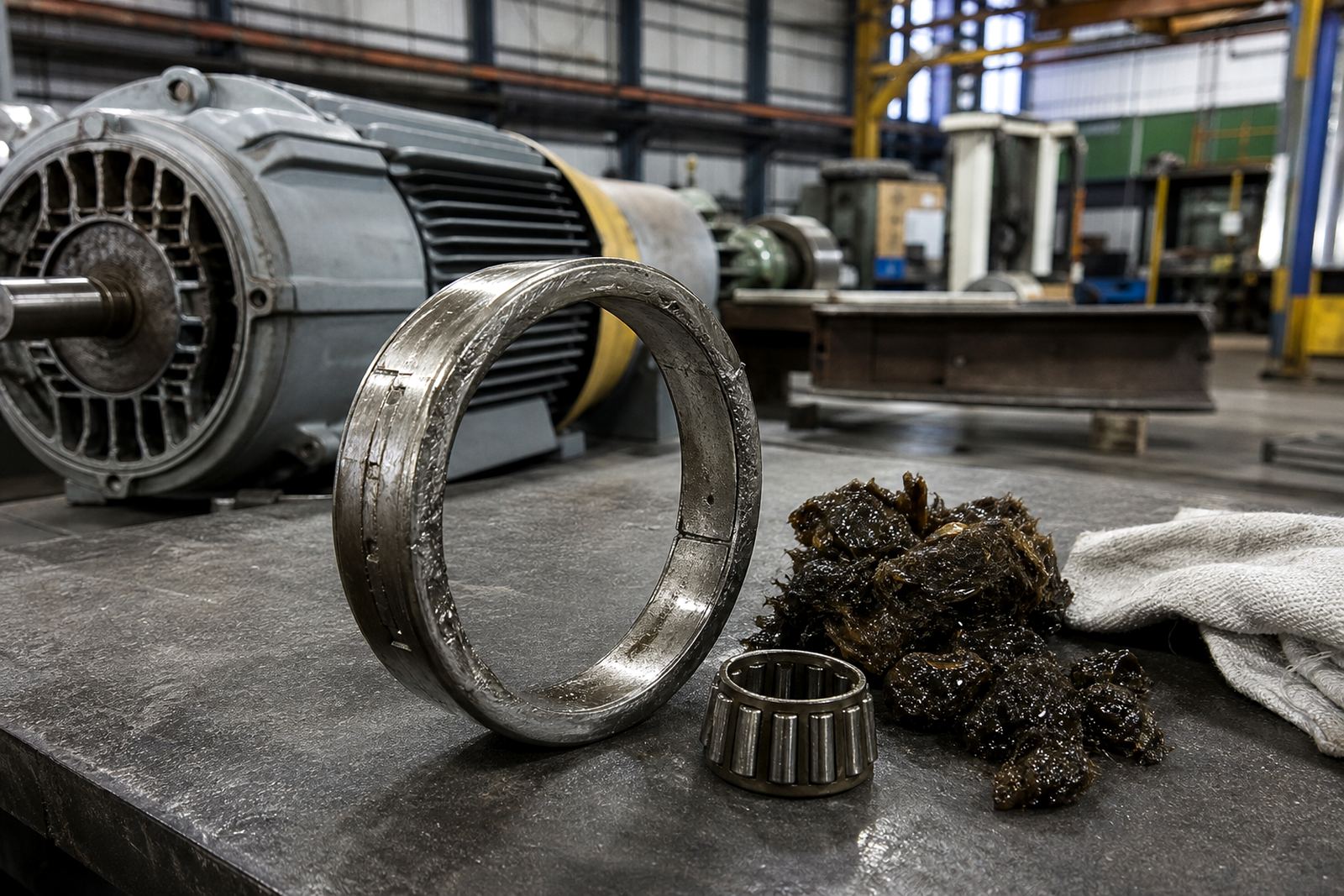
Even a perfect winding will not save a motor if the bearings are worn. Bearing checks help identify rough running, play on the shaft, noise or heat build-up before the motor is returned to service. In many workshops, bearing replacement is done together with cleaning and shaft inspection so the unit does not go back out with a hidden mechanical problem.
A technician will normally check for smooth rotation, end float, side play and signs of scoring on the shaft or housing. If bearings have failed because of contamination, poor lubrication or misalignment, the cause must be found too. Otherwise the same fault can return after a few weeks. On plant equipment in Vereeniging or Boksburg, alignment checks are often just as important as the bearing itself.
- Rotate the shaft by hand and listen for roughness
- Feel for tight spots or uneven resistance
- Check seals, housings and lubrication condition
- Confirm correct fit during bearing installation
Testing the Motor on the Bench
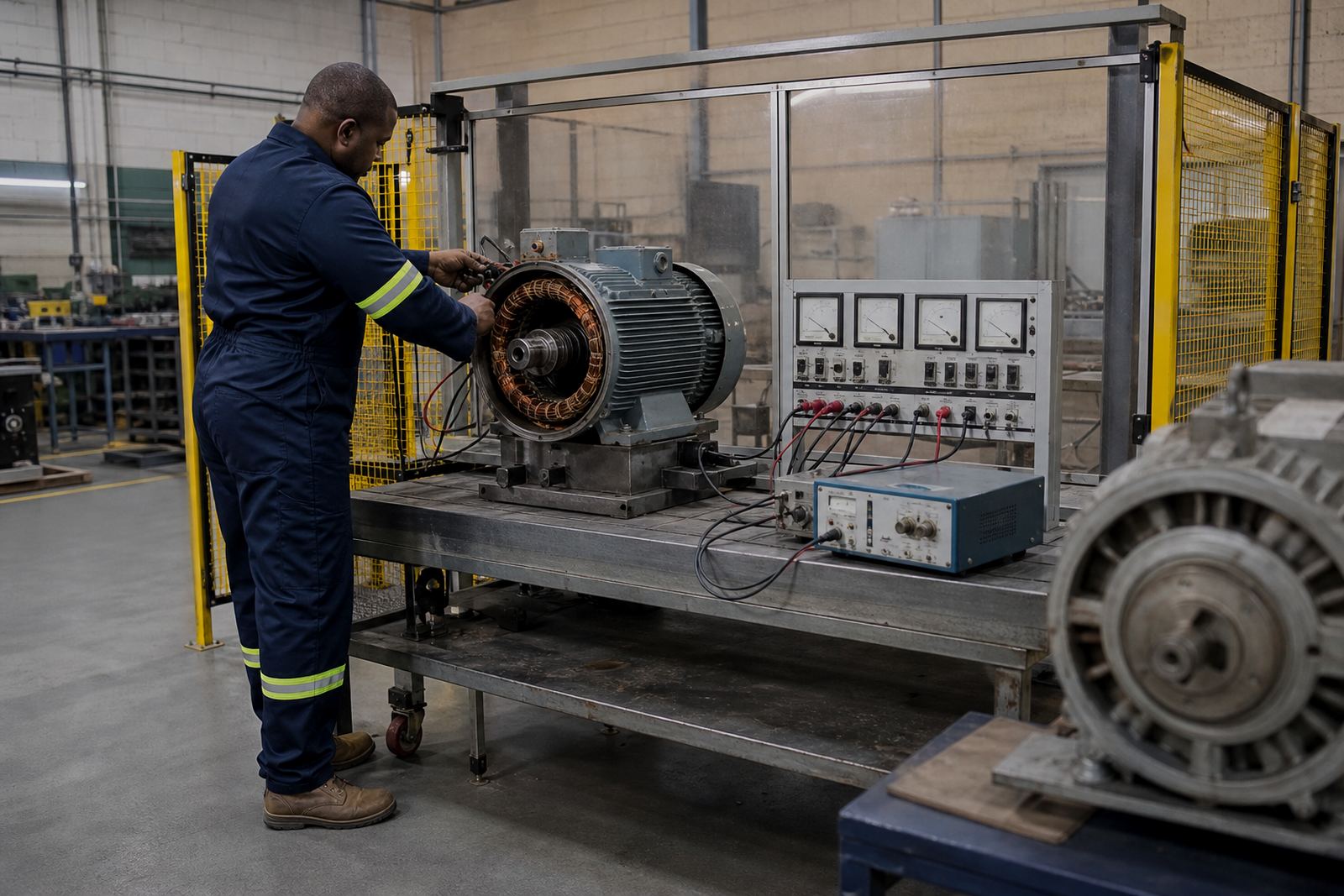
Once the winding and mechanical checks are complete, the motor may be tested on a bench or test stand before it goes back to site. This stage confirms that the motor starts correctly, runs in the right direction and does not draw unusual current. For three phase motors, phase sequence and connection arrangement must be checked before energising the unit.
The technician will usually listen for abnormal noise, check vibration and watch for heat rise during the run test. A good repair should sound even and run without surging. If a motor hesitates, trips or vibrates badly, the fault may still lie in the winding, bearings, mounting feet or connection leads. It is better to stop and inspect again than to send a doubtful motor back into production.
Where required, the team may also check rotation against the application before commissioning. A pump, fan or conveyor can be damaged if the motor turns the wrong way, so this part of the test must not be rushed.
Variable Speed Drive Checks After Repair
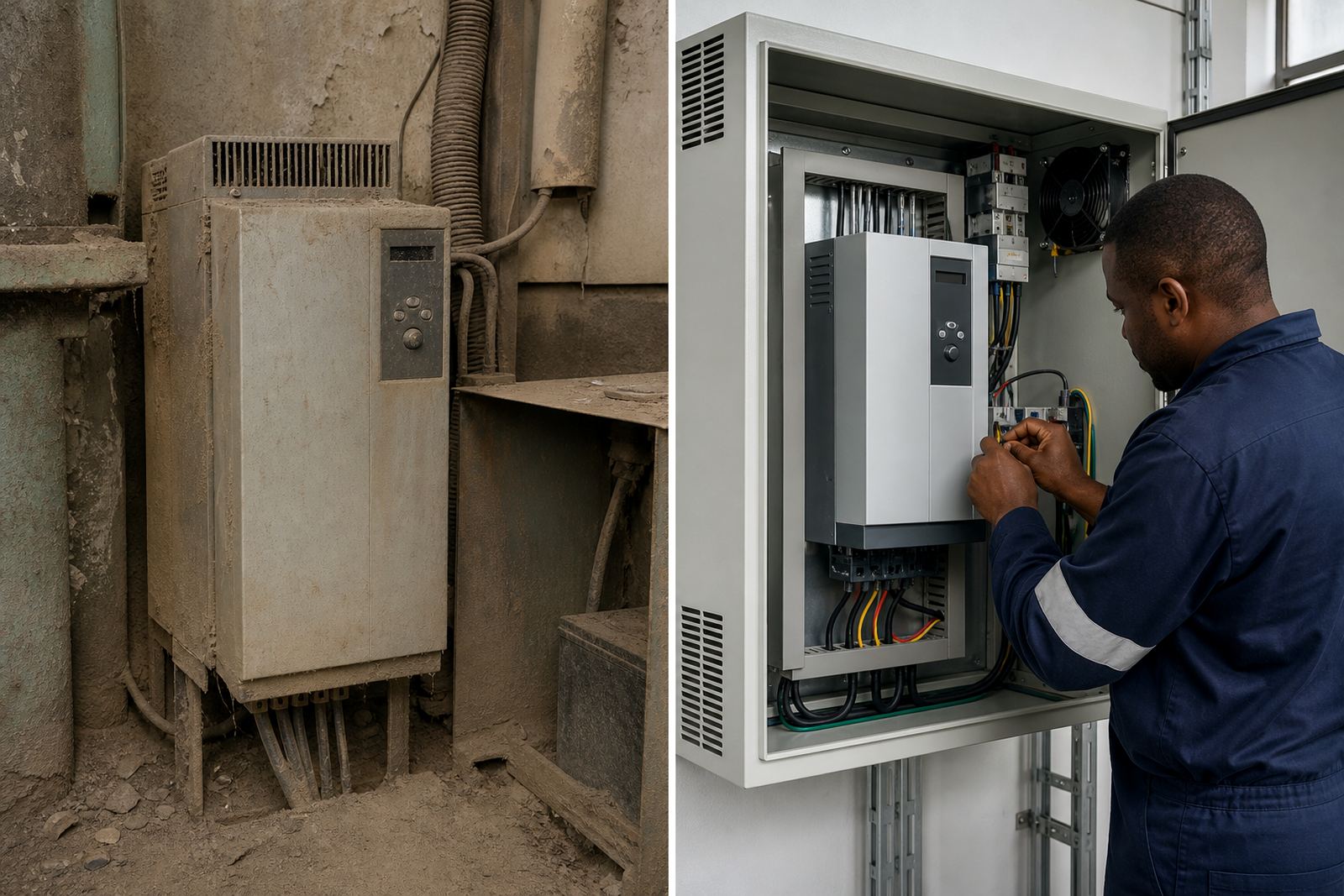
When a motor is linked to a variable speed drive, the drive must also be inspected with care. A drive fault can create a motor problem and a motor fault can damage a drive, so both sides of the system need attention. Drive repair work often includes fault finding, panel cleaning, cable checks and a close look at power and control terminations.
Common checks include visual inspection of the board, signs of overheating, loose terminals, damaged fans and dust build-up inside the enclosure. The technician may also verify input supply quality, output connections and the condition of the motor cable. If a drive has tripped repeatedly, the cause might be outside the unit, not only inside it. That is why site reporting and spares assessment are useful before any restart.
- Check the enclosure for dust, heat damage and loose fittings
- Confirm input supply and motor output cables are sound
- Inspect cooling fans and internal airflow paths
- Review fault history before returning the drive to service
A Practical Handover Checklist for Site Teams
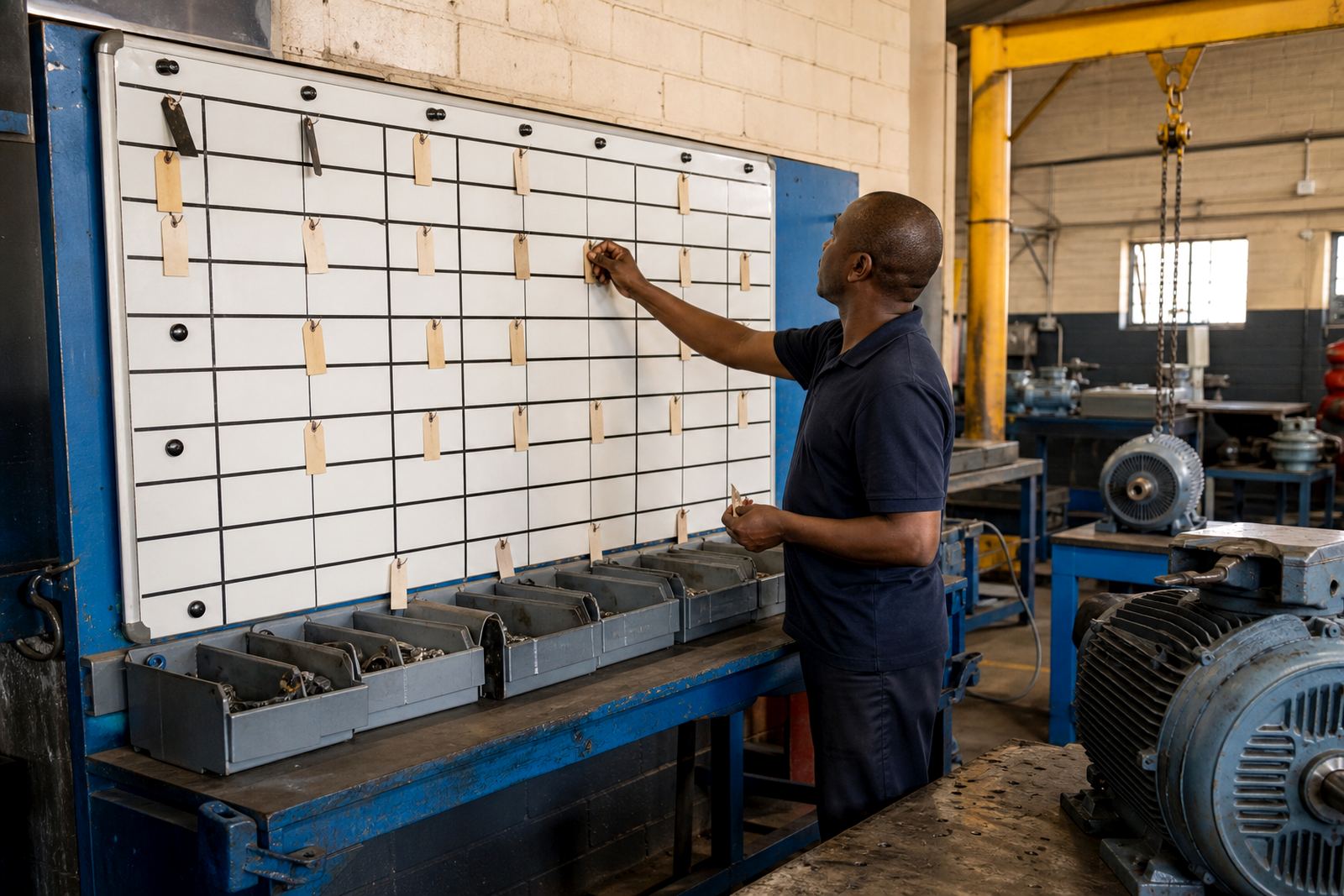
Before a repaired motor leaves the workshop or goes back into a plant in Ekurhuleni, Pretoria or Durban, the handover should be clear and complete. Site teams need to know what was tested, what was replaced and what should be watched during the first few hours of running. Good records make the next service easier and help maintenance teams spot patterns.
Useful handover points include the work done on the winding, any bearing replacement, the insulation readings taken, and whether the motor was tested with a drive or direct on line. If alignment checks, motor removal, shutdown planning or commissioning support were part of the job, that should be noted too. A tidy record helps operations, especially when multiple machines are being returned during a short shutdown window.
- Confirm the motor tag details and connection arrangement
- List tests completed and readings recorded
- Note any recommendations for cable or panel checks
- Advise on first-run monitoring for noise, heat and vibration
When testing is done properly, repairs last longer and plant risk is lower. That is the real value of careful motor work, not only getting the unit running again but keeping it in service with fewer surprises.