
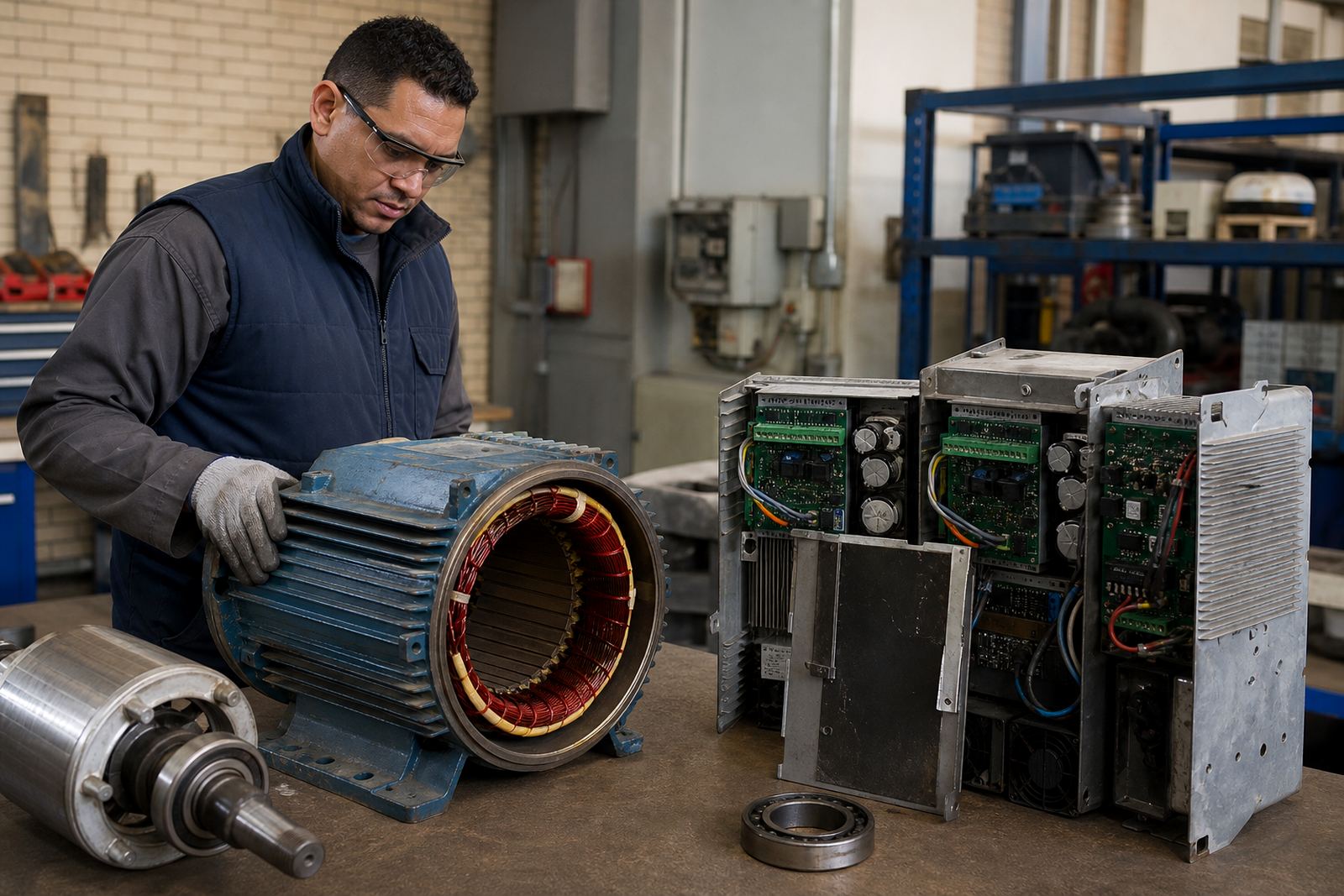

Why bearing problems are often visible before they become severe
Bearings support the rotating parts inside electric motors, pumps, fans and other driven equipment. When a bearing starts to fail, the first clues are often changes in noise, heat, vibration or the way the machine runs under load. In many cases the motor still starts and runs, which is why the early warning signs get missed.
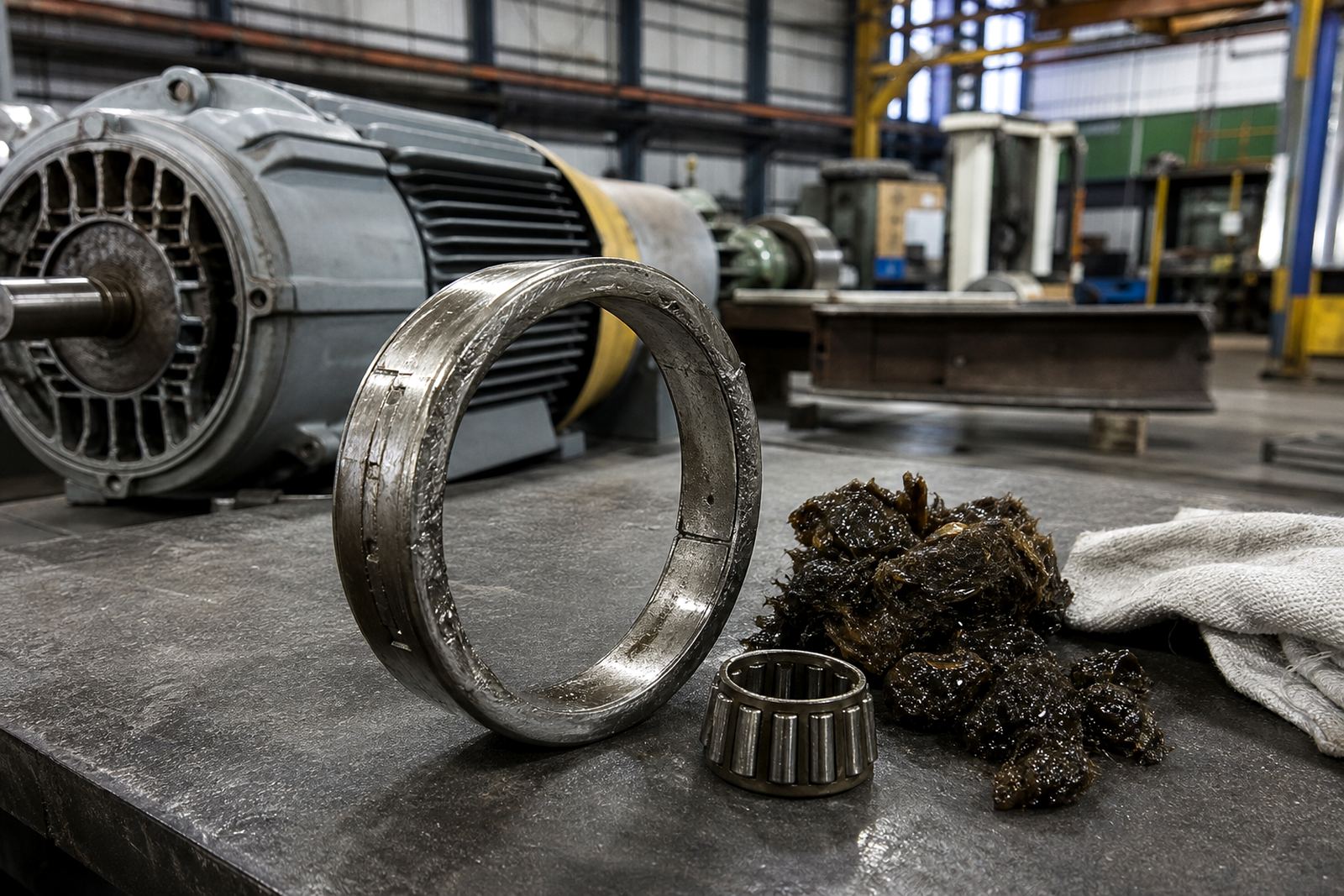
At our Germiston base we often see equipment from Johannesburg, Ekurhuleni, Pretoria, Vereeniging and Durban arrive only after the noise has become obvious. If the issue is caught earlier, there is a better chance of saving the shaft, housing and windings from extra wear. A small fault can grow fast once the grease breaks down or contamination gets into the bearing race.
Sound changes that should make you stop and inspect
One of the easiest signs to notice is a change in sound. A healthy motor usually has a steady hum. A failing bearing may add a grinding, squealing, rumbling or growling sound. In some cases the sound changes with speed or load, which points to uneven rolling surfaces or poor lubrication.
- A high pitched squeal can suggest lack of lubrication or a dry bearing.
- A rough rumble may point to pitted races or damaged rolling elements.
- A clicking or tapping noise can appear when a bearing is badly worn.
- A sound that gets worse as the machine warms up can mean clearance issues or grease breakdown.
If several machines in a plant are running at once, compare the suspect unit with a similar motor. A clear difference in sound is worth checking even if the machine still works. Do not assume the noise is harmless just because the motor is not tripping.
Heat, vibration and smell are important warning signs
Heat is another common clue. A bearing that is overloaded, under-lubricated or contaminated can run hotter than normal. The housing may feel warm to the touch, and in some cases the end shield or drive end side becomes noticeably hotter than the rest of the machine. Excess heat can also affect the insulation system over time.
Vibration is just as important. Excessive vibration may show up as loose fasteners, movement in the base, visible shaking, or a motor that sounds harsh at one specific speed. In workshops around Boksburg and Kempton Park, vibration often appears after poor alignment, damaged mounting feet, or a belt that has been overtightened. A burnt smell can also appear when heat has started damaging grease, paint or insulation.
- Check whether the vibration increases when the machine starts up or under full load.
- Look for signs of grease leakage or discoloured housing around the bearing area.
- Listen for changes at different speeds if the equipment uses a variable speed drive.
- Check if the machine runs hotter after long duty cycles or during load shedding recovery starts.
Simple site checks before you touch the machine
Before any inspection, the equipment must be isolated and made safe by qualified people using lockout procedures. Electrical work and motor removal should never be handled casually. If the machine is in a panel, near live conductors or linked to a drive, treat it as an electrical task and not just a mechanical one.
Once it is safe, start with a visual check. Look for dust build-up, oil contamination, water ingress, damaged fan covers, loose mounts and unusual wear on couplings or belts. On coastal sites and humid areas, moisture can get into bearings faster than people expect. In dusty workshops, fine particles can work their way into seals and shorten bearing life.
- Confirm the motor is isolated, locked out and tested dead.
- Check for hot spots, discolouration and grease leaks.
- Inspect the base, feet, coupling and alignment condition.
- Note whether the fault started after washing down, rain exposure or a power interruption.
When bearing symptoms point to a bigger fault
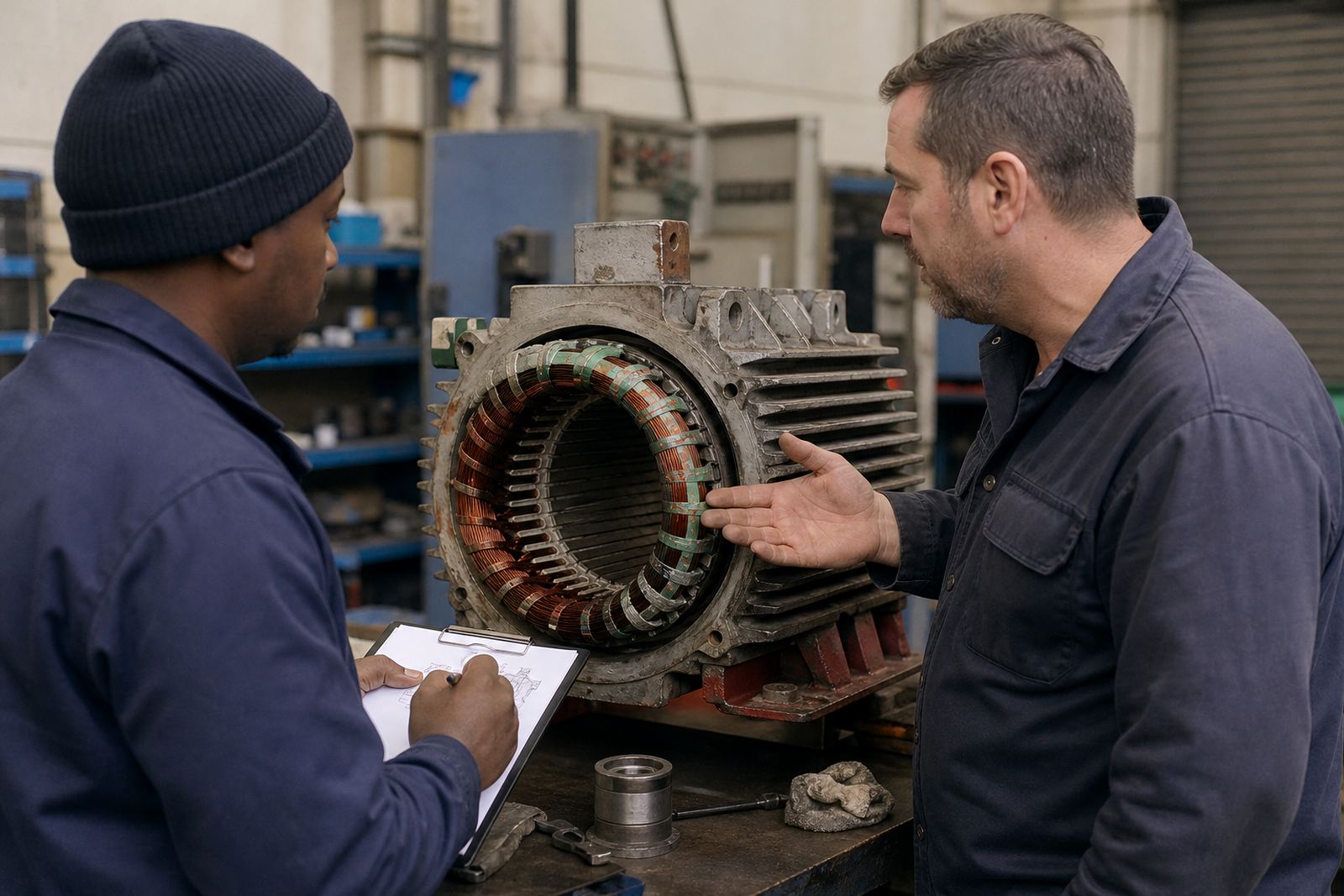
A bad bearing does not always stay a bearing fault. If the machine has run for too long with vibration or excessive heat, the shaft may be scored and the housing may become oval. In electric motors, the extra movement can damage the windings, seals and end brackets. Repeated trips on a drive can also point to a motor that is struggling mechanically rather than an electronic fault only.
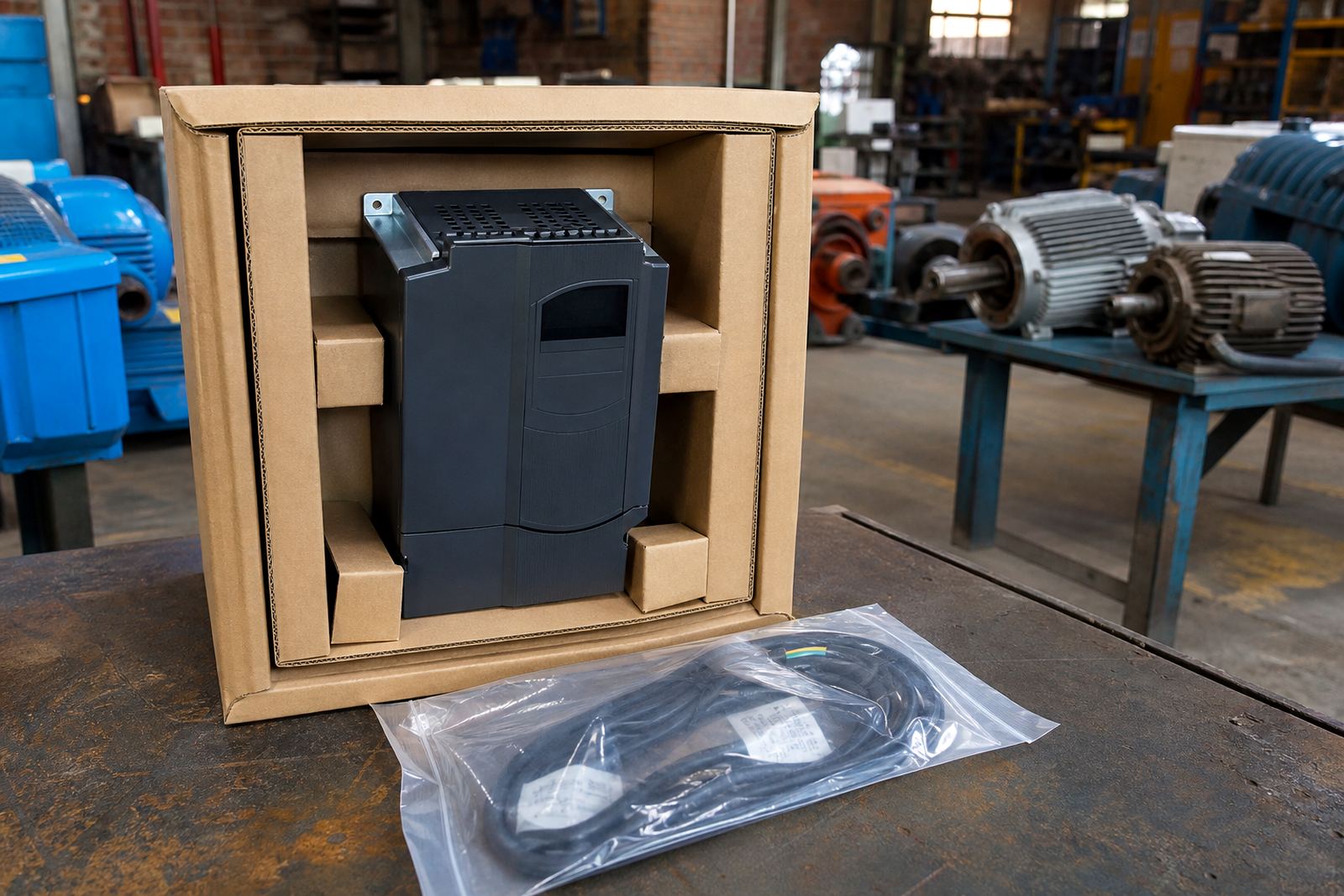
During fault finding, it is worth checking whether the issue is linked to poor alignment, a blocked fan, damaged cables, panel contamination or repeated overload. In some cases the drive is reacting correctly to a mechanical problem upstream. That is why a proper inspection should cover both the motor and the variable speed drive if one is fitted. A panel with dust on the cooling parts or loose terminations can add stress, especially in plants that run through long shifts.
What a proper repair process should include
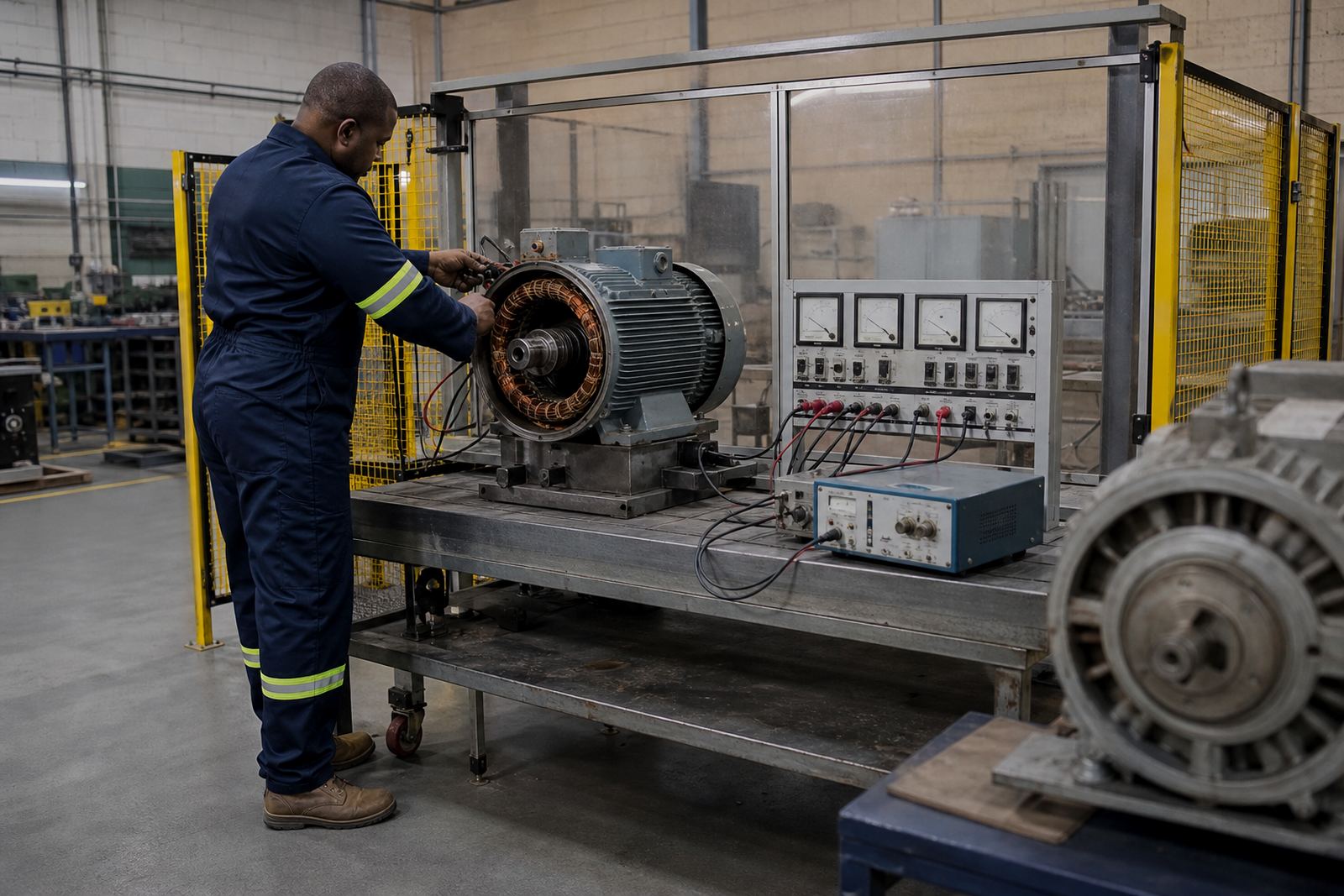
A sound repair approach starts with stripping, cleaning and measuring the unit, then checking the bearing seats, shaft condition and winding condition before any parts are changed. If the bearings are replaced, the correct fit, grease type and end play must be set carefully. After that, insulation testing helps confirm that the windings are still suitable for service and that moisture or contamination has not already spread through the motor.
For driven equipment, it is also sensible to inspect the drive side. Variable speed drives may need fault finding, drive inspection, panel cleaning, cable checks and commissioning support once the motor is back in place. In Germiston and across Gauteng we often assist with motor removal, bearing checks, spares assessment and site reporting so maintenance teams can plan the next step properly. The goal is not just to get the machine turning again, but to get it back in a condition that makes sense for the site.
A quick checklist for operators and maintenance teams
Use this as an early warning guide when checking motors, pumps, fans and other rotating equipment. If you spot more than one item, arrange a proper inspection soon rather than waiting for a failure on shift.
- New grinding, rumbling or squealing sounds
- Extra heat at the drive end or bearing housing
- Noticeable vibration, shaking or movement
- Grease leaks, dust contamination or moisture around the motor
- Repeated trips, poor starting or speed changes under load
- Burnt smell, discoloured paint or damaged seals
- Loose mounting bolts, poor alignment or worn couplings
If you are unsure, stop and have the equipment checked by qualified people. A fast visual clue can save a lot of downtime, but only if it is acted on early and safely.