

Start With The Nameplate Details
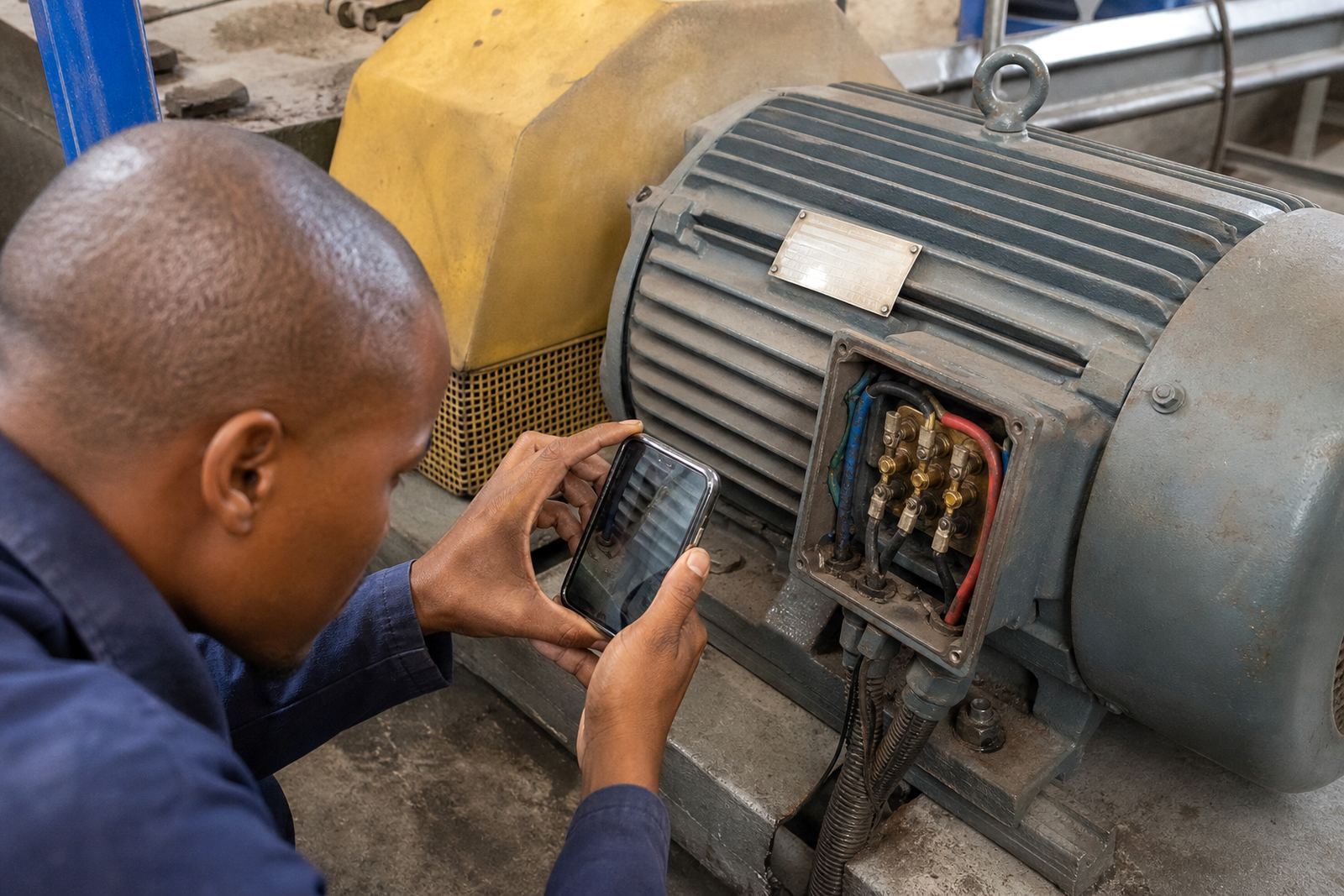
The first thing a repair team will ask for is the motor nameplate information. It tells them what they are dealing with before the unit arrives at the workshop or before a field visit is arranged. Share the full rating plate details exactly as they appear, even if the plate is faded or covered in grime. A quick photo from a phone is often enough to start the process, and it helps avoid confusion between similar motors on site.
Useful details include the rated voltage, current, speed in r/min, power in kW, frequency, phase, insulation class and duty rating. If the plate is damaged, note the frame size, mounting style and shaft dimensions if you can measure them. On older motors in factories around Germiston, Boksburg or Vereeniging, plates are sometimes missing after years of heat, dust and vibration, so any old record from the plant file can help.
Tell Us What The Motor Does On Site
A motor does not fail in a vacuum. The machine it drives, the load profile and the working conditions all matter. A pump motor running on a sewage line is not the same as a conveyor motor in a packaging plant or a fan motor in a workshop roof space. Share what the motor drives, how often it starts, whether it runs continuously, and whether it works harder during peak production or during shutdown periods.
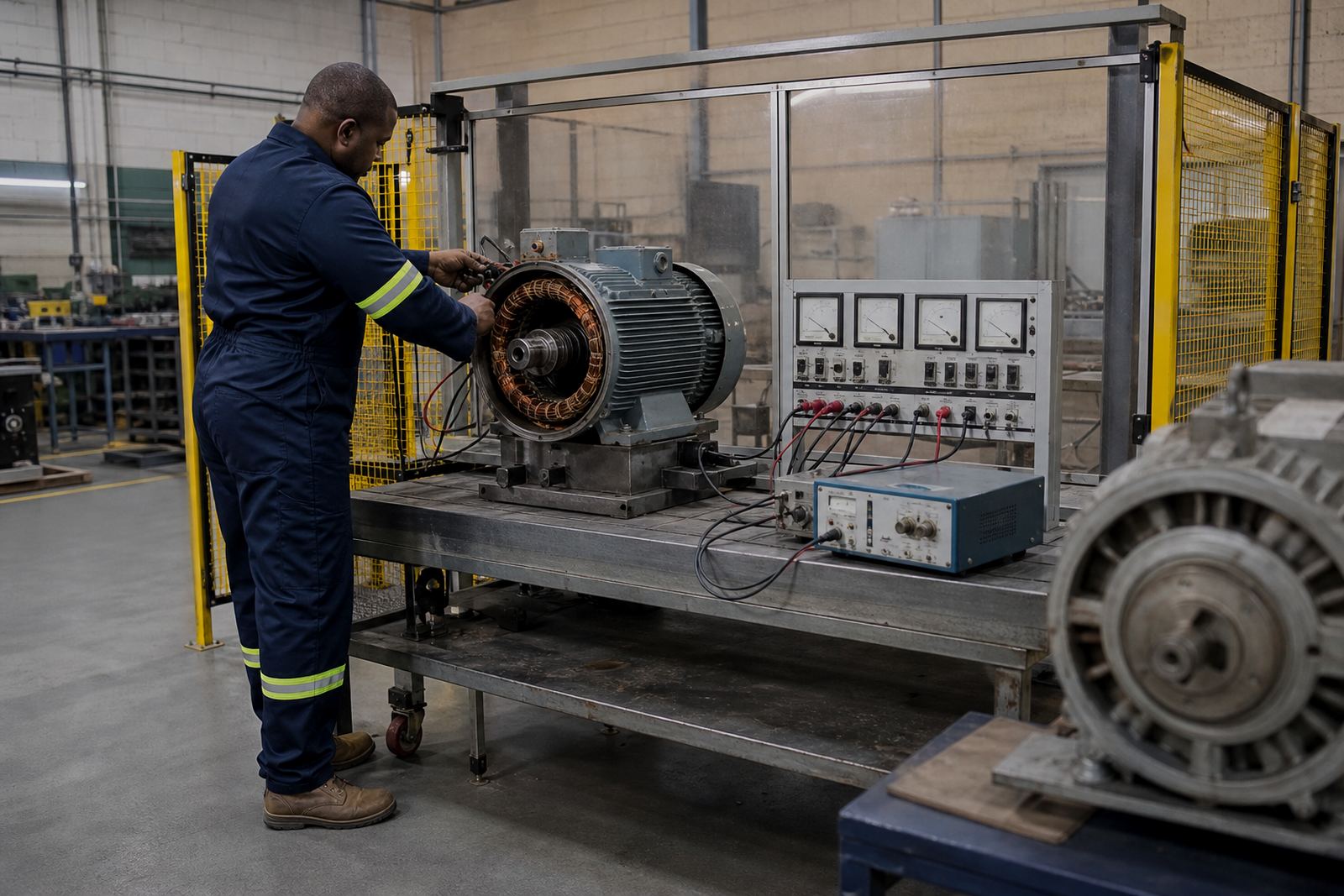
It also helps to note the environment. Coastal humidity in Durban, dust in some workshops, heat near ovens, or water ingress from cleaning can all change the fault pattern. If the motor sits near chemicals, in a wash bay or outdoors, say so. These details help with motor rewinding decisions, bearing selection checks and insulation testing, because the repair team can look at the right failure causes from the start.
- Machine type and duty: pump, fan, compressor, conveyor, mixer or crusher
- Where it runs: indoors, outdoors, wet area, dusty area or high heat zone
- How it failed: tripping, overheating, noise, vibration, smoke, no start or speed loss
- When it failed: after load-shedding, after a storm, after a maintenance stop or during normal running
Share The Symptoms Before The Strip Down
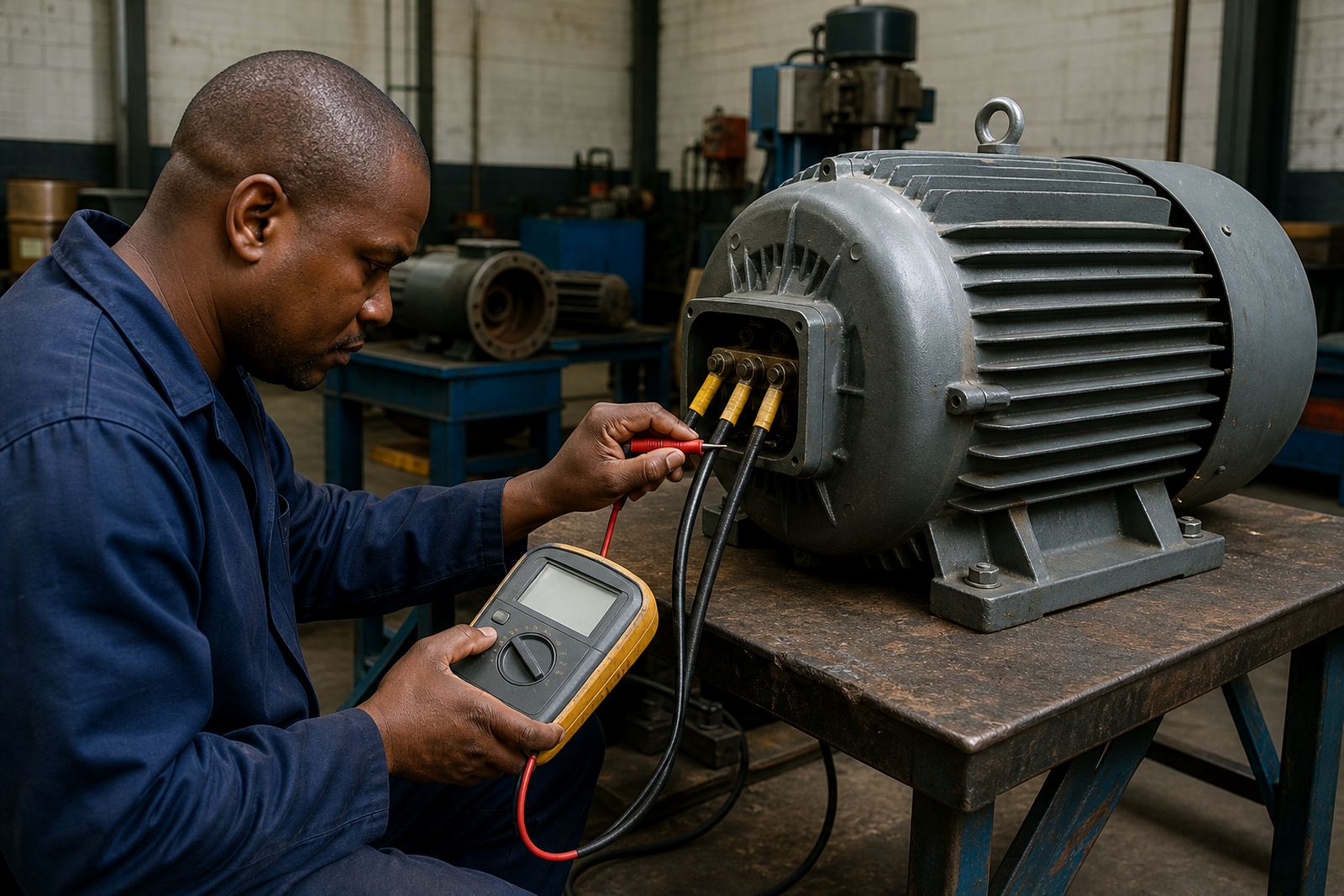
The more exact the symptoms, the easier it is to plan inspection. A motor that trips instantly may point to earth leakage, winding damage or a cable fault. A motor that hums but does not start may have a supply issue, a capacitor issue on single-phase units, a seized load or a bearing problem. If the motor is noisy, say whether the sound is grinding, screeching, rattling or a low growl. Each one points in a different direction.
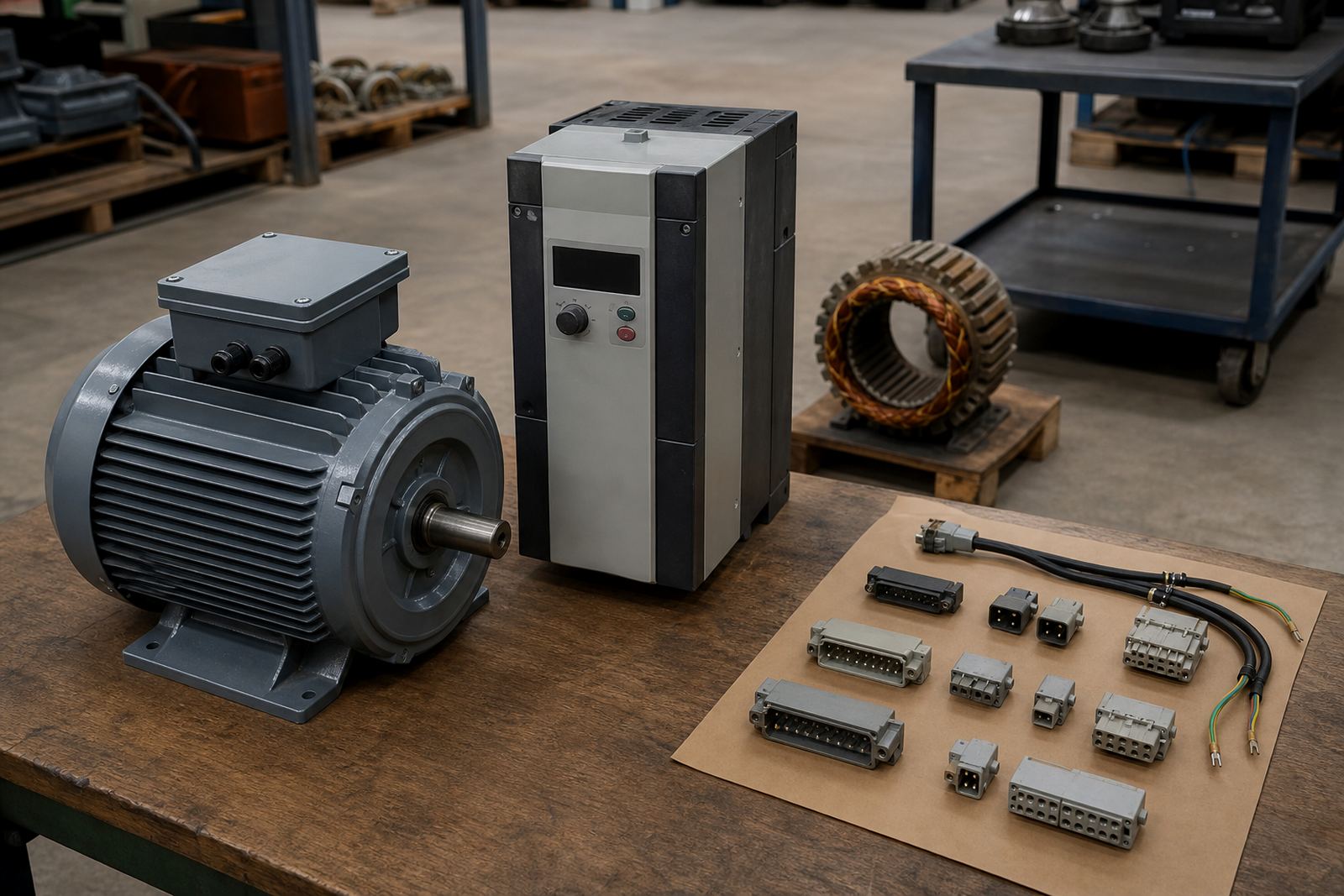
For drive-related faults, note the display message, fault code or flashing pattern if one is visible. Also mention whether the variable speed drive fails only at start-up, during acceleration, under heavy load or after a power dip. In South African plants, load-shedding and voltage dips can expose weak components, so the timing of the fault matters more than many people think.
- Was there smoke, smell, heat or visible sparking?
- Did the motor trip the breaker, overload or earth fault device?
- Was there a storm, water ingress or a recent washdown?
- Did the fault start after maintenance, belt replacement or alignment work?
Add Photos, Measurements And Cable Details
Clear photos save time and reduce back-and-forth. Send images of the nameplate, terminal box, coupling, fan cover, mounting feet and any damaged cables. If the motor is still in place, a wide shot of the whole machine helps the technician understand access, lifting needs and whether motor removal will need rigging support. For a drive, include the front panel, wiring terminals, cooling area and panel condition.
Measurements are useful too. If you can, record shaft diameter, key size, centre height, mounting hole spacing and overall length. On site reporting jobs in Pretoria or Kempton Park, these details help the team prepare tools and spares before arrival. Cable size and length also matter, especially where long runs, damaged glands or poor terminations have caused nuisance trips.
- Motor photos from all sides, including the terminal box
- Drive photos, including the display and wiring area
- Any visible wear on couplings, belts, pulleys or fan covers
- Cable condition, gland condition and panel cleanliness
List Previous Repairs And Known Risks
If a motor has been rewound before, repaired on site, or run after a bearing change, tell the team. Previous work can explain repeat failures. A winding that has been repaired more than once may show heat stress, varnish breakdown or damage at the connections. New bearings can also fail early if the shaft, housing or alignment is not right. Even simple details like whether the motor ran after a flood or after a belt was overtightened can point to the cause.
Share any maintenance notes, shutdown reports or fault logs you have. If the unit has a history of overloads, frequent starts, or vibration after coupling work, say so. In plants with tight production schedules, those notes help the repair team choose the right checks first instead of guessing. It is far better to give too much detail than leave out the one point that explains the fault.
Safety Steps Before Anyone Touches The Equipment
Electrical work must only be carried out by qualified people, and lockout procedures must be followed before inspection, removal or testing starts. Isolate the supply, prove dead, secure the switch position and make sure stored energy is released before anyone opens a terminal box or panel. On variable speed drives, capacitors can retain dangerous charge after isolation, so waiting time and safe verification matter.
Before the team arrives, make sure the area is safe to access and that the correct people are available to point out the machine, shut down associated equipment and confirm the process risk. If there is water nearby, unstable platforms, moving belts or limited access in a cramped plant room, mention it early. That helps with shutdown planning and avoids delays on site.
- Lock out and tag out the supply
- Prove the circuit is dead before touching conductors
- Stop linked equipment and release stored energy
- Keep the area clear for motor removal, inspection or field service
What To Send Through The Enquiry Form
When you use the enquiry form on the contact page, aim to give a short but complete summary. A few lines with the right facts will speed up fault finding, spares assessment and the decision on whether the motor needs workshop repair or on-site support. If you are in Germiston, Johannesburg, Ekurhuleni, Boksburg, Pretoria, Vereeniging or Durban, mention the site location and whether access is during a running shift or a shutdown window.
A useful enquiry includes the motor type, problem description, photos, location and any urgency around production. If a drive is involved, say whether it is for speed control, soft start or process control. If the job may need alignment checks, commissioning support or panel cleaning, add that too. The more precise the first message, the easier it is for the team to plan the next step since 2007.