

Start With The Fault You Can Prove
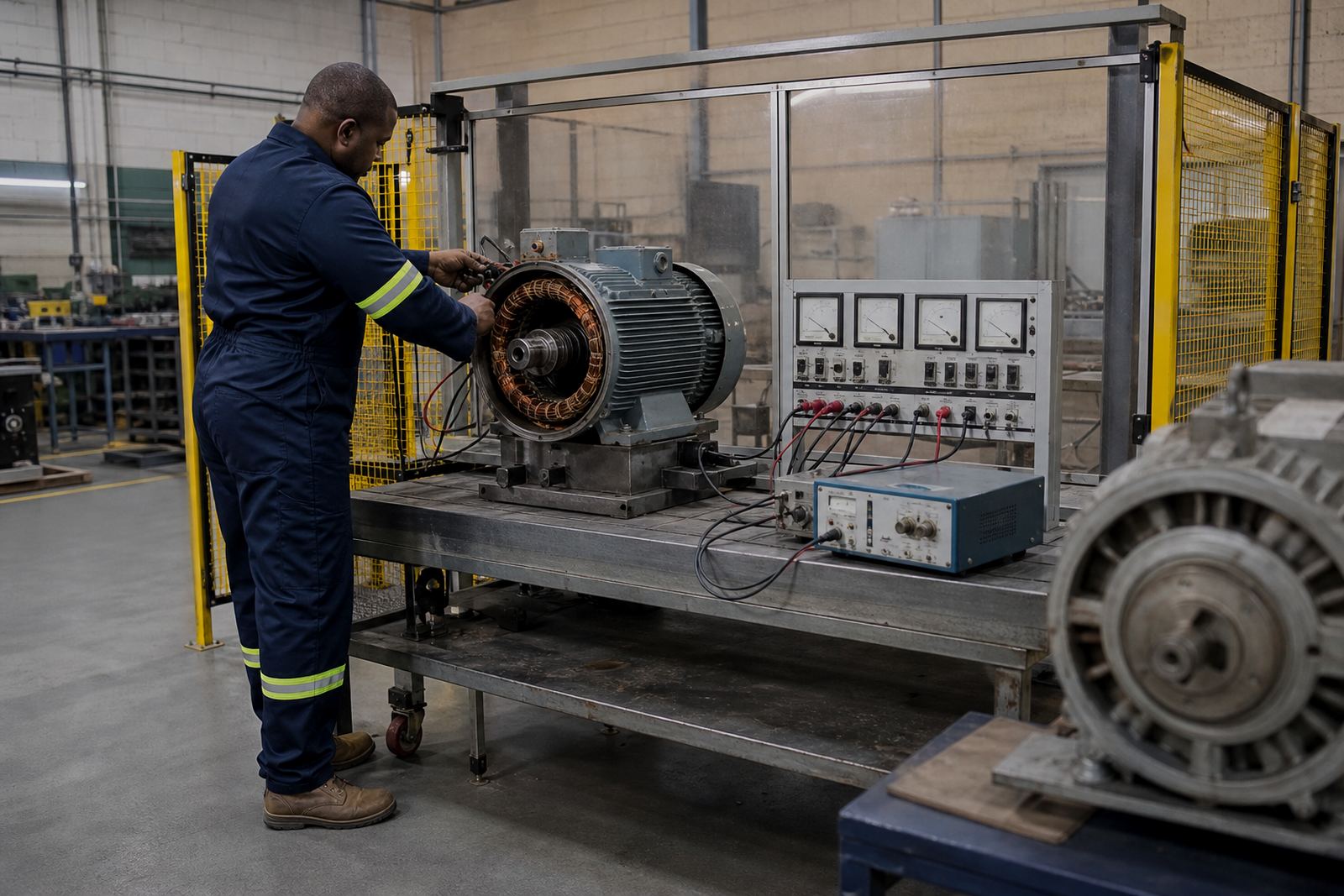
Before anyone quotes repair or replacement, get a clear fault picture. On site that usually means checking the symptom, the operating load, the supply conditions and any recent trips, overheating or vibration. A motor that fails after repeated overloads needs a different approach from one that only struggles after rain, dust or a voltage dip. In Germiston, Johannesburg and the wider Gauteng area, we often see issues linked to tired bearings, damaged insulation, loose terminals or drive settings that no longer match the application.
Electrical work must be done by qualified people using lockout procedures, and no one should open a motor or drive until the supply is isolated and proven dead. That is basic safety, not a box-tick. It also protects the equipment while fault finding is still underway.
Compare Repair Scope Before You Commit
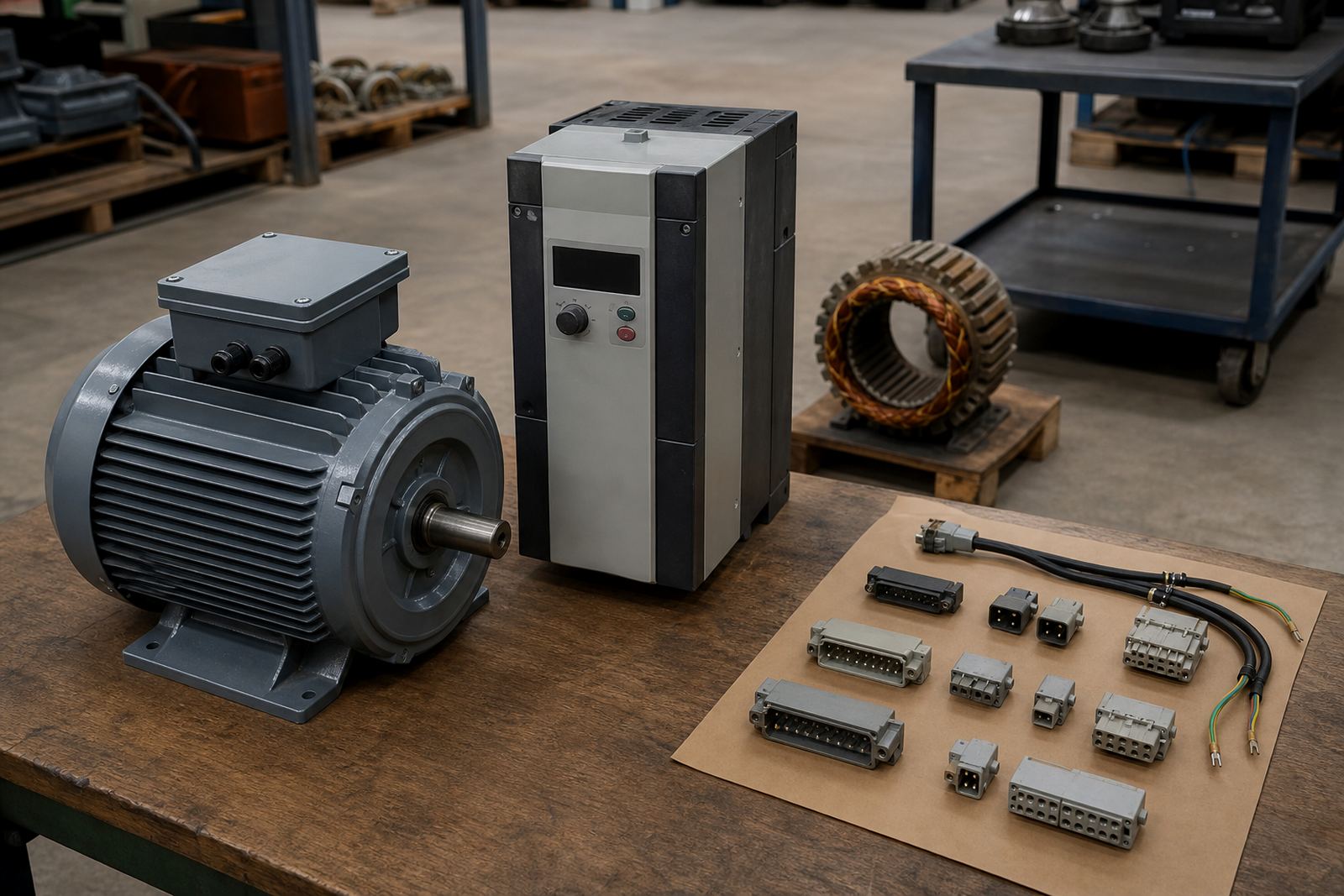
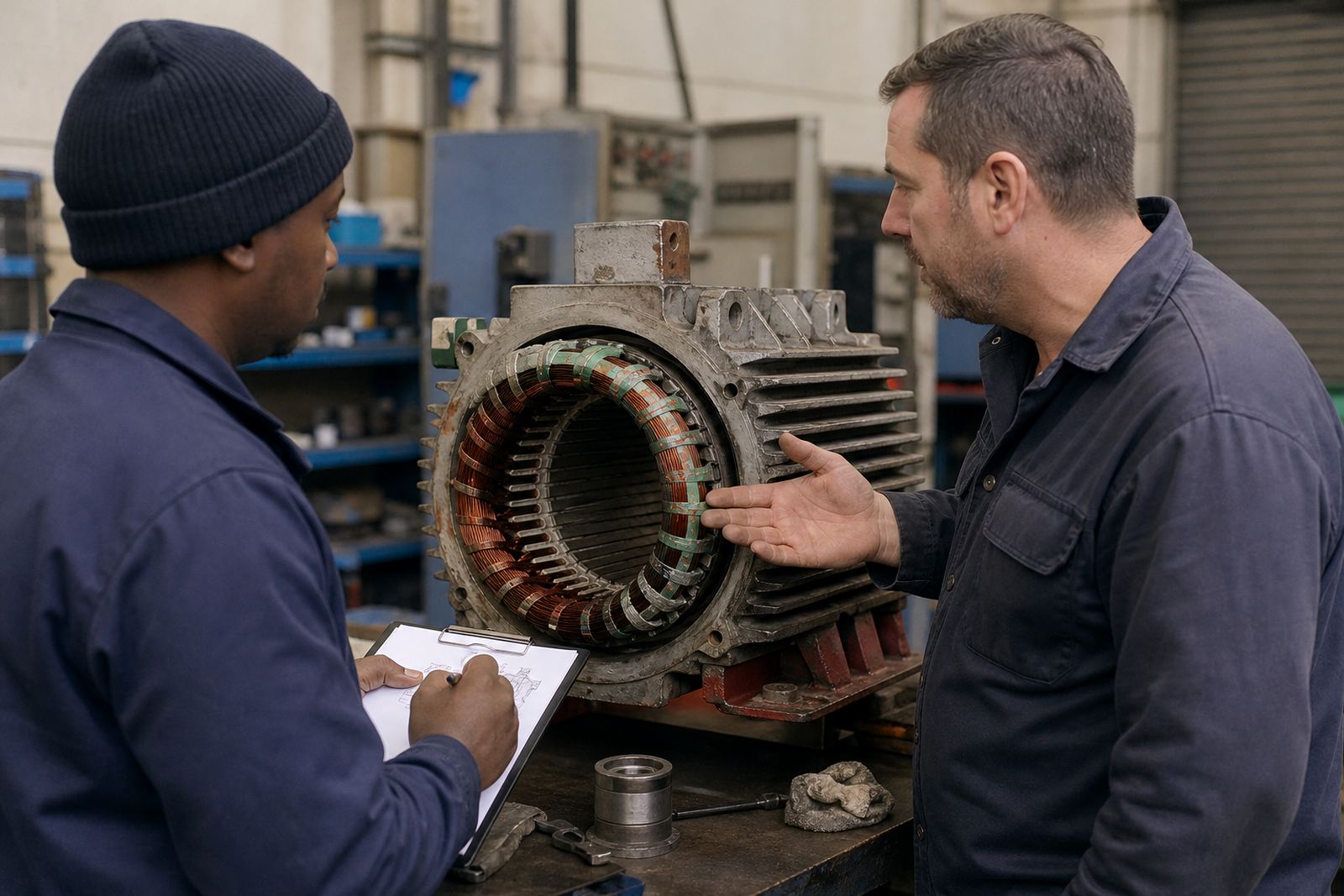
Repair scope tells you how far the work goes. A light repair may cover cleaning, testing, bearing checks and small wiring corrections. A full motor rewind is a deeper intervention and is usually considered when winding insulation has broken down, a winding is burnt, or repeated test results show unsafe resistance values. Drive repair can be equally varied. Some units need only a cooling fan, capacitor, terminal repair or board-level fault finding, while others need a more complete inspection after dust, heat or power quality problems.
- Ask whether the fault is electrical, mechanical or both
- Confirm if the housing, shaft and frame are still serviceable
- Check if bearings, seals and terminals also need attention
- Request insulation testing and winding checks before deciding
- For drives, include panel cleaning and cable checks in the scope
A proper scope keeps the job honest. It also helps you avoid paying for a partial fix when the rest of the machine is already near failure.
Measure Downtime Against Your Production Needs
Downtime is often the biggest cost, especially during shutdown periods or when a single machine supports the whole line. If a motor can be removed, tested and reinstalled quickly, repair may be the better option. If the unit is critical and there is no spare on site, a repair plan should include motor removal, transport, fault reporting and commissioning support so the restart is controlled. That matters in plants across Pretoria, Vereeniging and Durban where production windows can be tight and loadshedding can interrupt work twice in one day.
It helps to ask how much work can be done while the unit is out, and what can be done on site before removal. Sometimes a drive inspection, panel cleaning and cable checks can identify the issue before any major strip-down. Other times the damage is inside the motor and removal is unavoidable. Either way, a clear downtime plan is better than guesswork.
Use Repair When The Core Parts Still Make Sense
Repair is usually the practical choice when the frame, shaft and core are sound and the fault is limited to windings, bearings, insulation or drive electronics. Electric motor rewinding can restore a unit that has overheated, suffered phase loss or lost insulation strength, provided the mechanical parts are still within usable condition. Bearing replacement is worth considering when noise, play or heat points to wear but the rotor and housing are still in good shape.
For variable speed drives, repair is often sensible when the fault is traced to a specific component or a known stress point such as dust ingress, blocked cooling or a failed control section. In humid coastal conditions, especially around Durban, corrosion and moisture can affect both motors and drives. If the fault is caught early, a repair may give dependable service without replacing the whole unit.
Know When Replacement Is The Better Call
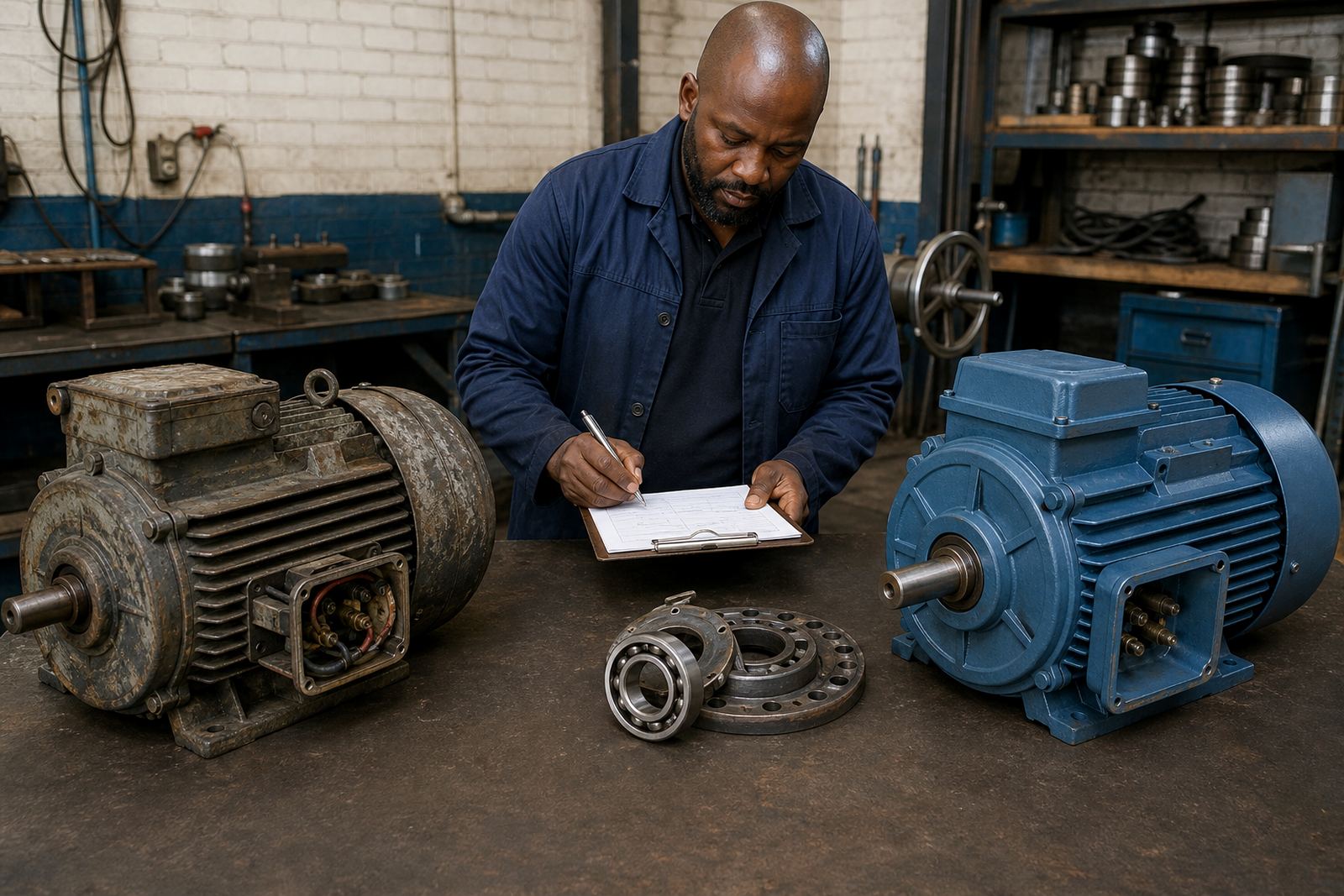
Replacement becomes more practical when repair would leave you with repeated risk or when the machine is already too far gone. If the winding has failed more than once, the shaft is badly worn, the frame is cracked, or the drive has multiple board failures, replacement may save time over the longer term. The same applies when spares are no longer sensible to source or the unit no longer matches the load requirement.
Do not decide on price alone. Compare the full picture: removal, repair work, reinstallation, commissioning and the risk of another stop shortly after restart. A cheaper repair that fails again can cost more than fitting a replacement that suits the duty correctly. For workshops in Boksburg and Kempton Park, that comparison is often the difference between a short outage and a week of avoidable disruption.
Build A Simple Comparison Checklist
When you need to choose between repair, rewind or replacement, use a plain checklist. It keeps the discussion focused and helps the technician, supervisor and buyer work from the same facts. A good checklist also supports shutdown planning, especially when multiple motors need attention at once.
- What is the exact fault symptom and when did it start?
- Has the unit tripped, overheated or made unusual noise?
- Are the bearings, insulation and windings still testable?
- Can the motor or drive be removed without slowing the whole site?
- Is there a spare unit on site or a backup arrangement?
- Will repair, rewind or replacement give the best long-term value?
At Locor in Germiston, our team works through fault finding, motor removal, drive inspection, bearing checks, insulation testing, alignment checks and site reporting so clients can compare options properly. The goal is not just to get the machine running again, but to choose the option that fits the plant, the downtime window and the actual condition of the equipment.