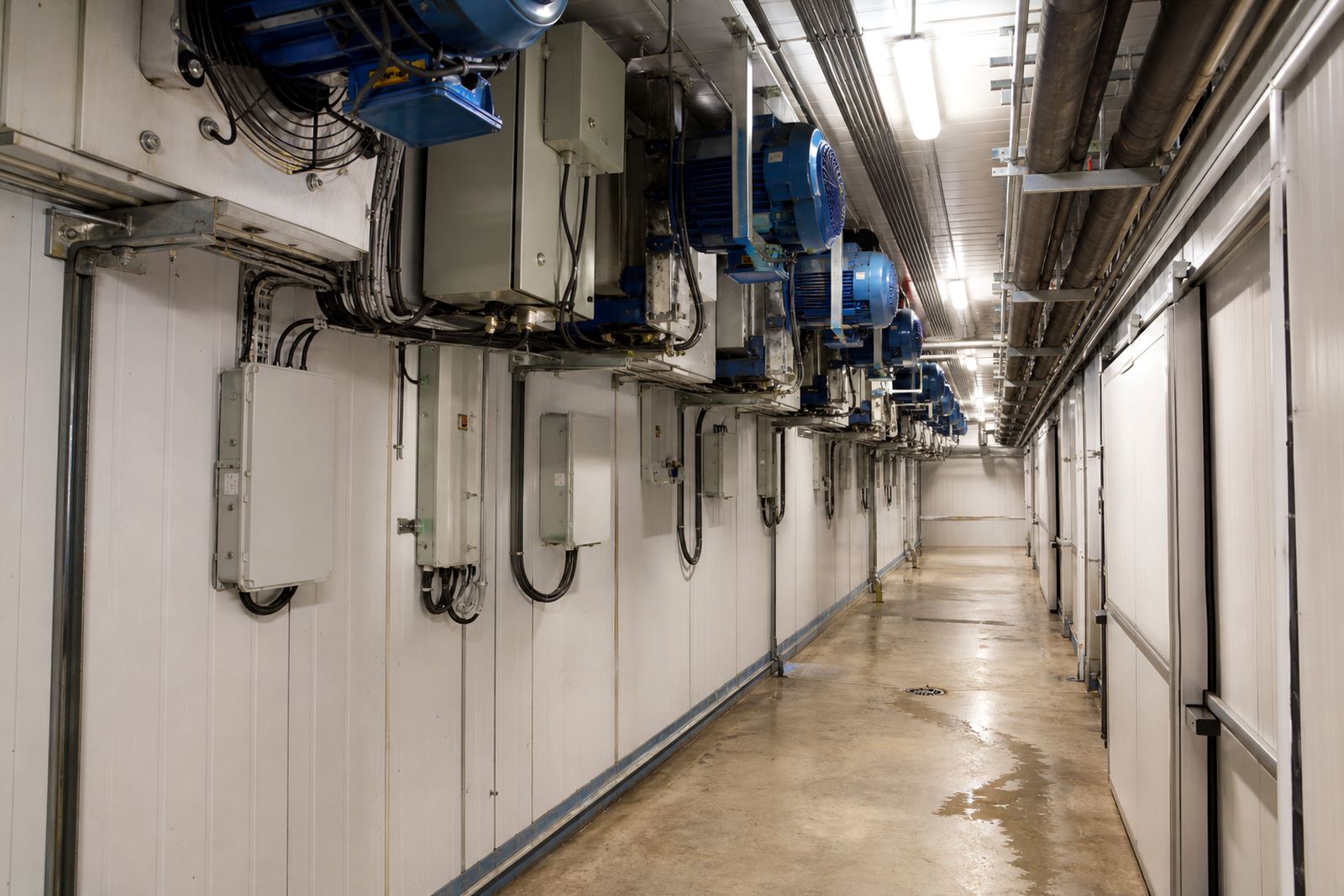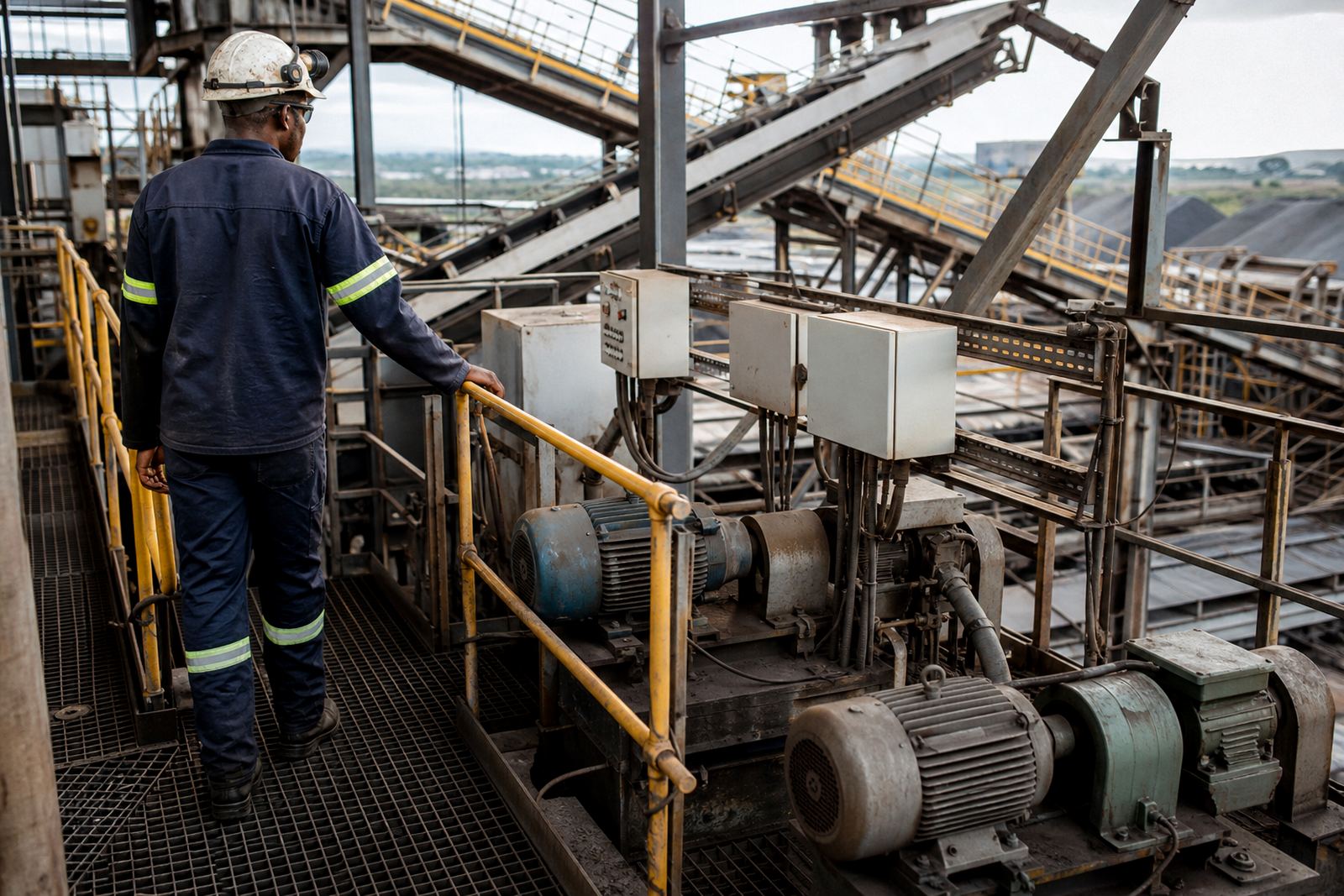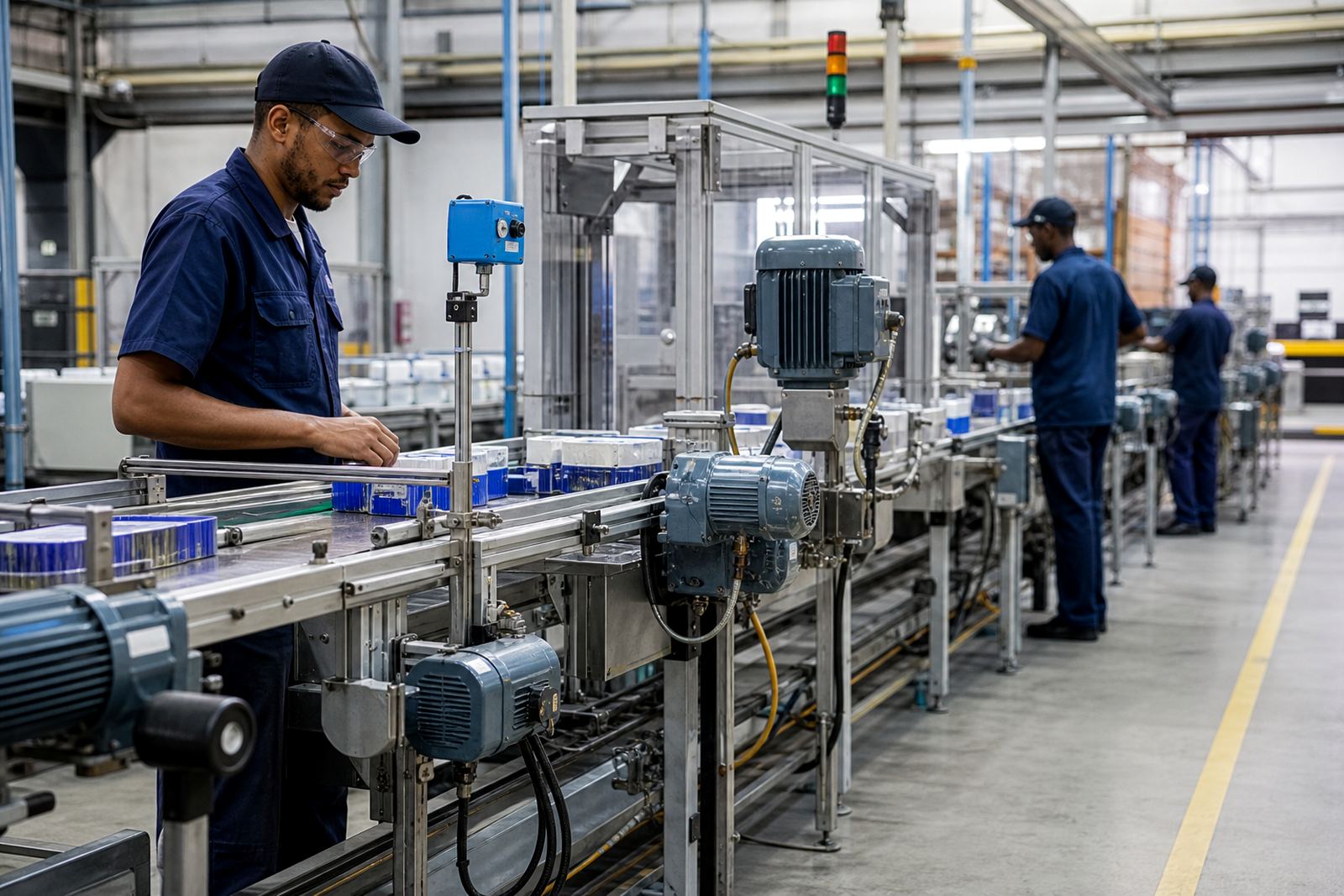


When a packaging line starts tripping or running unevenly
Packaging systems depend on repeatable motion. When a conveyor surges, a filler hesitates or a wrapper stops mid-cycle, the whole line slows down and product begins to stack up. In many plants the first signs are small: a motor that runs hotter than usual, a drive that throws a fault after load-shedding, or a starter that needs a second attempt before the line comes back into service.
Locor works on motor and drive faults that affect packaging lines in factories and workshops across South Africa. That includes plants in Germiston and Boksburg, production sites in Kempton Park and Johannesburg, and facilities further afield in Pretoria, Vereeniging and Durban. Our work is practical: fault finding, motor removal, drive inspection, bearing checks and insulation testing, then the repair path that suits the equipment and the shutdown window.
Electrical work must always be done by qualified people using proper lockout procedures. Packaging lines often have more than one supply point, so isolation needs to be checked carefully before any panel is opened or motor removed. A rushed start-up after maintenance can cause more damage than the original fault.
How we approach rewinding and drive repair for production lines
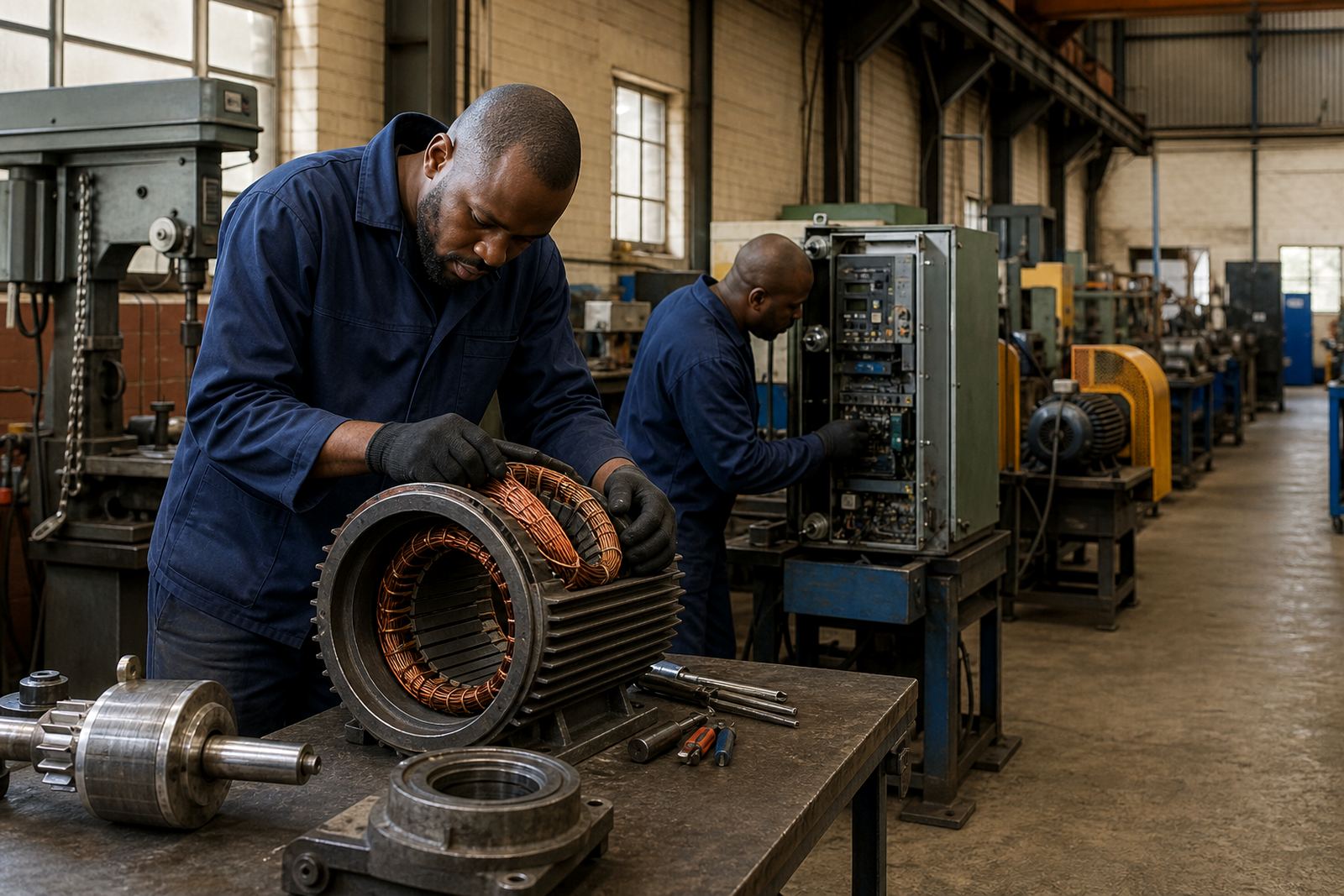
Motor rewinding starts with proper fault identification. If a winding has failed, the motor is stripped and inspected for heat damage, contamination and signs of repeated overloading. The replacement winding must suit the frame size, application and duty cycle. After rewind, the motor should be tested for insulation strength and checked again before it goes back into service.
Bearings are just as important as the windings. A packaging motor with worn bearings can run noisy, draw extra current and create vibration that affects alignment. Bearing replacement is part of a proper repair when there is play, noise or heat buildup. We also check shaft condition, fan covers, terminal boxes and coupling fit before recommissioning.
Variable speed drive repair usually starts with inspection of the power section, control section and cooling path. Many drive faults are linked to heat, loose terminations, dust, failed capacitors or damaged boards after a surge. Packaging plants should also review whether the drive settings still suit the actual load, because a motor that was fine on one line may trip on another after a change in product or cycle speed.
- Insulation testing before and after repair
- Bearing checks and replacement where wear is visible
- Panel cleaning and cable checks to reduce nuisance faults
- Site reporting so maintenance teams know what was found
Planning a packaging line repair around shutdown windows
Good planning matters as much as the repair itself. Packaging lines usually run on tight schedules, and maintenance windows can be short. Before motor removal or drive work starts, it helps to map the line, note which machine sections depend on each other and record what must be isolated first. If there are multiple motors in one line, label the cables and terminals before disconnecting anything.
For larger sites in Ekurhuleni, Pretoria or Durban, shutdown planning should also consider access, lifting gear, spares availability and the order in which machines are restarted. A line should not be brought back in pieces unless the controls and interlocks allow it. If commissioning support is needed, the team on site should confirm rotation, current draw, fault history and any unusual noise or vibration before handing over.
Motor removal should be planned with the same care as reinstallation. Couplings, belts and mounts need attention on the way out and again on the way back. If a machine has been moved or realigned, alignment checks should be repeated because even a small shift can cause extra wear or false drive faults.
- Confirm the shutdown scope before equipment is opened
- Allow time for testing, not only for repairs
- Keep the restart sequence written down for operators and maintenance staff
- Check that all guards and covers are back in place before energising
Common mistakes that cause repeat faults
One common mistake is to replace a drive without checking the motor and cable set first. If the motor insulation is weak or the cable has damage, the new drive may trip just like the old one. Another mistake is to run a packaging line with a noisy bearing because it still turns. That approach often ends in a full motor failure during a busy shift.
Loose terminals, dirty panels and poor cooling also cause trouble. In factories where dust or product residue is present, a drive panel can overheat if it is not cleaned properly. Cable checks and panel cleaning should be part of normal maintenance, not only emergency work. Load-shedding adds another layer, because repeated power interruptions can expose old faults that were already sitting there.
Some teams also skip insulation testing after moisture exposure or after a motor has stood idle for a long period. In humid coastal conditions, or after a washdown, it is worth checking before restart. A test result that looks fine on paper still needs to be matched with the actual site conditions, the machine duty and the restart load.
Typical budget ranges for packaging line work
Budget depends on the fault, the size of the motor, whether the drive can be repaired, and whether field service is needed. For packaging lines, a simple inspection and fault finding visit may sit at the lower end, while a motor rewind, bearing replacement and recommissioning support will cost more. If a drive has multiple failed components, the repair scope can increase quickly.
As a rough planning guide, businesses often set aside a few thousand Rand for inspection, assessment and minor remedial work, then more for motor rewinds or drive repairs where parts and testing are involved. Larger motors, urgent shutdown work and after-hours callouts can add to the total. The best approach is to assess the equipment first and then decide whether repair, replacement or staged work makes better sense for the plant.
For sites in Germiston, Boksburg, Kempton Park and Johannesburg, we also see budget pressure from repeated start stop duty and ageing controls. That is why spares assessment matters. If a component is near failure, it is usually better to plan for it before it stops the line again.
Locor supports packaging operations across South Africa from its Germiston base. Our services include fault finding, motor removal, drive inspection, bearing checks, insulation testing, alignment checks, commissioning support, shutdown planning, spares assessment, panel cleaning, cable checks and site reporting. Clients reach us through the enquiry form on our contact page, and we work with plants that need careful repair work rather than guesswork.