



Home / Industries / Cold Storage

Industries

Cold Storage

Cold stores depend on motors and drives that keep air moving, temperatures stable and product handling on schedule. Locor supports refrigeration fans, pumps and handling systems from Germiston across Johannesburg, Ekurhuleni, Pretoria, Vereeniging and Durban.

Cold Storage

Keeping cold rooms running when every degree matters

Cold storage sites put extra strain on electric motors because the plant runs for long hours, often in damp rooms, chilled air streams and areas with frequent washdowns. Fans, pumps, conveyors and louvre actuators all need to keep working even when loads rise during receiving, dispatch and defrost cycles. When a motor starts drawing high current or a drive trips on fault, the effect can be felt quickly in product quality and stock movement.

Locor supports cold facilities from our Germiston base with motor rewinding and drive repair for plants and workshops across South Africa. We work on equipment used in packhouses, freezer rooms, distribution centres and industrial refrigeration systems, with an emphasis on careful fault finding and proper re-commissioning.

  • Refrigeration evaporator and condenser fans
  • Cold room circulation pumps
  • Material handling motors and conveyors
  • Drive systems for speed control and process adjustment

Typical equipment in a cold storage plant

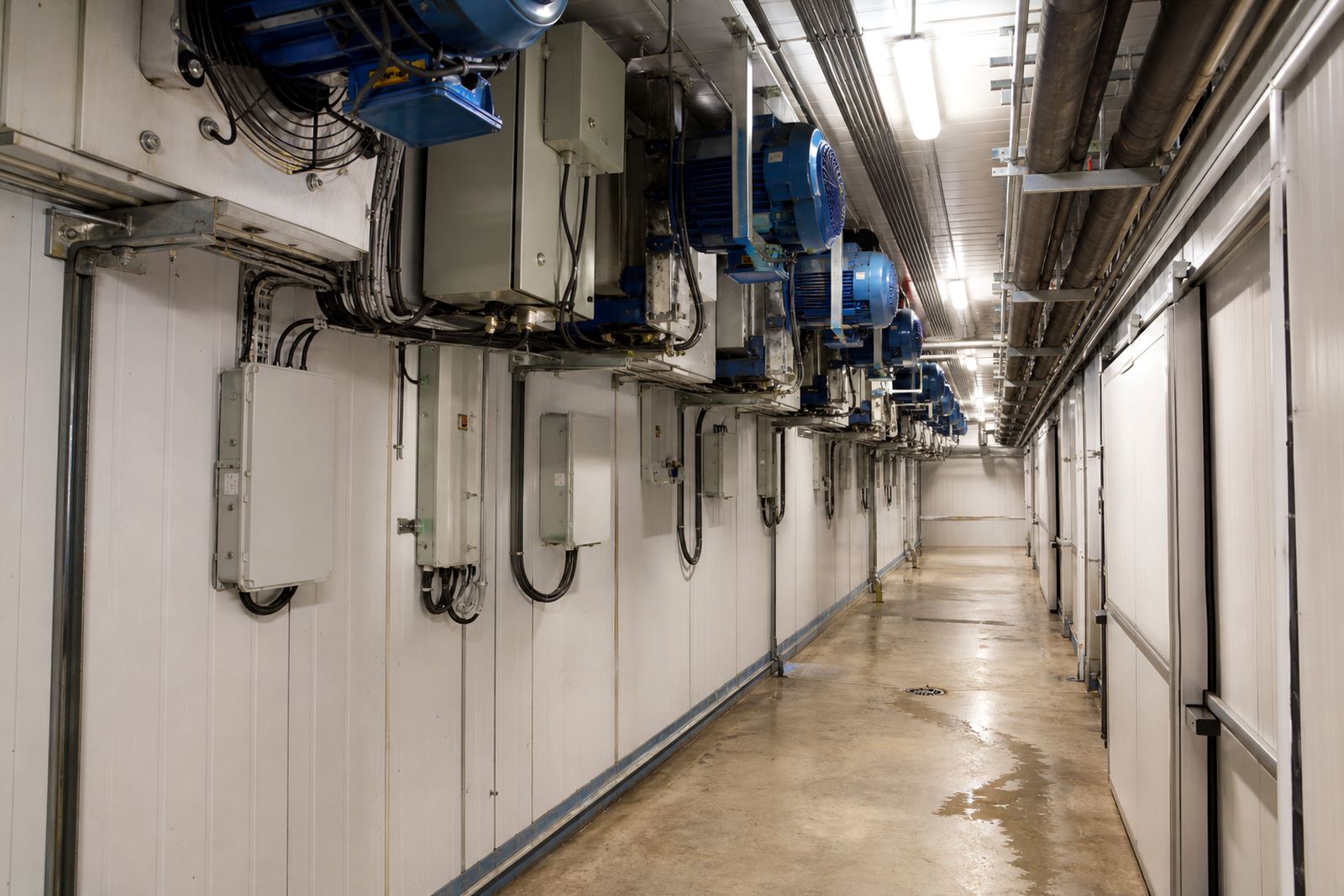
A cold facility usually has a mix of motors and controls rather than one single system. The common set includes fan motors on cooling coils, pump motors for glycol or water circuits, belt or gear driven handling equipment, and variable speed drives that manage airflow or transfer rates. In many sites, the electrical gear sits in plant rooms that are cooler than ambient but still subject to moisture, condensation and fine dust.

We also see bearing wear from continuous duty, insulation breakdown from moisture ingress, and drive faults caused by poor ventilation in control panels. If a site has old cabling, overloaded starters or repeated nuisance trips, the problem may sit deeper than the motor itself. A proper inspection should look at the whole circuit, not only the failed part.

  • Motor removal and refit after safe isolation
  • Bearing checks and replacement where needed
  • Insulation testing on windings and cables
  • Panel cleaning and cable checks in control areas

How layout and planning affect cold store reliability

Good planning matters in cold storage because access is often tight and shutdown windows are limited. Motors on high bay evaporators may need lifts, access platforms or clear floor space around racking. Drives and panels should be mounted where they can be reached for inspection without exposing them to dripping water or poor airflow. If a site is near the coast, like Durban, extra attention should be given to corrosion and terminal corrosion, especially on enclosures and glands.

We advise facilities to map critical motors by location, duty cycle and spare availability. That makes shutdown planning easier and reduces confusion when a motor fails during a busy receiving period. It also helps to keep a record of bearing sizes, winding details, cable routes and drive settings so the next intervention is quicker and cleaner.

  • Mark critical motors and drives by room, bay and circuit
  • Keep access clear around panels and starters
  • Separate wet zones from control equipment where possible
  • Allow space for safe lockout and test equipment

What usually goes wrong in cold facilities

The most common faults are not dramatic at first. A fan may run hotter than normal, a pump may start noisier than before, or a drive may show intermittent trips during defrost or peak load. In chilled and freezer areas, moisture can work into bearings and windings, and that can lead to early failure if the issue is left too long. Vibration, poor alignment and blocked airflow around panels can make matters worse.

We also find errors after rushed repairs. A motor may be fitted back without proper alignment checks, a cable lug may be left loose, or a drive may be put back into service without checking the motor data and acceleration settings. Those mistakes can shorten service life and create repeat faults that waste time and money.

Safe repair work and the right shutdown process

Electrical work must be done by qualified people, with lockout procedures in place before any testing or stripping begins. Cold facilities often have multiple sources of supply, backup generation and interlinked panels, so isolation needs to be verified properly. A rushed reset is not a repair, and it can put staff and stock at risk.

Locor can assist with fault finding, drive inspection, commission support and shutdown planning so the work is handled in a controlled way. We also do site reporting, which helps maintenance teams understand what failed, what was tested and what should be monitored next. That makes it easier to plan the next stoppage without guesswork.

  • Confirm isolation before touching any live conductors
  • Test for stored energy in drives and control circuits
  • Record settings before disconnecting equipment
  • Use proper lifting and handling methods for heavier motors

Budget ranges for rewinding and drive repair

Costs depend on motor size, access, winding condition, bearing state and whether the drive needs component level repair or full replacement. Smaller motors used on fans or pumps are usually more affordable to rewind than larger three phase units, while drives can vary widely depending on the fault and parts required. Sites should budget for diagnostics, removal, testing, refitting and commissioning, not only the repair itself.

As a working guide, many cold store maintenance teams allow a few thousand Rand for simpler inspection and minor remedial work, and more for full rewinds, bearing replacement or drive repairs where components and site time add up. If a plant has several critical machines down at once, it is better to set aside a realistic maintenance budget than to wait for repeated breakdowns. That usually costs less in the long run.

What our Motor Rewinding customers say

Verified Google reviews

Questions we get asked

What equipment in a cold store usually needs motor support?

Evaporator fans, condenser fans, circulation pumps, conveyor drives and other handling motors are common. Variable speed drives are also used to control airflow and process speed.

Can a drive fault be caused by the cold room environment?

Yes. Moisture, condensation, poor ventilation in panels and corrosion can all contribute to drive faults. Regular panel checks and correct enclosure placement help reduce the risk.

Do you work outside Germiston?

Yes. We support cold storage plants and workshops in Johannesburg, Ekurhuleni, Pretoria, Vereeniging, Durban, Boksburg and Kempton Park, as well as other South African sites by arrangement.

Planning something? Send the team a message.

Contact form