

Motors that keep cutting, drilling and moving material
In a metal fabrication shop, one motor fault can slow a whole bay. Saws, drill presses, presses, grinders, compressors, extraction fans and material handling equipment all rely on sound electrical condition and steady torque. When a motor begins to hum, trip, overheat or run unevenly, the problem often shows up first as poor output on the floor.
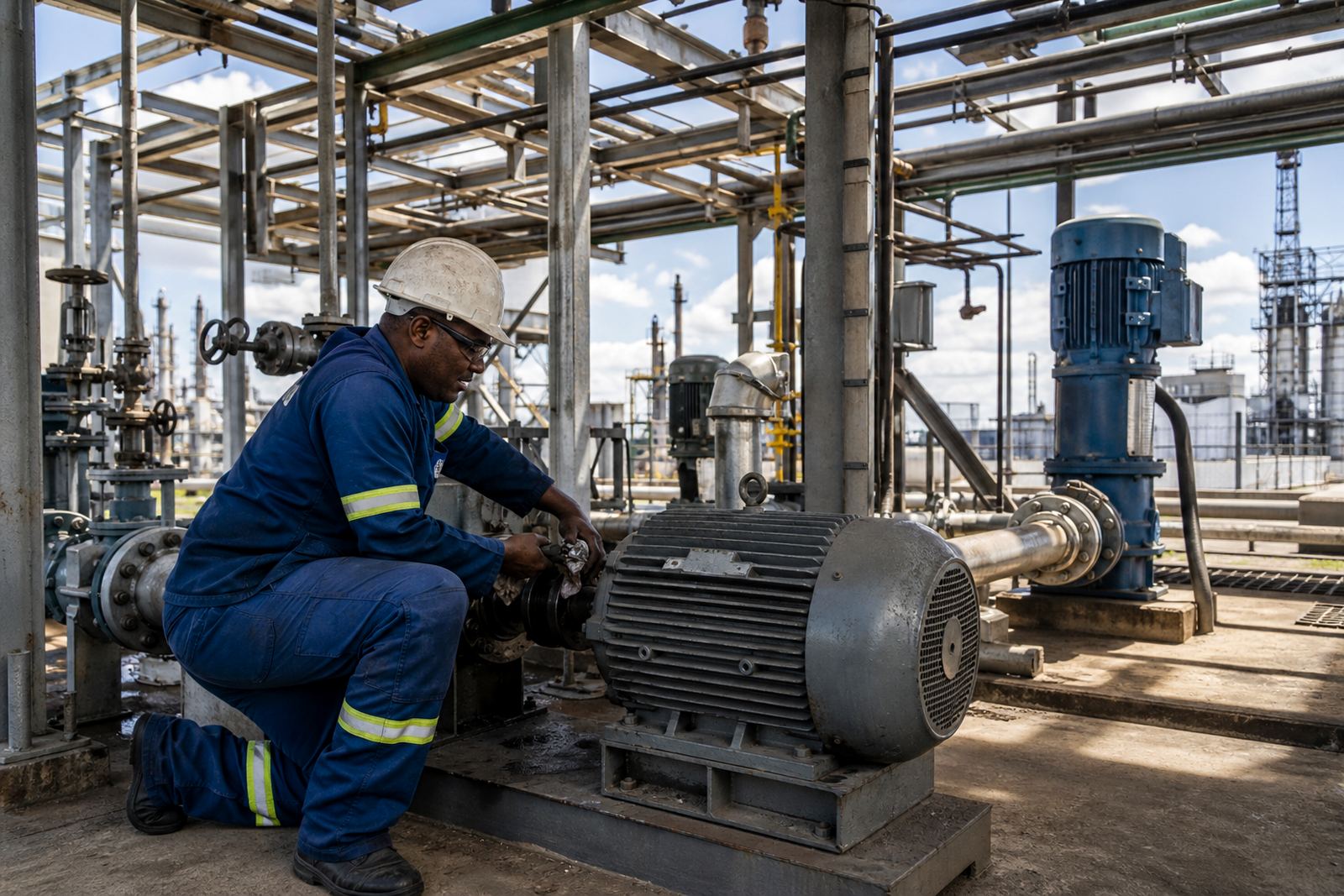
We work with plant and workshop equipment that has to handle dust, vibration and frequent starts. That includes motors on saws and drills, lift tables, conveyors, hoists, compressors and ancillary equipment. In many cases the right response is not a quick reset, but proper fault finding, bearing checks, insulation testing and, where needed, rewinding or repair. Electrical work must be done by qualified people and every job should follow lockout procedures before any covers are removed.
Typical equipment set in a fabrication workshop
Every site is different, but the same groups of equipment tend to appear in fabrication bays around Germiston, Boksburg, Kempton Park and Johannesburg. A small workshop may run a few fixed-speed motors and a compressor, while a larger plant may use multiple drives, hoists and conveyor systems. Planning for support starts with knowing what is on site, how it is wired and which items are critical to production.
- Saw motors, drill motors and grinding equipment
- Air compressors and vacuum extraction fans
- Overhead cranes, hoists and lifting gear
- Conveyors, roller systems and handling equipment
- Variable speed drives on process or auxiliary equipment
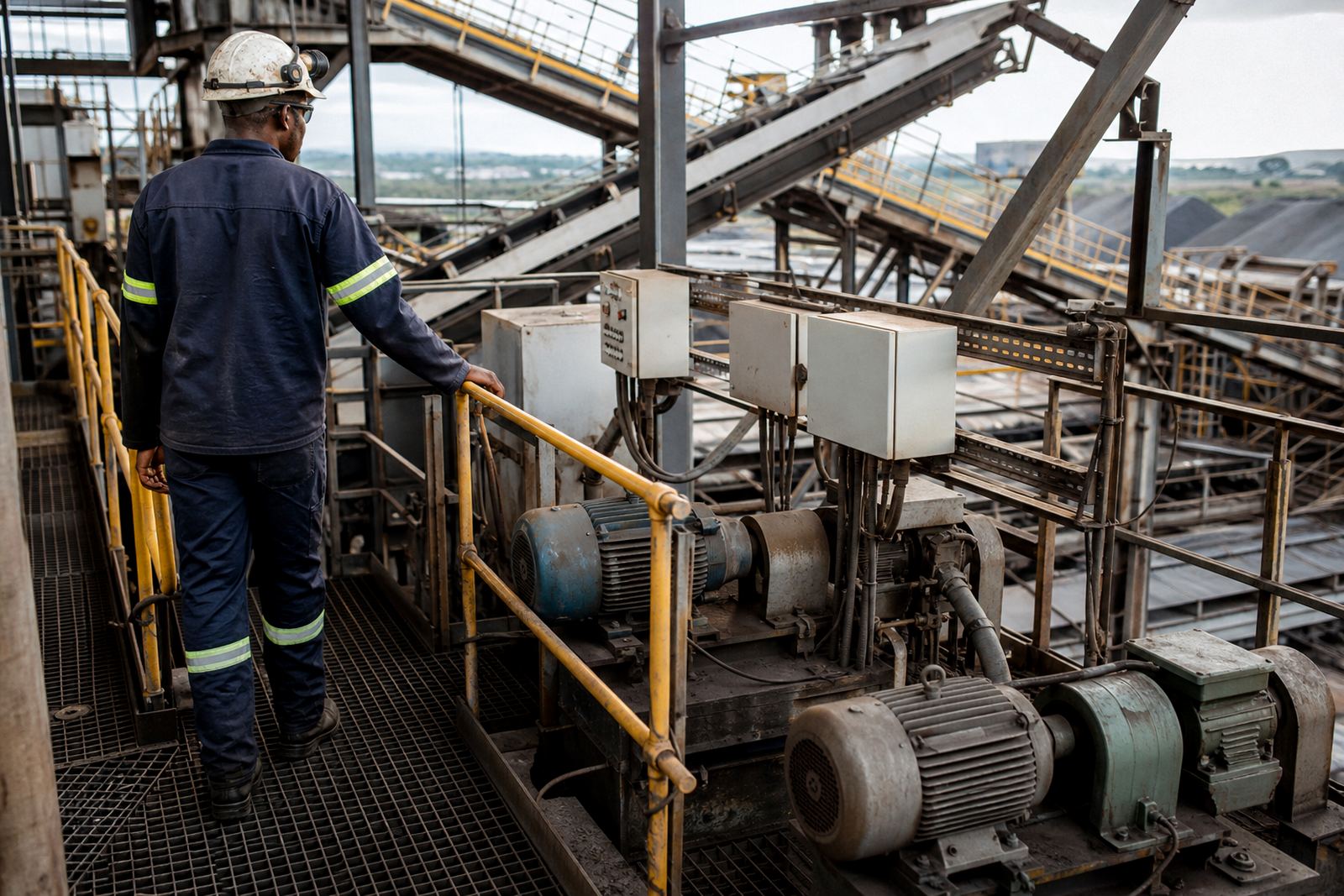
We also look at the condition around the motor. Dust build-up, poor cable routing, loose glands, damaged bearings and misalignment can all shorten service life. In coastal areas like Durban, humidity adds another layer of risk, while inland sites often battle dust and heat. A sound maintenance routine has to suit the site, not just the motor plate.
How layout and planning reduce downtime
Good planning makes motor support easier and cheaper over time. If a machine room is cramped, badly ventilated or hard to isolate, every fault takes longer to diagnose and repair. Clear access around motor frames, drive panels and terminal boxes helps with inspection, testing and removal. It also makes shutdown work less disruptive when the plant is under pressure.
For fabrication sites, it helps to map which motors are essential, which can wait and which can be swapped during a planned stop. We often advise clients to keep a simple spares list for bearings, couplings, cooling fans, terminal components and any special fittings that are hard to source at short notice. Shutdown planning, site reporting and spares assessment are useful where production cannot stop for long.
- Leave enough working space around motors and panels for safe access
- Separate dusty cutting areas from electrical equipment where possible
- Label isolation points clearly and keep them visible
- Check ventilation paths so heat does not build up around drives
- Keep records of rewinds, bearing changes and insulation test results
What goes wrong most often on fabrication lines
The common faults are usually practical rather than dramatic. Worn bearings can cause noise, vibration and rising current draw. Damaged insulation may lead to tripping, overheating or earth leakage. On drive controlled equipment, dust in panels, loose terminations, bad cooling or failed components can cause unstable speed and nuisance faults. If a motor has been running hard during peak production, the signs often show up after the shift when the machine cools down.
One mistake we often see is replacing a component without checking the full system. A motor might have failed because of a jammed load, misalignment or cable damage. A drive might be blamed when the real issue is on the motor side or in the panel. Careful inspection, cable checks, panel cleaning, alignment checks and commissioning support help avoid repeat faults. It is also worth noting that incorrect isolation or bypass work can create serious safety risks, so proper lockout and testing are essential every time.
Rewinding, repairs and the checks that matter
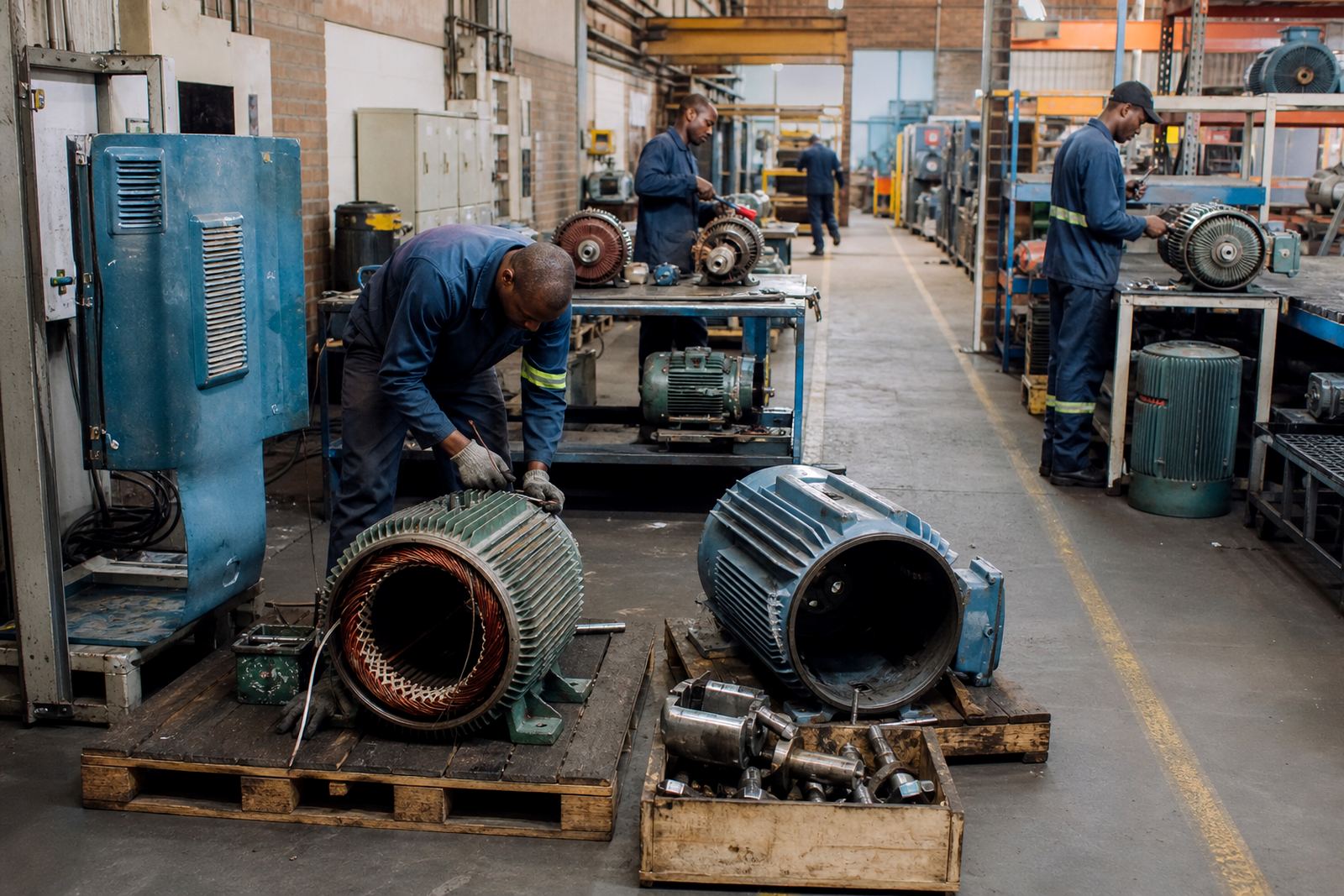
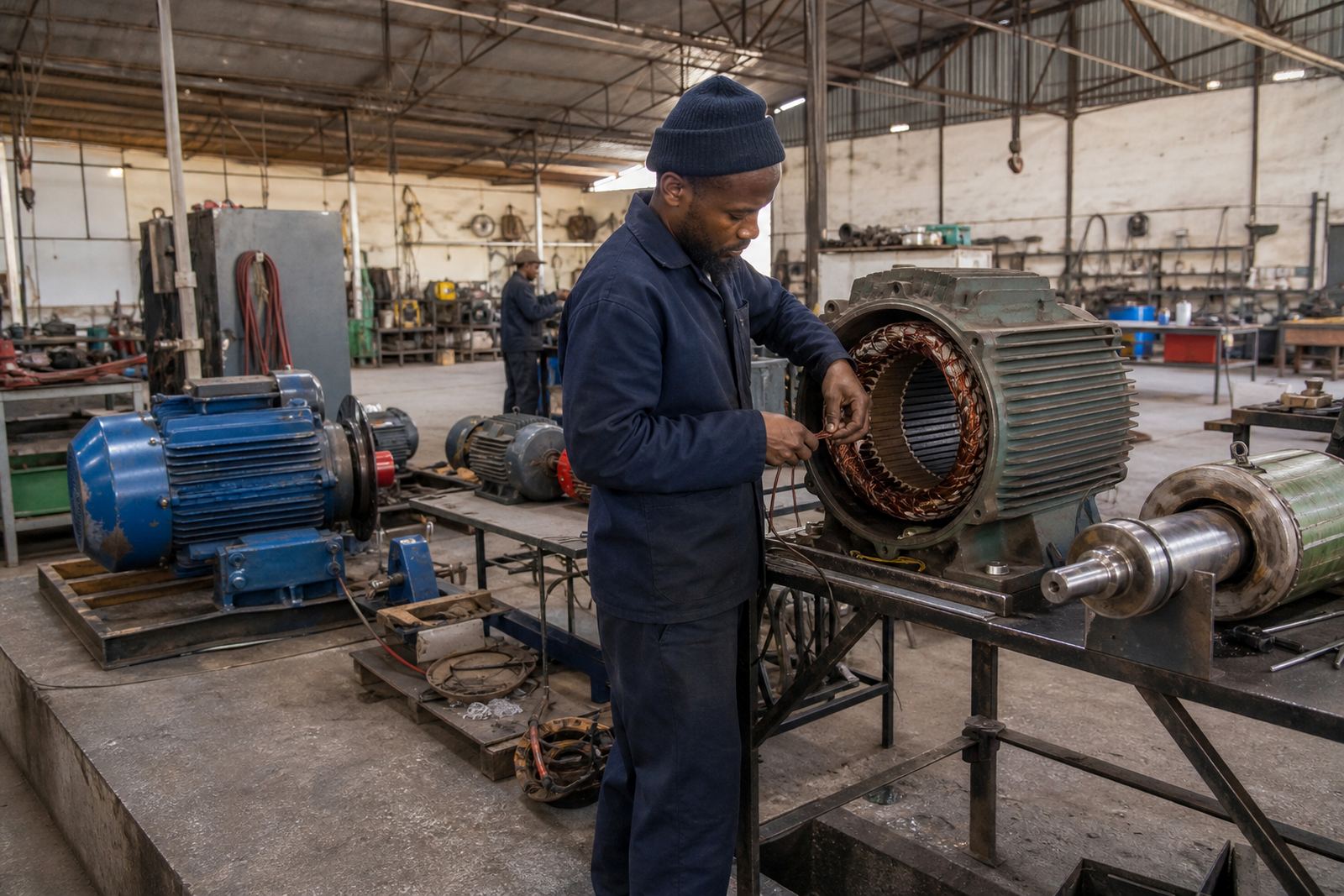
Electric motor rewinding is used when the winding insulation has broken down or the original winding has suffered heat or contamination damage. The process generally involves stripping the failed winding, checking the core and stator condition, installing new winding conductors and insulating materials, then testing the finished motor before it returns to service. Bearing replacement is often done at the same time if wear or contamination is present.
Insulation testing helps confirm whether a motor can return to service safely. Drive repair follows a different path, with inspection of internal condition, cooling, terminals and electronic components where appropriate. For both motors and drives, the goal is the same: reliable operation under site conditions, not just a short term fix. Locor’s team in Germiston supports this work with motor removal, drive inspection, fault finding and field reporting across Gauteng and further afield.
Budgeting for repairs in Rand without wasting money
Budgeting for metal fabrication support is easier when you separate emergency callouts from planned maintenance. A small inspection or drive assessment may cost far less than a full rewind or major strip and rebuild, while a badly damaged unit can become uneconomical if several parts have failed at once. The sensible range depends on motor size, access, fault type and whether the unit needs removal, transport or special handling.
As a working guide, smaller workshop jobs often sit in a lower Rand range than large industrial motors, and drive repairs can vary widely depending on the fault. It is common to compare the repair cost against replacement, expected life and downtime risk before deciding. For many plants, the cheaper option on paper is not always the cheaper option once lost production, rework and safety risk are added in. A proper assessment helps you choose the right route and avoid spending twice.
If your fabrication shop is in Germiston, Pretoria, Vereeniging, Durban, Johannesburg or Ekurhuleni, send the job details through the enquiry form on our contact page and we will help assess the next step.