

What food plants usually call us for
Food processing sites rarely fail in one neat place. A mixer may trip during peak production, a conveyor may run hot after a washdown, or a packaging line may start hunting under load. When that happens, the issue can sit in the motor, the bearings, the drive or the wiring between them. Locor works from Germiston and assists plants and workshops in Johannesburg, Ekurhuleni, Pretoria, Vereeniging and Durban with practical repair work that gets the equipment back into service without guesswork.
In food environments, downtime is often tied to shift timing, cold room schedules and cleaning windows. A small fault in a motor can affect filler timing or conveyor spacing, while a drive problem can upset speed control and product flow. We work on the electrical side of the equipment and support teams that need steady running, not just a quick reset.
Typical equipment in mixers, conveyors and pack lines
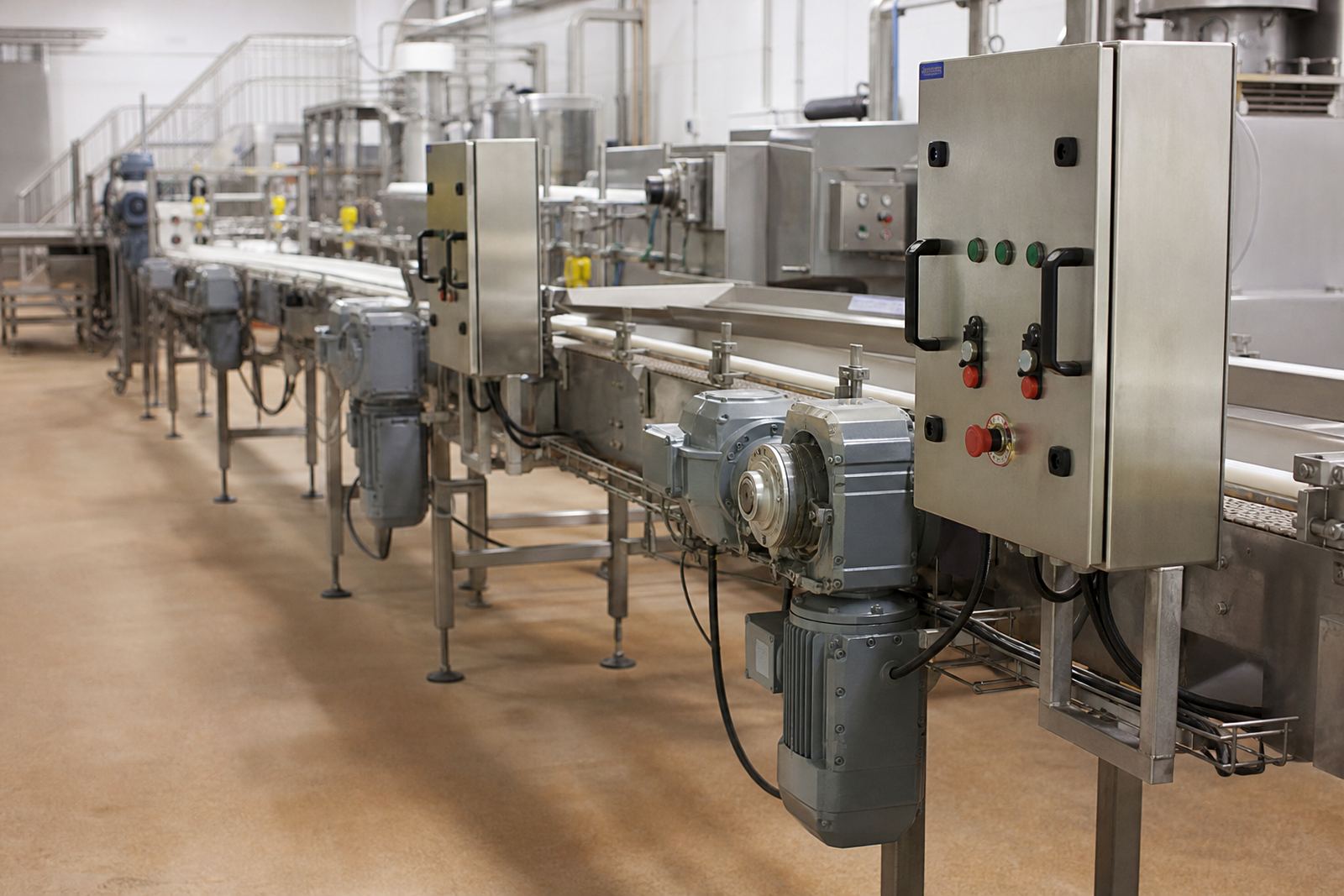
Food processing lines use a fairly predictable set of machines, but they are often arranged in tight spaces with limited access for lifting and testing. That makes planning important. We commonly see direct coupled motors, gear motors, belt driven conveyor motors, extraction fans, dosing units and variable speed drives feeding control panels. On some sites there are older units mixed with newer control gear, which means the fault finding has to be done carefully.
- Mixers and blenders with high starting load
- Conveyor motors exposed to dust, moisture or cleaning chemicals
- Packaging equipment that needs stable speed control
- Fans and pumps used for transfer, cooling or extraction
- Variable speed drives in panels near heat or vibration
In coastal areas such as Durban, moisture and salt in the air can shorten insulation life and accelerate bearing wear. In Gauteng, dust and heat build-up around panels is often the bigger issue. The same machine can fail for different reasons depending on the site, so inspection has to match the environment.
How rewinding and motor repair is handled
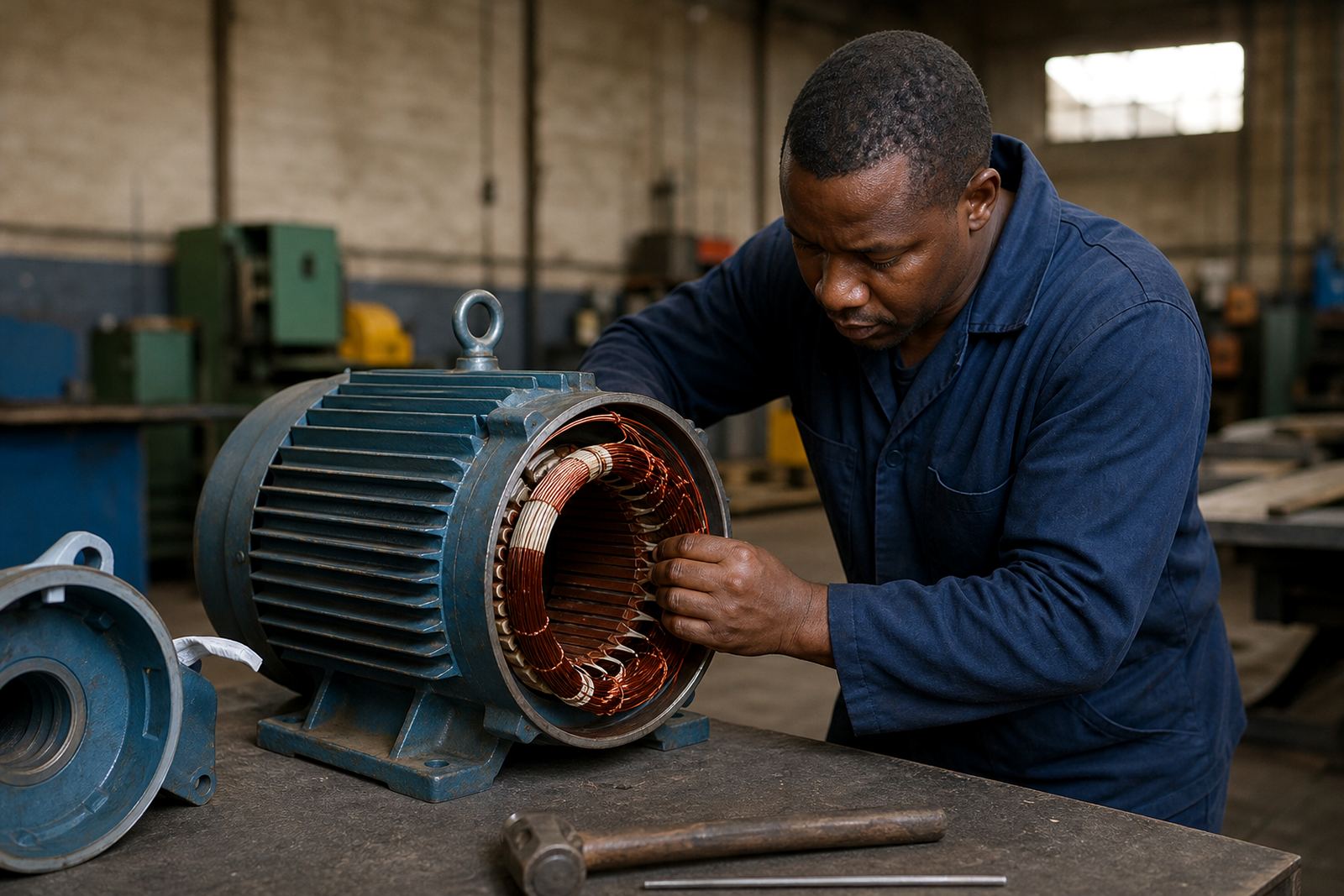
Electric motor rewinding is used when the winding insulation has broken down, the motor has overheated or the stator shows signs of electrical failure. The motor is stripped, inspected and tested before any rewind work starts. A proper repair may include bearing replacement, cleaning, re-insulation and checks on the rotor, shaft and frame condition. If the bearing seats are worn or the shaft has been damaged by a failed bearing, that has to be dealt with before the motor goes back into service.
Insulation testing is part of the process because it shows whether the windings can safely handle the electrical load. On food processing sites, where motors may start and stop many times a day, that testing matters. It helps confirm whether a repair is worth doing or whether the damage is too far gone. Electrical work must be carried out by qualified people, with lockout procedures in place and the supply made safe before any removal or opening of equipment.
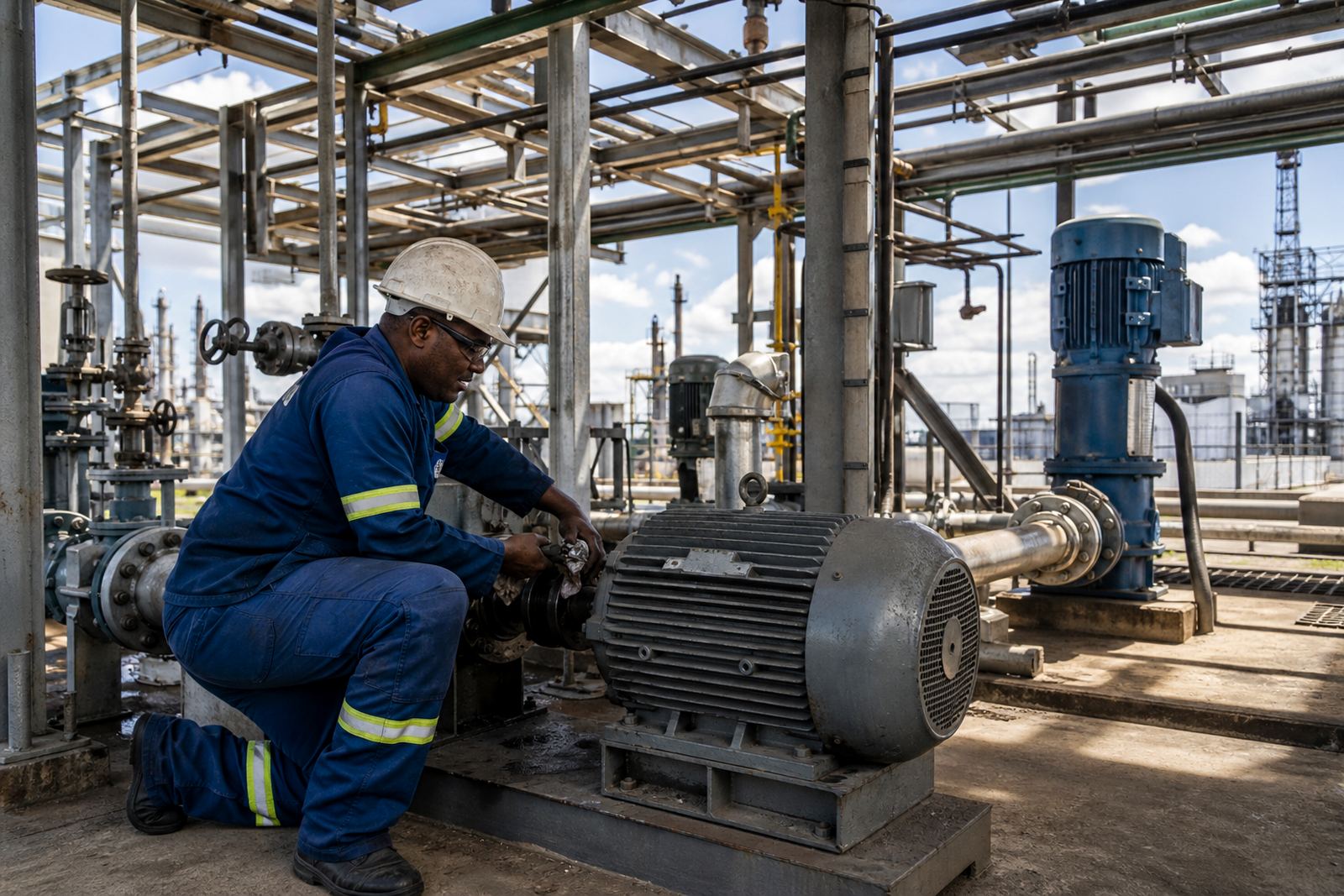
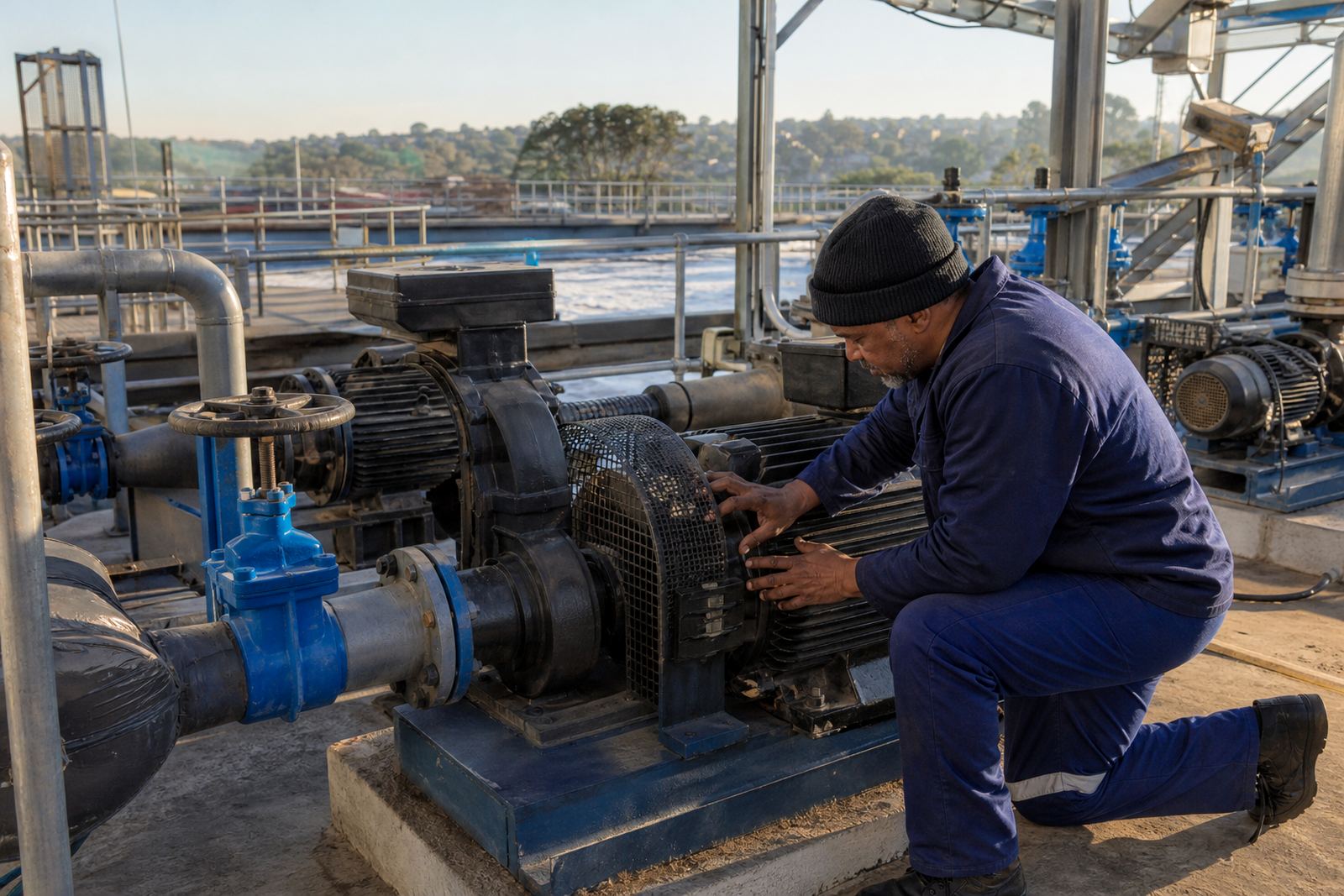
We also carry out motor removal, alignment checks and commissioning support where the site needs help putting the unit back into service. If the motor drives a conveyor or filler, poor alignment can create extra vibration and early failure. That is why the mechanical side is checked as well as the electrical side.
Variable speed drive faults that interrupt production
Drive repair is often needed when a production line will not hold speed, trips on overcurrent, gives undervoltage faults or fails after a power disturbance. In South Africa, load-shedding and voltage swings can stress drives, especially where the cooling is poor or the panel is full of dust. Food plants rely on these drives to keep mixers, conveyors and packaging machines in step, so even a small fault can throw the whole line out.
Locor handles drive inspection, panel cleaning, cable checks and site reporting so the cause of the failure is not missed. Sometimes the fault lies in the drive itself. Sometimes the problem is in the supply, the motor, the control signal or a loose termination. A quick reset may get the machine moving again, but if the root cause is not found the same fault usually comes back, sometimes worse.
- Inspect the drive cooling path and panel ventilation
- Check input and output cables for damage or heat marks
- Test the motor side before fitting a repaired drive
- Review site power quality and shutdown history
- Confirm control signals and setpoints before restart
Layout and planning advice for busy food sites
Good planning saves time on a food plant because access is often tight and shutdown windows are short. If a motor sits above a conveyor or close to a washdown zone, removal may need extra lifting gear, isolation points and a clear work area. We help with shutdown planning, spares assessment and site reporting so maintenance teams can line up the job properly before the line goes down.
It helps to keep key details ready: motor nameplate data, drive model information, the machine location, and the symptom that showed up first. If the motor failed after a belt jam or a conveyor blockage, say so. If the drive tripped after a power dip, note the time and what else was running. Those details make fault finding faster and reduce repeat work. Also check whether the panel needs cleaning, whether cables run through wet areas, and whether there is enough space for safe access. A cramped room with flour dust or wash water nearby can turn a simple job into a messy one.
For plants in Germiston, Boksburg and Kempton Park, we often see mixed workshop and production layouts where equipment gets moved around over time. That can lead to long cable runs, poor label markings and hidden damage. A proper site report helps sort the layout before the next failure hits.
Budget ranges and the mistakes that cost more
Repair budgets in this kind of work depend on the motor size, the type of fault, the condition of the frame and whether the drive can be repaired or must be replaced. Smaller motor repairs may be in the low thousands of Rand, while larger rewind jobs, bearing work and drive faults can move into a higher range once testing, stripping and reassembly are included. If a site needs removal, site attendance, insulation testing and commissioning support, those items also need to be allowed for.
Common mistakes are usually simple ones. Teams delay shutdowns until the motor is badly burnt. They fit a repaired drive without checking the motor cables. They ignore bearing noise because the line is still running. They skip lockout because the machine is under pressure to keep moving. In food processing, that kind of shortcut can lead to contamination risk, spoilage or a full line stoppage. It is better to stop early, inspect properly and fix the root cause, even if the job feels inconvenient at the time.
Locor supports businesses across South Africa from our Germiston base, with work for Johannesburg, Ekurhuleni, Pretoria, Vereeniging and Durban. If your mixers, conveyors or packaging equipment are struggling, use the enquiry form on our contact page and give us the fault details, the equipment type and the site location.
Who handles the work at Locor
Our team includes Sibusiso Mthembu, Managing Director, Annelie van Wyk in Operations, Thabo Nkosi as Senior Winding Technician, Megan Naidoo as Drive Repair Specialist, Johan Pretorius as Field Service Coordinator and Lerato Molefe in Customer Support. That mix helps us handle workshop repairs and site support without losing track of the job. The work is practical, and the handover has to be clear, especially when a plant is under time pressure.
Whether the issue is a failed motor winding, a noisy bearing, a damaged drive or a cable fault, the aim is the same: return the equipment to service safely and keep the process steady. Food plants do not need drama, they need a clean fix and proper follow through.