

When bearing checks are needed
Bearings do the hard work of keeping a motor shaft turning true, so when they start to wear you usually notice it before the motor stops completely. Common signs include a low rumbling noise, a high pitched whine, excess heat at the end shield, grease leakage, shaft play, or vibration that gets worse under load. In South Africa, where motors often run through long shifts, dusty plant areas and humid coastal conditions, these warning signs can come on faster than people expect.
We check motors that have been reporting repeated trips, abnormal current draw, rough starting, or uneven fan movement. A bearing problem can also show up after belt tension issues, poor alignment, water ingress, or a failed seal. If the motor has been standing during load shedding or shutdowns, corrosion can form on the rolling elements and raceways, so a check before full restart is a sensible step.
- Noise that changes with speed
- Heat build-up at the drive end or non-drive end
- Vibration felt through the frame or base
- Grease contamination, dust entry or water marks
- Repeated faults after start-up
What our bearing checks include
Our bearing checks are focused on condition, not guesswork. We inspect the motor externally and where practical open the bearing housings for a closer look. This includes checking for play, rough rotation, discoloration, grease condition, seal wear and signs of scoring on the shaft or housing. If needed, we compare the condition of the drive end and non-drive end bearings because wear can be uneven depending on load and alignment.
We also look at the surrounding causes that often shorten bearing life. That means coupling alignment, pulley condition, fan cover clearance, base movement, contamination from dust or moisture, and whether the lubrication used is suitable for the operating speed and temperature. For motors in workshops, food areas, mines, or outdoor plants, the wrong grease or a damaged seal can lead to early failure.
- Visual inspection of bearings and housings
- Manual rotation and feel check
- End play and shaft movement assessment
- Lubrication condition review
- Related alignment and mounting checks
How the inspection process works
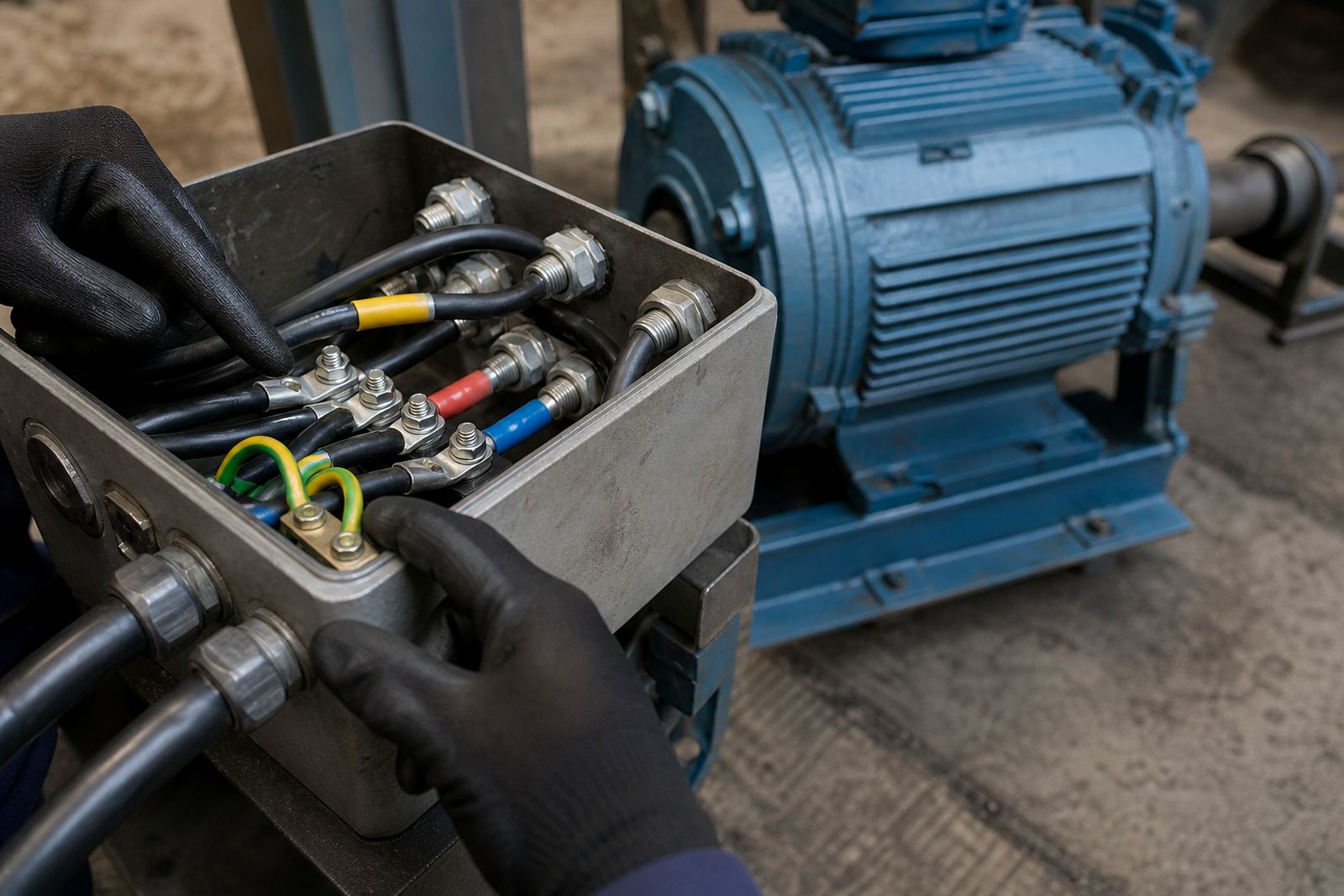
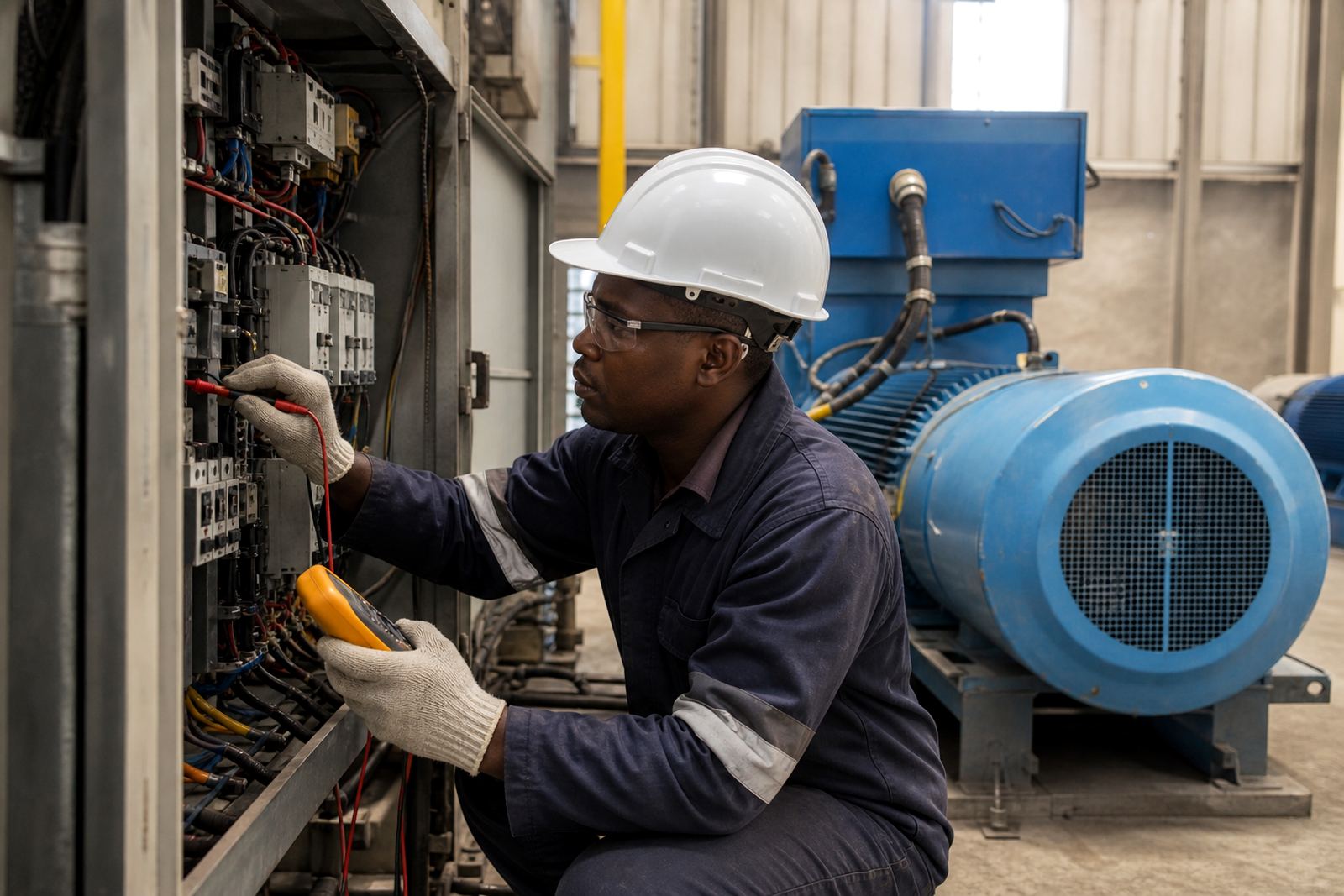
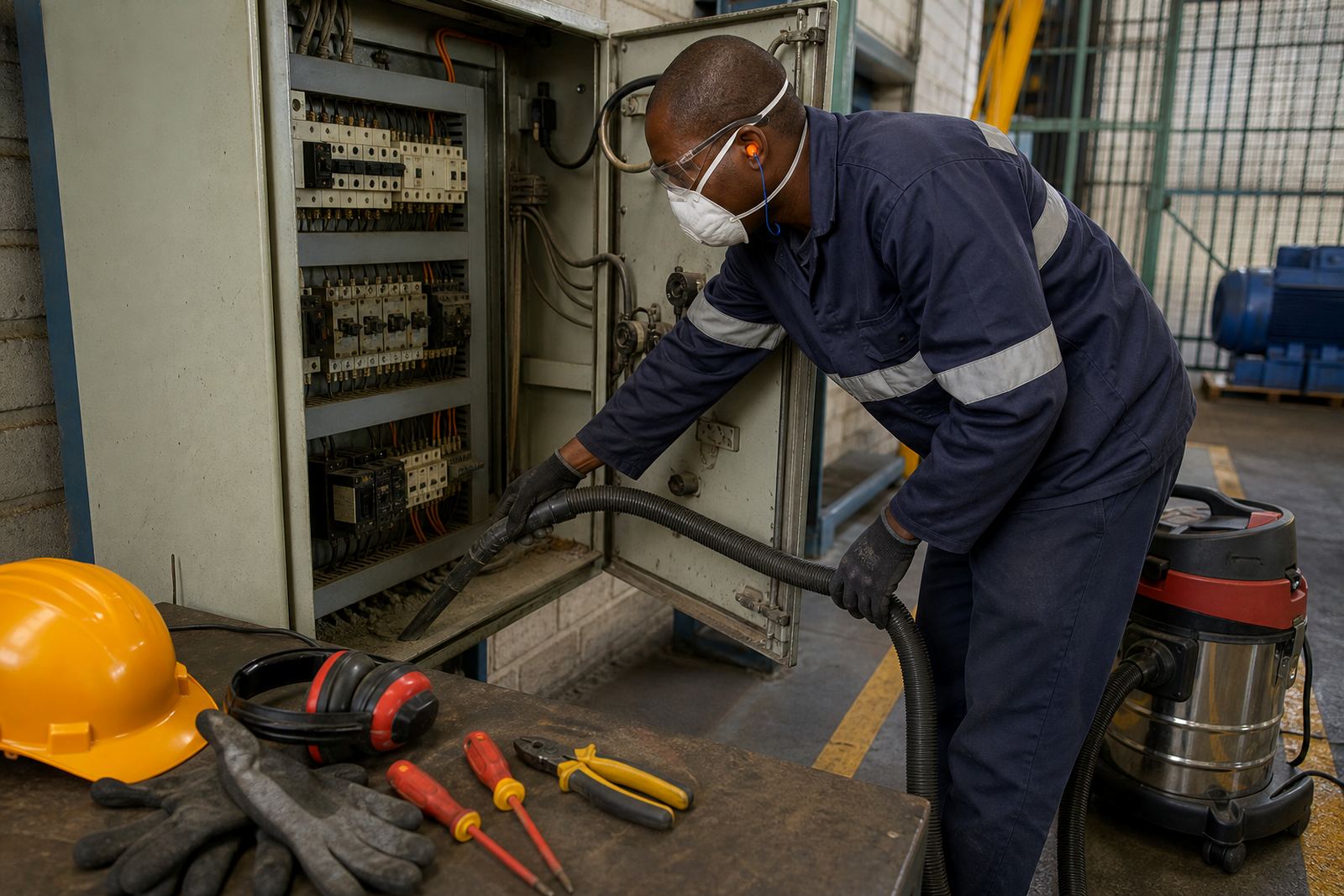
We start by isolating the motor correctly and applying lockout procedures before any work begins. Electrical work must be done by qualified people, and no motor should be opened or tested while it is live. Once the unit is safe, we record the motor details, operating symptoms and site history. That helps us separate bearing wear from electrical faults, coupling problems or mechanical overload.
From there, the technician inspects the motor in stages. If the unit is on site, we can carry out a basic condition check and advise whether removal is needed. If the motor is sent to our Germiston base, we can strip it further, inspect the bearings more closely and note any signs of heat staining, cage damage or contamination. We then share the findings in plain language so your team can decide on repair, replacement or reinstallation planning.
- Safe isolation and lockout
- Motor identification and fault history capture
- External and internal bearing condition review
- Cause checks for alignment, contamination and load
- Clear report with next-step recommendations
Repair options after a failed bearing
If the check shows early wear only, a bearing replacement may be enough. If the bearing has run hot, seized or damaged the shaft seat, the job can become more involved. We assess whether the housing is still serviceable, whether the shaft needs attention, and whether other parts such as seals, grease paths or end covers should be renewed at the same time. In some cases, it is wiser to inspect the winding insulation too, because heat from a failed bearing can affect the motor electrically as well as mechanically.
Locor also supports related work such as motor removal, insulation testing, fault finding and commissioning support, which helps when a bearing issue forms part of a bigger shutdown job. For sites in Germiston, Boksburg, Kempton Park, Johannesburg and Pretoria, we can coordinate with maintenance teams so the motor goes back in with the right alignment, cable checks and start-up checks in place.
- Bearing replacement where the motor condition allows
- Seal and grease condition review
- Shaft and housing wear assessment
- Optional insulation testing after overheating
- Reinstall and commissioning support
Turnaround on site and in the workshop
Turnaround depends on motor size, condition and whether the unit is being checked on site or brought into the workshop. A straightforward inspection on a production line or workshop floor may be completed the same day, while a stripped bearing assessment takes longer. If parts must be sourced or if the housing needs extra work, the schedule extends accordingly. We do not promise fixed timeframes because each motor, and each plant shutdown, is different.
For busy sites, especially where one motor supports a conveyor, pump or fan, we help with shutdown planning so the inspection fits around your operation. That is useful during planned maintenance in Johannesburg, Vereeniging, Durban and the wider Ekurhuleni area, where a lost day can affect more than one machine. If a site is dealing with load shedding or restricted access, we can plan the sequence carefully so the motor is removed and returned with less interruption.
Pricing approach and maintenance intervals
Pricing is based on the actual motor condition, the extent of stripping required, access on site, and whether further repair work is needed. A simple bearing check costs less than a full strip and rebuild, while motors that have suffered heat damage, contamination or shaft wear need more time and parts. We quote after we understand the job properly, so you only pay for the work your motor needs.
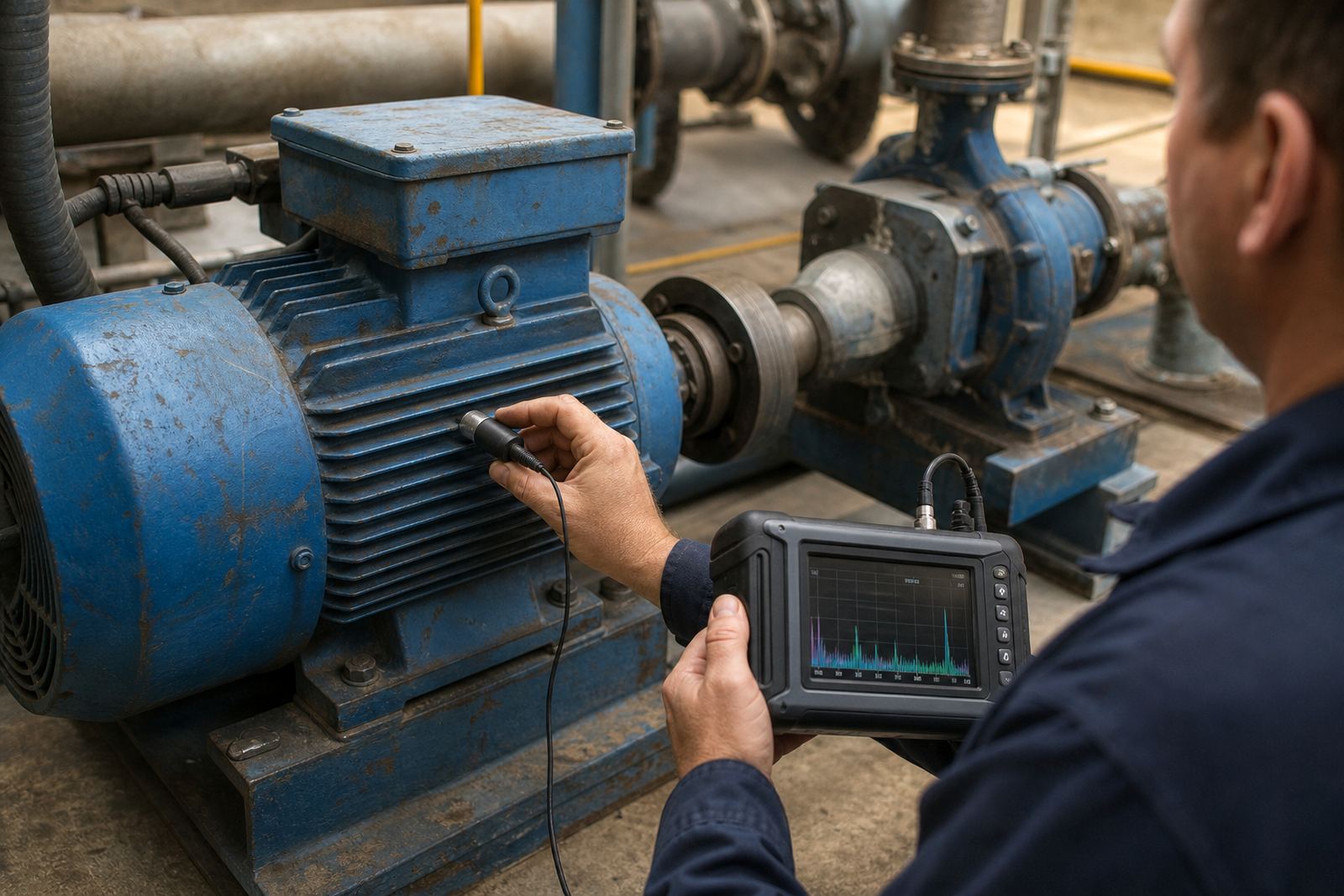
As a rule, bearing inspections should be part of planned maintenance rather than a reaction to failure. On many plant motors, a regular visual and vibration check during scheduled shutdowns is enough to catch problems early. In harsher environments, such as dusty workshops or coastal sites with moisture exposure, checks may need to happen more often. If a motor runs continuously or carries a critical load, it is worth including bearing condition in every major service interval.
- Condition-based pricing, not a one-size-fits-all rate
- Useful for planned shutdowns and emergency callouts
- Maintenance intervals depend on load, speed and environment
- More frequent checks in dusty, wet or hot conditions
- Recommended for motors showing repeat noise or vibration
Motor sizes and operating details we commonly check
We work on a wide range of industrial electric motors used in factories, workshops and plant rooms. Bearing checks can apply to small 0.37 kW units right through to larger three-phase motors used on pumps, fans, compressors, mixers and conveyors. The motor frame size, shaft diameter and bearing reference determine what parts and clearances are needed, so these details matter when planning a repair.
Typical information that helps us assess the job includes duty cycle, mounting type, speed in r/min, supply voltage, and whether the motor runs indoors, outdoors or in a humid area. A motor with a 2 pole, 4 pole or 6 pole winding pattern may show different vibration behaviour, and variable speed operation can put extra stress on bearings if the drive settings or cable conditions are not correct. We note these factors during inspection so the end result is practical for your site, not just neat on paper.
Key facts
| Service focus | Condition checks for motors with bearing wear symptoms |
|---|---|
| Typical signs | Noise, heat, vibration, shaft play and grease leakage |
| Motor range | Small workshop motors to larger three-phase industrial units |
| Operating detail checked | Frame size, shaft diameter, speed, duty cycle and mounting |
| Service areas | Germiston, Johannesburg, Ekurhuleni, Pretoria, Vereeniging and Durban |
| Safety requirement | Qualified electrical work only, with lockout procedures before inspection |