

Motor and drive support for Vereeniging sites
Vereeniging has a hard-working industrial mix, from production lines and pump rooms to treatment plants, warehouses and maintenance shops. Locor assists these sites with electric motor rewinding and variable speed drive repair when equipment starts running hot, trips on overload, loses insulation integrity or simply does not perform the way it should. Our base in Germiston allows us to support Vereeniging and surrounding areas without dragging work across long distances, which helps when a plant has a short shutdown window or a weekend stoppage to manage.
We have worked with electrical equipment long enough to know that faults are not always obvious at first glance. A motor may look fine outside, yet still have winding damage, bearing wear or moisture-related insulation breakdown inside. A drive may power up and still have control board faults, fan issues, terminal damage or heat stress from poor cabinet conditions. That is why our approach starts with fault finding, then moves to inspection, testing and only then repair recommendations.
For Vereeniging clients, the goal is usually simple: keep the plant moving, limit repeat failures and bring the equipment back into service with proper checks done. All electrical work must be handled by qualified people, with lockout procedures in place before any removal, opening or testing. That applies whether the motor is on a pump skid, conveyor, fan set or mixer, and it matters on every site.
What we cover on site and in the workshop
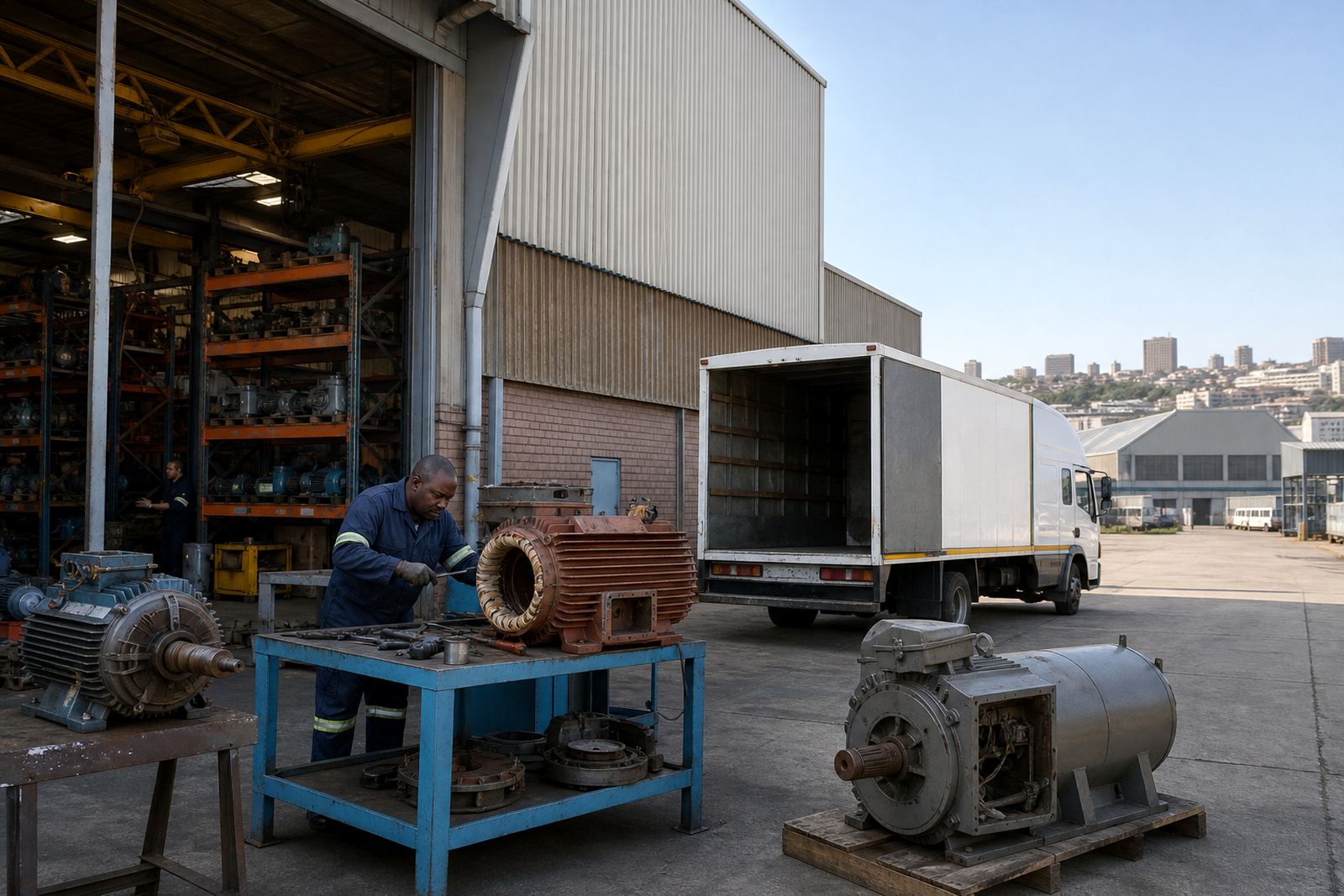
Some repairs are best handled on site, especially when the issue is tied to cabling, terminal condition, mounting, alignment or panel cleanliness. Other jobs need the motor or drive to come back to the workshop for strip down, cleaning, testing and component replacement. In Vereeniging, we typically support a mix of both, depending on access, shutdown timing and how critical the equipment is to production.
- Fault finding on motors, drives and connected control circuits
- Motor removal and refitting support where site conditions allow
- Drive inspection and functional checks
- Bearing checks and bearing replacement
- Insulation testing on windings before and after repair
- Alignment checks and commissioning support after installation
- Shutdown planning for planned maintenance windows
- Spares assessment, panel cleaning and cable checks
- Site reporting for maintenance teams and supervisors
We also keep an eye on the practical side of the job. If a drive cabinet is dusty, the cooling fans are blocked or terminals have discoloured from heat, those details are recorded and passed back to the maintenance team. Small issues often become big ones during load-shedding recovery, especially when equipment is being started and stopped more often than usual. Clean panels, sound terminations and proper cable dressing help reduce avoidable failures.
How we handle rewinding and bearing replacement
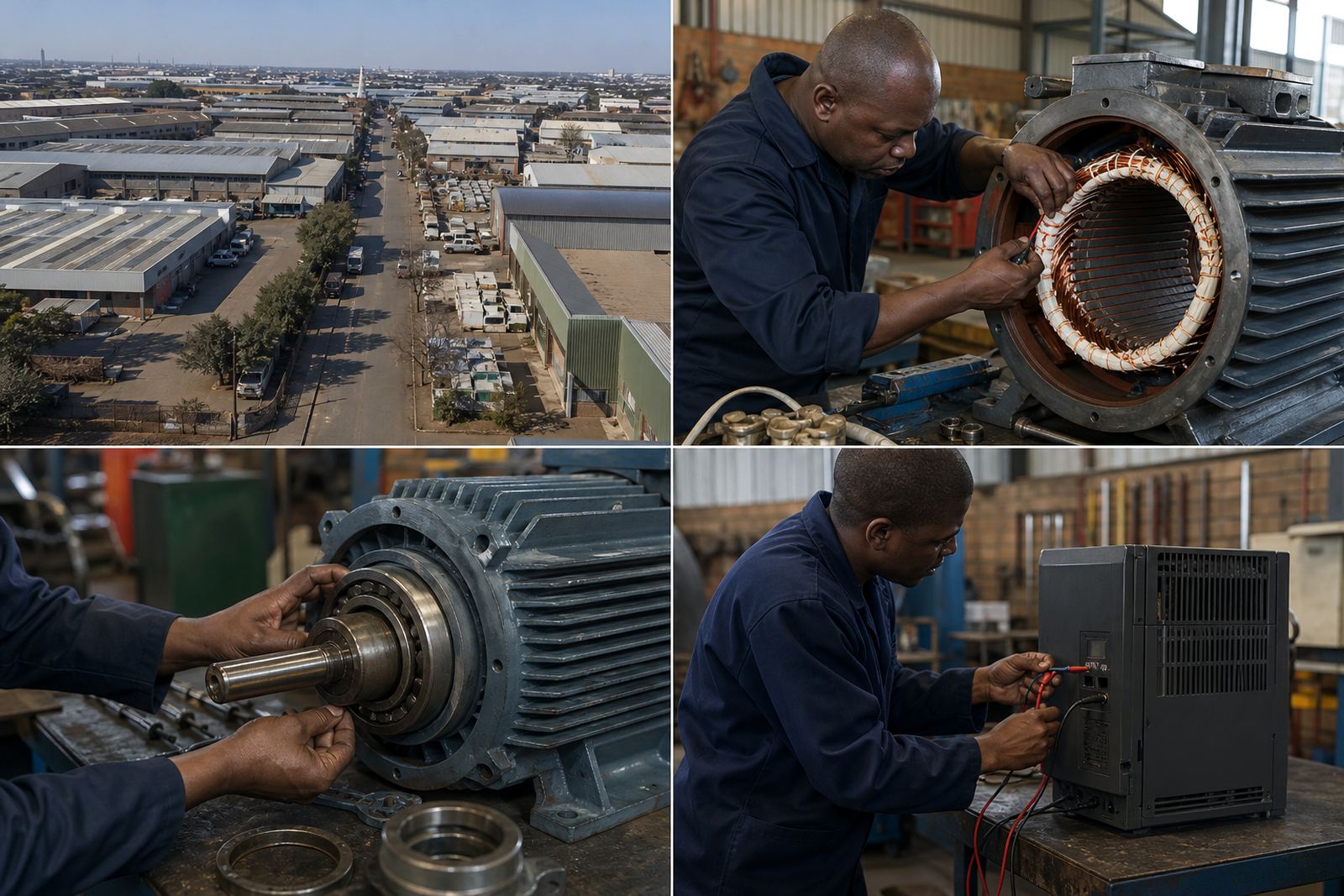
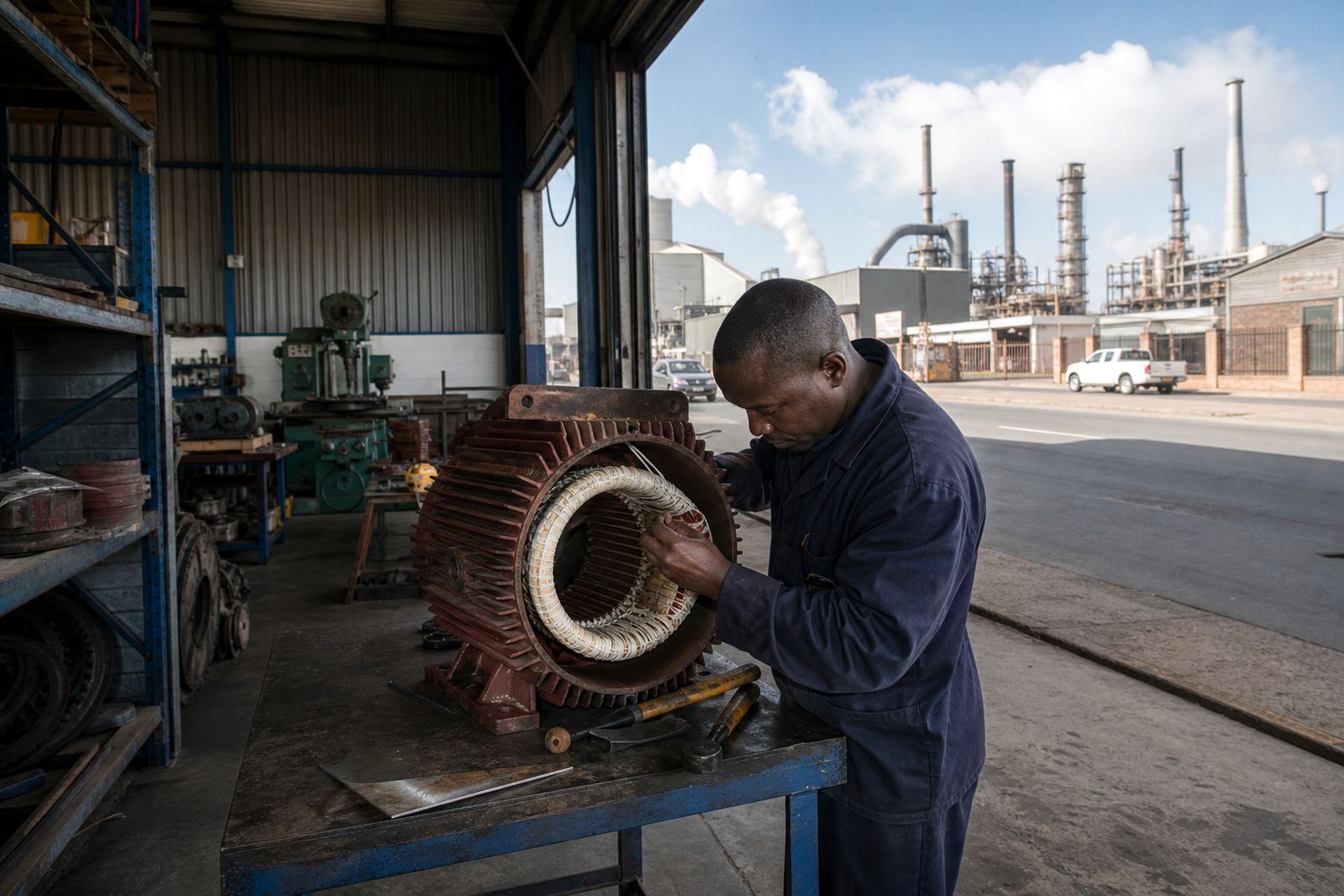
Electric motor rewinding is a careful process that starts with stripping, inspection and measurement. The old winding is removed, the stator core is checked for damage or contamination, and the slots are prepared before new winding wire and insulation materials are fitted. After winding, the motor is varnished, cured and tested to confirm that the electrical readings are where they should be. If the original failure came from overheating, moisture ingress or repeated starts, we look for the underlying cause as well, not just the visible damage.
Bearing replacement is often part of the repair. A motor can sound noisy, run rough or show increased temperature because the bearings have worn or the grease has broken down. In coastal or humid conditions this can happen faster, but even inland sites around Vereeniging can see bearing wear from dust, vibration and poor alignment. During bearing work we check shaft condition, end shields, housing fit and any signs of rotor rub, because one loose or damaged component can shorten the life of the whole unit.
We do not treat rewinding as a quick patch. The point is to return the motor to service with sound electrical integrity and proper mechanical condition. That includes insulation testing before start-up, checking for earth faults or weak insulation paths, and confirming that the motor is safe to energise under qualified supervision. If a motor has failed more than once, the history matters and we take time to review it.
Variable speed drive repair for local production lines
Variable speed drives are used to control speed, torque and process behaviour on pumps, fans, conveyors and other rotating equipment. When they fail, the cause may be a power section fault, control board problem, damaged terminals, overheating, contaminated cooling paths or a site issue such as poor supply quality. Locor repairs and tests drives used in Vereeniging workshops and plants, with attention to the operating environment and the electrical conditions that caused the fault in the first place.
We handle drives as part of the wider system, not as isolated boxes. That means checking incoming supply, output wiring, panel condition, cooling and the load that the drive is trying to run. A drive that keeps tripping may be reacting to motor insulation problems, cable damage or overloading rather than a fault inside the unit itself. Where needed, we support commissioning and re-connection so the repaired drive goes back into service in a controlled way.
For sites that depend on continuous flow or pumping, this kind of support matters during outages and after load-shedding events. We also assess spare holding, because it often makes sense to keep at least one critical unit ready on site, especially where a single motor or drive can stop a whole section of production.
- Inspect drive cabinets for dust, heat stress and loose terminations
- Check cooling fans, filters and airflow paths
- Review motor and cable condition before re-starting
- Support shutdown planning for planned drive swaps
- Provide site reporting for maintenance records
Travel, response and turnaround for the Vaal Triangle
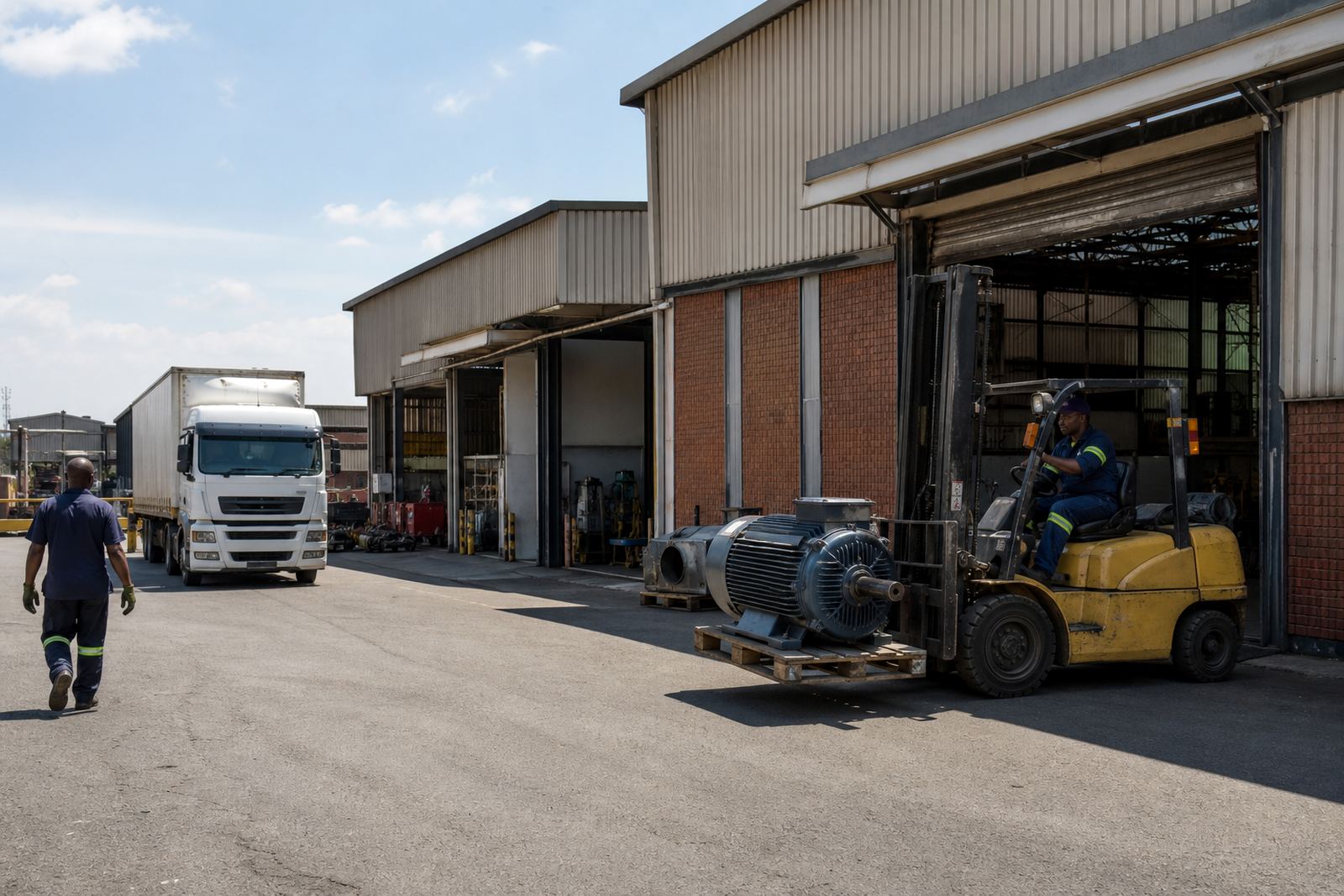
From Germiston, we regularly support Vereeniging, Vanderbijlpark and the broader Vaal area, along with Johannesburg, Ekurhuleni, Pretoria and Durban work when clients need coordinated maintenance. Travel is planned around access, urgency and shutdown timing, so the right people and tools arrive prepared for the job. For plant sites, that often means arranging the visit around shift handover or an approved stoppage window.
Turnaround depends on the fault, parts required and the condition of the equipment. A straightforward bearing change or inspection can move faster than a motor that needs full strip down and rewind, and a drive with board damage will take longer than one with a cleaning and terminal repair issue. We keep the process practical and give maintenance teams clear feedback on what can be repaired, what should be watched and what needs replacement.
For Vereeniging clients, one of the big concerns is keeping work within the maintenance plan instead of letting it spread into production time. That is why we pay close attention to fault reporting, shutdown planning and site reporting. If the job needs extra testing or a hold point before energising, we say so. If a unit can be returned safely with a simple repair, we say that too.
Who we usually assist in Vereeniging
Vereeniging has a mix of heavy users and practical maintenance teams, and we work with the sort of places where downtime has a direct cost. That includes production facilities, utilities, pump stations, engineering workshops, processing areas and plant maintenance departments that need a supplier who understands the pressure of a stopped machine. We also assist sites in Boksburg, Kempton Park and Pretoria when they need the same kind of support across more than one location.
Our team includes Sibusiso Mthembu as Managing Director, Annelie van Wyk in operations, Thabo Nkosi on winding work, Megan Naidoo on drive repair, Johan Pretorius on field service and Lerato Molefe on customer support. Since 2007, the focus has stayed on careful workmanship and clear communication with the people who have to keep the plant running.
- Production sites needing motor repair and testing
- Utility and pumping stations with drive or motor faults
- Workshops that need inspection and spares assessment
- Maintenance teams planning a shutdown or weekend intervention
- Sites needing clean reporting after work is complete
If you need support in Vereeniging, send your enquiry through the contact page form and include the equipment type, fault symptoms, site location and any shutdown timing. That helps us plan the visit properly and avoid unnecessary delays.